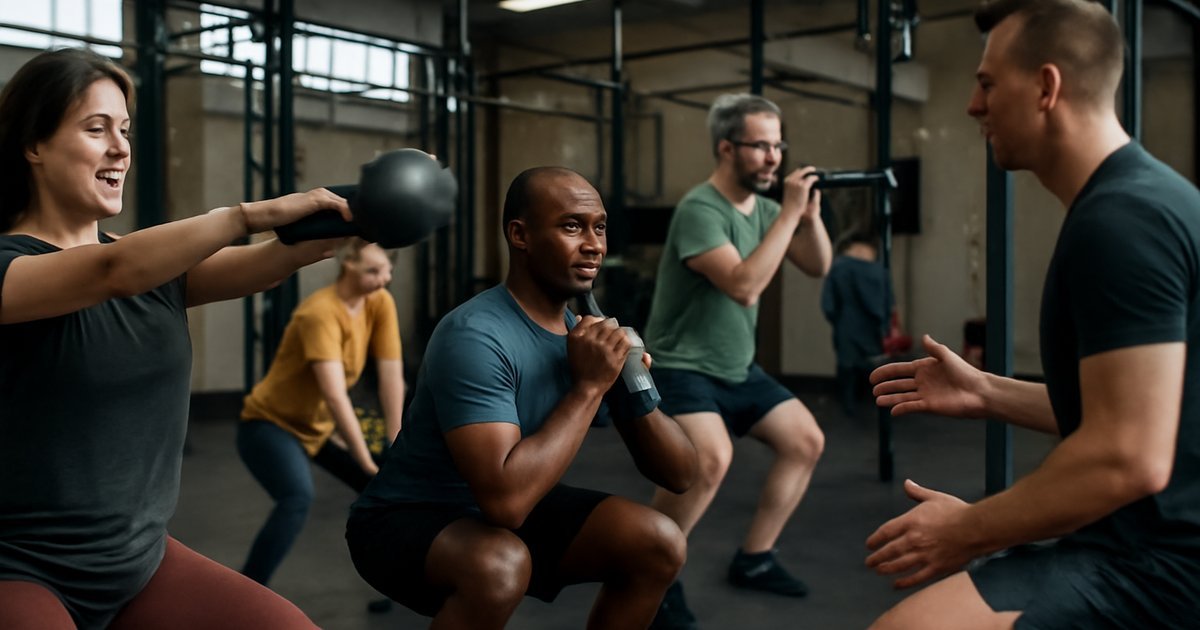
CrossFit has transformed from a niche training program into one of the most widely practiced fitness systems in the United States — but is it right for you?
Mark, 47, had spent years on the treadmill with minimal results. His cardiologist told him he needed more muscle, better cardiovascular endurance, and less belly fat — but traditional gym routines never held his interest long enough. Then a coworker invited him to a CrossFit class. Six months later, his resting heart rate had dropped, his strength improved significantly, and for the first time in a decade, he actually looked forward to working out.
According to the CDC, fewer than 25% of American adults meet both the aerobic and muscle-strengthening guidelines set by the Physical Activity Guidelines for Americans. CrossFit — a high-intensity functional fitness program that combines weightlifting, gymnastics, and cardiovascular conditioning — is one of the few training modalities designed to address all of these components simultaneously.
In this guide, you’ll learn exactly what CrossFit is, what the research says about its health benefits, how to get started safely as an adult, and what warning signs to watch for along the way.
What Is CrossFit?
CrossFit is a branded, high-intensity fitness program developed in the early 2000s that combines elements of Olympic weightlifting, powerlifting, gymnastics, rowing, running, and aerobic conditioning. Workouts are typically short — 10 to 30 minutes — but extremely demanding, and they change daily through what practitioners call the “Workout of the Day,” or WOD.
The program is built around ten recognized physical fitness domains: cardiovascular endurance, stamina, strength, flexibility, power, speed, coordination, agility, balance, and accuracy. This broad-spectrum approach makes CrossFit distinctly different from single-modality training like pure strength training or traditional cardio.
According to CrossFit Inc., there are more than 15,000 affiliated gyms — called “boxes” — across the United States, making it one of the most widely distributed fitness programs in the country. Practitioners range from elite athletes to older adults managing chronic conditions, which speaks to its scalability.
Every CrossFit workout is designed to be modified — or “scaled” — to fit individual ability levels. A 65-year-old beginner and a competitive athlete may follow the same WOD structure, but with completely different weights, movements, and intensity levels.
Health Benefits Backed by Research
CrossFit has generated a significant body of peer-reviewed research over the past decade. The findings are largely positive, particularly for adults in the 30-to-60 age range who are looking to improve multiple dimensions of health at once.
- Cardiovascular health: A 2014 study published in the Journal of Strength and Conditioning Research found that 10 weeks of CrossFit training significantly improved VO2 max — a key measure of cardiovascular fitness — in both men and women across a range of fitness levels.
- Body composition: Clinical evidence indicates that CrossFit’s combination of resistance and aerobic training is effective for reducing body fat percentage while preserving or increasing lean muscle mass.
- Metabolic health: Research suggests that high-intensity functional training of the CrossFit variety can improve insulin sensitivity and support healthier blood glucose regulation, which is especially relevant for adults at risk of type 2 diabetes.
- Bone density: The weightlifting component provides mechanical loading of the skeleton, which is a clinically recognized strategy for maintaining bone mineral density — a major concern for adults over 40, particularly women approaching menopause.
- Mental health: Studies consistently show that high-intensity exercise reduces symptoms of anxiety and depression. The group-based, community-driven environment of CrossFit also provides social support, which the NIH identifies as a significant factor in long-term mental well-being.
- Functional strength: Movements in CrossFit — squats, deadlifts, overhead presses — mirror everyday activities. Building strength in these patterns supports independence and reduces the risk of falls and injury as you age.
It’s important to note: individual results vary considerably based on starting fitness level, consistency, nutrition, sleep, and recovery habits. CrossFit is not a guaranteed outcome — it is a framework for structured, progressive physical challenge.
Is CrossFit Safe for Adults Over 30?
Safety is the question most adults ask first — and it’s a fair one. CrossFit has historically been associated with a higher injury risk than some lower-intensity modalities, but the research paints a nuanced picture.
A comprehensive 2018 review published in the Orthopaedic Journal of Sports Medicine found that CrossFit’s injury rate — approximately 2.1 injuries per 1,000 training hours — is comparable to or lower than Olympic weightlifting, powerlifting, and recreational distance running. The most common injury sites are the shoulder, lower back, and knee.
Most physicians and sports medicine specialists agree: CrossFit is not inherently dangerous, but it requires proper coaching, gradual progression, and honest self-awareness about your physical limitations. The risks rise significantly when:
- You push through pain rather than appropriate effort
- You skip the foundational training and jump into advanced movements
- You train with poor technique at high loads or speeds
- You ignore recovery between sessions
- You have unmanaged joint conditions, cardiovascular disease, or orthopedic issues you haven’t disclosed to a coach or physician
One rare but serious concern is rhabdomyolysis — a condition where muscle fibers break down and release proteins into the bloodstream that can damage the kidneys. This is most likely when a highly deconditioned person undergoes extreme, sudden overexertion. Recognizing the early signs (muscle soreness far beyond normal, dark-colored urine, swelling) and seeking immediate medical attention is critical.
For the majority of generally healthy adults, CrossFit — when introduced properly and progressed gradually — is a safe and effective training approach.
Who Should Get Medical Clearance First
Before beginning CrossFit or any high-intensity exercise program, most physicians recommend a pre-participation health evaluation if you fall into any of these categories:
- Age 45 or older and previously sedentary
- Diagnosed cardiovascular disease, hypertension, or arrhythmia
- Type 1 or type 2 diabetes
- Chronic joint conditions such as osteoarthritis or previous orthopedic surgery
- Obesity (BMI over 30) with associated metabolic conditions
- History of back injuries or herniated discs
- Pregnancy or recent postpartum recovery
- Any condition for which you currently take prescription medication
The American College of Sports Medicine (ACSM) recommends that adults with multiple cardiovascular risk factors undergo an exercise stress test before beginning vigorous-intensity training programs. This is a conversation worth having with your primary care physician before your first CrossFit class.
How to Get Started: A Practical Roadmap
Starting CrossFit as an adult doesn’t mean walking into the most intense class on day one. A strategic, informed approach will dramatically improve both your safety and your long-term results.
Step 1: Find an accredited CrossFit affiliate. Look for a gym (called a “box”) with CrossFit Level 2 or higher certified coaches. These coaches have demonstrated competency in movement assessment, programming, and scaling. Avoid gyms that rush you into group classes without any individual assessment.
Step 2: Complete a fundamentals or on-ramp program. Most reputable CrossFit affiliates offer a beginner program — typically 3 to 6 sessions — where you learn foundational movements: the squat, deadlift, press, clean, and basic gymnastics positions. This phase is non-negotiable for adult beginners.
Step 3: Communicate your health history openly. Tell your coach about any injuries, chronic conditions, surgical history, or movement limitations. A good coach will modify every workout accordingly without judgment.
Step 4: Scale aggressively at first. Ego is the most common source of injury in CrossFit. Use lighter weights, simpler movement variations, and lower volume than you think you need during your first several weeks. Your body needs time to adapt to the novel demands.
Step 5: Start with 2-3 sessions per week. For adults new to high-intensity training, research suggests that two to three sessions per week provides sufficient stimulus for meaningful adaptation while allowing adequate recovery. More is not better in the early phases.
Step 6: Prioritize sleep and nutrition. CrossFit’s high metabolic demands require adequate protein intake (most sports dietitians recommend 1.2 to 1.6 grams per kilogram of body weight for active adults), carbohydrate replenishment, and seven to nine hours of sleep for optimal recovery. If you’re also interested in building complementary strength, consider reading our guide on Dumbbell Training for Adults to supplement your CrossFit programming on recovery days.
What a Typical CrossFit Class Looks Like
Understanding the structure of a CrossFit class can reduce anxiety for first-timers and help you know what to expect before you walk through the door.
Most one-hour CrossFit sessions follow this general format:
- Warm-up (10-15 minutes): Dynamic movement preparation, mobility work, and general cardiovascular priming — often includes light jogging, jumping jacks, and movement-specific drills.
- Skill or strength work (15-20 minutes): Focused practice on a specific lift (such as the back squat or barbell clean) or a gymnastics skill (such as pull-up progressions). This section typically involves coaching on technique and progressive loading.
- Workout of the Day — WOD (8-20 minutes): The main event. This is where the high-intensity conditioning happens. WODs are timed, scored by weight moved, rounds completed, or repetitions achieved. Common formats include AMRAP (as many rounds as possible), EMOM (every minute on the minute), and For Time.
- Cool-down (5-10 minutes): Static stretching, breathing exercises, and brief class debrief.
The community aspect is real and meaningful. Most CrossFit classes cheer each other on, which many participants report as a major motivator — particularly adults who have struggled with consistency in solo gym environments.
Living With CrossFit Long-Term: Sustainability Tips
For adults who want CrossFit to be a sustainable long-term practice rather than an intense but short-lived phase, a few clinical and behavioral principles make a significant difference.
Respect your recovery. The NIH and sports medicine research consistently show that inadequate recovery between sessions is the primary driver of overtraining syndrome and injury accumulation. Incorporate at least one to two complete rest days per week, and consider active recovery activities — gentle walking, light yoga, or foam rolling — on non-training days. Our article on Hiking for Fitness and Health outlines excellent low-intensity options that complement CrossFit training.
Periodize your training. CrossFit programming in well-coached environments includes planned variation in volume and intensity. If you’re following a reputable affiliate’s programming, trust the process — avoid adding extra intense sessions on top of an already demanding schedule.
Monitor your body’s signals. Distinguish between the normal discomfort of productive effort — burning muscles, elevated heart rate, temporary fatigue — and the warning signals of impending injury: sharp joint pain, grinding sensations, numbness, or pain that worsens with movement.
Adjust as you age. Adults over 50 may find that recovery takes longer, that certain high-impact movements need modification, and that mobility work becomes increasingly important. This is normal physiology, not a reason to stop — it’s a reason to train smarter. For additional age-appropriate exercise strategies, our guide on HIIT for Beginners Over 30 provides useful context on intensity management for this population.
When to Call Your Doctor — Red Flags to Watch For
CrossFit is physically demanding, and knowing when symptoms cross from normal training response into a medical concern can be life-saving. Seek immediate medical attention if you experience:
- Chest pain, tightness, or pressure during or after exercise — this is a potential cardiac emergency
- Dizziness, fainting, or near-fainting during exercise
- Shortness of breath disproportionate to effort or inability to catch your breath after stopping
- Dark brown or cola-colored urine within 24-48 hours of intense exercise — a potential sign of rhabdomyolysis
- Sudden severe joint pain, particularly in the shoulder, knee, or lower back with loss of range of motion
- Heart palpitations or irregular heartbeat during or after training
At your next scheduled physician visit, share the following:
- That you are participating in high-intensity functional training
- Your current frequency, duration, and intensity level
- Any persistent soreness, joint discomfort, or fatigue that hasn’t resolved with rest
- Any changes in blood pressure, blood glucose (if diabetic), or medications that may affect your exercise tolerance
Frequently Asked Questions About CrossFit for Adults
Is CrossFit appropriate for adults over 50?
Yes, with appropriate scaling and medical clearance where indicated. Many CrossFit affiliates have dedicated masters programming for athletes over 40 and 50. Clinical evidence indicates that resistance and high-intensity training offer particular benefits for older adults, including preservation of muscle mass, bone density, and functional independence. The key is working with experienced coaches who can modify movements appropriately for your fitness level and any physical limitations.
How long before I see results from CrossFit?
Most adults report noticeable improvements in energy, endurance, and functional strength within four to eight weeks of consistent training (two to three sessions per week). Body composition changes typically become visible at the eight-to-twelve week mark, though this varies considerably based on nutrition, sleep, starting fitness level, and hormonal factors. This varies from person to person.
Can I do CrossFit if I have a bad back or knee problems?
Possibly, but only with explicit clearance from your physician or physical therapist and open communication with your CrossFit coach. Many foundational CrossFit movements can be modified to reduce spinal loading or knee stress. However, attempting to push through structural joint problems without professional guidance significantly increases injury risk. Always get a proper assessment before assuming you can or cannot participate.
How does CrossFit compare to traditional strength training or cardio?
CrossFit simultaneously targets cardiovascular endurance and muscular strength, making it time-efficient for adults with busy schedules. Traditional strength training allows for more precise progressive overload and may be superior for pure muscle hypertrophy goals. Traditional cardio (running, cycling) may offer lower injury risk for deconditioned beginners. Research suggests that CrossFit produces comparable or superior results to traditional training for overall fitness outcomes when performed consistently over 12 or more weeks.
Is CrossFit expensive?
CrossFit gym memberships typically range from $100 to $250 per month in the United States, which is higher than standard gym memberships. However, this cost includes daily programming, professional coaching, and class-based accountability — services that would cost considerably more if purchased separately as personal training sessions. Many adults find the coached, community-based structure worth the premium cost for consistency and safety reasons.
Final Thoughts
CrossFit is not a perfect system for every adult, but for millions of Americans, it has proven to be a uniquely effective way to address cardiovascular health, muscular strength, metabolic function, and mental well-being within a single, community-supported training framework.
Like any high-intensity exercise program, success depends on starting appropriately, progressing gradually, communicating openly with coaches and healthcare providers, and respecting your body’s recovery needs. The research is encouraging, the community is real, and the potential benefits — stronger bones, healthier heart, better glucose control, improved mood — are clinically meaningful.
If you’ve been looking for a training approach that challenges you comprehensively without the monotony of isolated exercises, CrossFit may be worth exploring. Just get your physician’s input first, find a reputable affiliate with qualified coaches, and give yourself the grace to start where you are — not where you think you should be.
Medical Disclaimer: This article is for informational and educational purposes only. It does not constitute medical advice, diagnosis, or treatment. Always consult your physician or a qualified healthcare provider before making changes to your health routine or treatment plan.
Medically reviewed by our editorial health team. Content follows evidence-based standards aligned with CDC and NIH guidelines.
Leave a Reply