Tag: functional fitness

  • Kettlebell Training for Adults: Benefits, Workouts & Tips

    Kettlebell Training for Adults: Benefits, Workouts & Tips

    One compact iron ball — and a full-body workout that rivals anything you’ll find in a modern gym.

    Meet James, 52, a mid-level manager from Columbus, Ohio. After his annual physical revealed borderline high blood pressure and a waistline creeping past 38 inches, his doctor gave him a clear recommendation: start exercising consistently. But James had no time for long gym sessions, no desire to sign up for expensive classes, and a garage with just enough room for a mat and one piece of equipment.

    His solution? A single 35-pound kettlebell — and a training plan that changed his health markers within four months.

    Kettlebell training has surged in popularity across the US over the past decade, and for good reason. According to the American Council on Exercise, kettlebell workouts can burn up to 20 calories per minute — comparable to running at a 6-minute-mile pace. Yet the impact on joints is far lower, the equipment investment is minimal, and the full-body conditioning benefits are exceptional.

    In this guide, you’ll learn what kettlebell training is, who it’s best suited for, what the clinical evidence says about its health benefits, how to get started safely, and how to build a sustainable routine — whether you’re 35 or 70.

    What Is Kettlebell Training?

    A kettlebell is a cast-iron or steel weight shaped like a cannonball with a flat base and a looped handle on top. Unlike dumbbells, which distribute weight evenly on both sides of the handle, kettlebells have an offset center of gravity — which means your muscles have to work harder to control the weight through each movement.

    Kettlebell training uses this unique design to combine strength work, cardiovascular conditioning, and mobility all in one session. Many exercises involve swinging, pressing, pulling, or carrying the weight through multiple planes of motion — making it a form of functional fitness, meaning it trains your body in ways that translate directly to real-life movement.

    The most common kettlebell exercises include the swing, goblet squat, Turkish get-up, clean and press, deadlift, and farmer’s carry. These movements engage multiple muscle groups simultaneously, which is one reason research shows kettlebell training to be highly time-efficient.

    According to the American College of Sports Medicine (ACSM), kettlebell training qualifies as both a moderate-to-vigorous aerobic activity and a muscle-strengthening exercise — two categories the CDC recommends adults include in their weekly routines.

    In the US, an estimated 80% of adults do not meet the minimum federal physical activity guidelines. Kettlebell training offers a practical, space-saving solution for that large segment of the population.

    Health Benefits of Kettlebell Training

    The science behind kettlebell training has grown substantially over the past 15 years. Here’s what clinical evidence suggests you can expect.

    Cardiovascular and Metabolic Health

    A landmark study published in the Journal of Strength and Conditioning Research found that a 20-minute kettlebell workout produced a heart rate response equivalent to running at a moderate pace — with participants burning roughly 13 to 20 calories per minute. That kind of metabolic output in a short session has clear implications for weight management and heart health.

    Research from the Mayo Clinic supports the idea that combining strength and cardio in a single session — sometimes called "concurrent training" — may improve insulin sensitivity, lower resting blood pressure, and support healthy cholesterol levels over time.

    Muscle Strength and Body Composition

    A study from the Journal of Human Kinetics found that adults who trained with kettlebells twice per week for 10 weeks significantly improved their upper-body and lower-body strength, along with reductions in body fat percentage — without changing their diet. This makes kettlebell training particularly effective for adults over 40 who are managing age-related muscle loss, known as sarcopenia.

    Core Stability and Posture

    Almost every kettlebell movement requires active stabilization from your core — the group of muscles surrounding your spine and pelvis. The asymmetrical load of the kettlebell forces your trunk muscles to work continuously to maintain alignment, which clinical evidence suggests can help reduce chronic low back pain over time.

    Grip Strength and Functional Longevity

    Grip strength is one of the most well-documented predictors of long-term health. Research published in the British Medical Journal showed that lower grip strength was associated with higher risk of cardiovascular disease, cognitive decline, and all-cause mortality. Kettlebell training — especially exercises like the farmer’s carry and the swing — is one of the most effective ways to build grip strength in adults.

    Bone Density

    Resistance training places mechanical stress on bones, which stimulates bone remodeling and can slow age-related bone density loss. The NIH’s National Institute on Aging identifies resistance training as one of the most effective lifestyle interventions for reducing osteoporosis risk. If you’re interested in learning more about exercise and bone health, our guide on bodyweight training for adults also covers bone-protective movement strategies.

    Who Is Kettlebell Training Best For?

    Kettlebell training is remarkably versatile, but it isn’t a one-size-fits-all solution. Here’s a breakdown of who tends to benefit most — and a few important considerations.

    Best suited for:

    • Adults aged 30-65 looking for efficient full-body conditioning
    • People with limited time who want cardio and strength in one session
    • Those managing early-stage metabolic conditions (with physician clearance)
    • Adults who travel frequently or prefer home workouts
    • Individuals recovering from obesity-related deconditioning (starting light)
    • Older adults who want to maintain functional strength and independence

    Proceed with caution or physician clearance if you have:

    • Uncontrolled hypertension or recent cardiac events
    • Acute back injuries or herniated discs
    • Severe osteoporosis or recent fractures
    • Unmanaged rotator cuff injuries
    • Balance disorders that significantly increase fall risk

    This varies from person to person. Always consult your physician before beginning a new exercise program, especially if you have one or more chronic conditions.

    Choosing the Right Kettlebell Weight

    One of the most common mistakes beginners make is choosing a weight that’s either too heavy (leading to injury) or too light (limiting results). Here are the general starting ranges most certified trainers and physical therapists recommend:

    For women new to kettlebell training:

    • Swings and lower-body movements: 18-26 lbs (8-12 kg)
    • Upper-body pressing movements: 8-18 lbs (4-8 kg)

    For men new to kettlebell training:

    • Swings and lower-body movements: 26-35 lbs (12-16 kg)
    • Upper-body pressing movements: 18-26 lbs (8-12 kg)

    If you’re over 60 or new to resistance training, starting at the lower end of these ranges is always the safer choice. Technique matters far more than weight — especially in the early weeks.

    Essential Kettlebell Exercises for Beginners

    These five foundational movements are safe, effective, and recommended by certified strength coaches for adults starting kettlebell training.

    1. The Kettlebell Deadlift

    Place the kettlebell between your feet, hip-width apart. Hinge at the hips — not the waist — while keeping your back flat and chest tall. Grip the handle, press your feet into the floor, and stand up straight. Lower back down with control. This movement teaches proper hip hinge mechanics and builds posterior chain strength (glutes, hamstrings, and lower back).

    2. The Goblet Squat

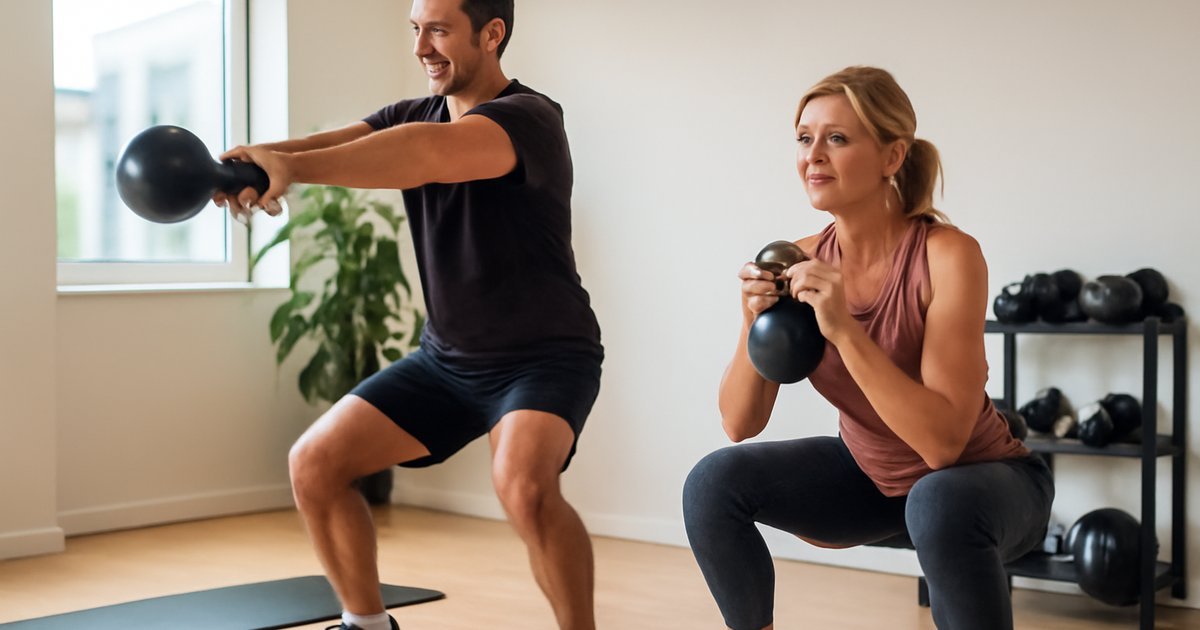
    Hold the kettlebell by the horns (the sides of the handle) at chest height. Squat down, keeping your chest tall and knees tracking over your toes. Drive through your heels to stand. The front-loaded position naturally promotes an upright torso, making this one of the most joint-friendly squat variations available.

    3. The Two-Hand Kettlebell Swing

    This is the signature kettlebell movement. Stand with feet shoulder-width apart. Hike the kettlebell back between your legs, then drive your hips forward explosively to swing the bell to shoulder height. Let it swing back between your legs and repeat. The swing is not a squat — it’s a hip hinge. Most of the power comes from the glutes and hamstrings, not the arms.

    4. The Farmer’s Carry

    Simply pick up one or two kettlebells and walk. Keep your shoulders back, core tight, and pace steady. This deceptively simple exercise builds grip strength, core stability, and shoulder integrity simultaneously. Research from the National Strength and Conditioning Association supports loaded carries as highly functional for real-world movement patterns.

    5. The Kettlebell Overhead Press

    Clean the kettlebell to the "rack position" (resting on your forearm at shoulder height), then press it directly overhead until your arm is fully extended. Lower with control. This builds shoulder strength, core stability, and overhead mobility — important for everyday tasks and injury prevention as you age.

    Sample Beginner Kettlebell Workout Plan

    The following weekly structure aligns with the CDC’s recommendation of at least 150 minutes of moderate-intensity activity and two days of muscle-strengthening per week:

    Days 1, 3, 5 — Kettlebell Circuit (25-35 minutes):

    • Warm-up: 5 minutes of light walking and hip circles
    • Goblet Squat: 3 sets of 10 reps
    • Two-Hand Swing: 3 sets of 12 reps
    • Farmer’s Carry: 3 rounds of 30 seconds
    • Overhead Press: 3 sets of 8 reps per arm
    • Cooldown: 5 minutes of gentle stretching

    Days 2, 4 — Active Recovery:

    • Light walking, swimming, or yoga (20-30 minutes)

    Days 6-7 — Rest or low-intensity movement

    Rest days are not wasted days. Clinical evidence from the ACSM confirms that muscle repair and adaptation happen during recovery — not during the workout itself. For more on optimizing your recovery between sessions, see our detailed guide on cycling for fitness, which also covers active recovery principles.

    Safety Tips and Common Mistakes to Avoid

    Kettlebell training is safe when practiced with proper form, but a few consistent mistakes can increase injury risk — especially for beginners.

    • Rounding the lower back during swings: This is the most common injury-causing error. Always maintain a neutral spine and hinge at the hips, not the waist.
    • Using momentum instead of muscle: Letting the bell swing freely without muscular control reduces effectiveness and strains your joints.
    • Skipping the warm-up: Cold muscles and joints are more injury-prone. Always warm up for at least 5 minutes before picking up a kettlebell.
    • Progressing weight too quickly: Research suggests a conservative 10% increase in load per week is a safe upper limit for most adults.
    • Training through sharp pain: Muscle fatigue and mild soreness are normal. Sharp, sudden, or joint pain is not — stop immediately and consult a healthcare provider.

    If you’re new to strength training altogether, consider complementing your kettlebell work with lower-impact movements. Our guide to Pilates for adults covers core stability and body awareness fundamentals that pair extremely well with kettlebell training.

    When to Call Your Doctor: Red Flags to Watch For

    Kettlebell training is generally safe for healthy adults, but there are clear warning signs that require prompt medical attention:

    Stop training and seek emergency care if you experience:

    • Chest pain, pressure, or tightness during or after exercise
    • Shortness of breath that is disproportionate to your effort level
    • Heart palpitations or irregular heartbeat
    • Sudden dizziness, lightheadedness, or fainting
    • Sudden severe pain in your lower back, shoulder, or joints

    Schedule a non-emergency doctor visit if you notice:

    • Persistent joint pain lasting more than 72 hours after a session
    • Numbness or tingling in the arms or legs
    • Swelling in a joint that doesn’t resolve with rest and ice
    • Significant worsening of a pre-existing condition after starting training

    Before starting any new exercise program, it’s strongly recommended that adults over 50 — or those managing a chronic health condition — get medical clearance from their physician. Tell your doctor what type of exercises you’re planning, how intense they’ll be, and how frequently you intend to train.

    Frequently Asked Questions

    How many days a week should I do kettlebell training?

    Most clinical exercise guidelines from the ACSM and CDC support two to three sessions per week for beginners, allowing at least 48 hours of recovery between strength training sessions. As your fitness improves over several weeks, you may be able to train up to four days per week — but recovery time remains critical at any level.

    Can older adults — say, 60 or older — do kettlebell training safely?

    Yes, with appropriate modifications. Research published by the National Institute on Aging supports resistance training for adults well into their 70s, noting improvements in muscle strength, balance, and functional independence. Older adults should start with lighter weights, prioritize technique over load, and consider working with a certified personal trainer or physical therapist initially.

    Will kettlebell training help me lose weight?

    Kettlebell training can contribute meaningfully to weight management when combined with a healthy diet. Because it combines cardiovascular and strength work, it burns calories both during and after the session — a phenomenon researchers call excess post-exercise oxygen consumption (EPOC). However, no form of exercise alone guarantees weight loss. Nutrition, sleep quality, stress levels, and other factors all play important roles.

    Is one kettlebell enough, or do I need a set?

    One kettlebell is genuinely sufficient for a complete beginner program. As you progress and become stronger, you may benefit from a lighter bell for pressing movements and a heavier one for swings and lower-body work. Many fitness experts recommend starting with a single moderate-weight bell and reassessing after 8-12 weeks of consistent training.

    How long before I see results from kettlebell training?

    Research suggests that measurable improvements in strength and cardiovascular fitness can appear within 4-6 weeks of consistent training, two to three times per week. Changes in body composition typically become noticeable after 8-12 weeks. Individual results vary based on starting fitness level, age, diet, sleep, and training consistency.

    Conclusion

    Kettlebell training is one of the most efficient, evidence-backed forms of exercise available to adults in 2026. With a single piece of equipment, you can build real strength, improve cardiovascular health, sharpen your balance, and protect your body against age-related decline — all in sessions that fit into even the busiest schedules.

    Like James from Columbus, many adults find that the simplicity of kettlebell training is what makes it stick. You don’t need a gym membership, a rack of weights, or hours per week. You need a plan, proper technique, consistent effort, and the guidance of a healthcare provider who knows your individual health history.

    Start light, focus on form, and give your body time to adapt. The results — in strength, energy, and long-term health — are well worth the investment.


    Medical Disclaimer: This article is for informational and educational purposes only. It does not constitute medical advice, diagnosis, or treatment. Always consult your physician or a qualified healthcare provider before making changes to your health routine or treatment plan.

    Medically reviewed by our editorial health team. Content follows evidence-based standards aligned with CDC and NIH guidelines.
  • Bodyweight Training for Adults: Benefits, Workouts & Tips

    Bodyweight Training for Adults: Benefits, Workouts & Tips

    No gym required — your own body may be the most effective fitness tool you own.

    Mark, 52, hadn’t set foot inside a gym in over a decade. Between long work hours, a tight budget, and two bad knees that made heavy lifting painful, traditional exercise felt out of reach. Then his doctor warned him that his blood pressure and fasting glucose were trending in the wrong direction. Something had to change.

    His physical therapist suggested something surprisingly simple: bodyweight training. No machines, no barbells, no membership fees. Just controlled, purposeful movement using his own body as resistance. Within four months, Mark had lost 18 pounds, lowered his resting blood pressure, and was sleeping better than he had in years.

    Stories like Mark’s are more common than you might think. According to the CDC, fewer than 25% of American adults meet the recommended guidelines for both aerobic and muscle-strengthening activity. Bodyweight training offers an accessible, evidence-backed solution — especially for adults aged 30 to 70 who need effective exercise without the barriers of equipment, cost, or high injury risk.

    In this guide, you’ll learn what bodyweight training is, what the science says about its benefits, how to build a safe and effective routine, and when to check in with your doctor before starting.

    What Is Bodyweight Training?

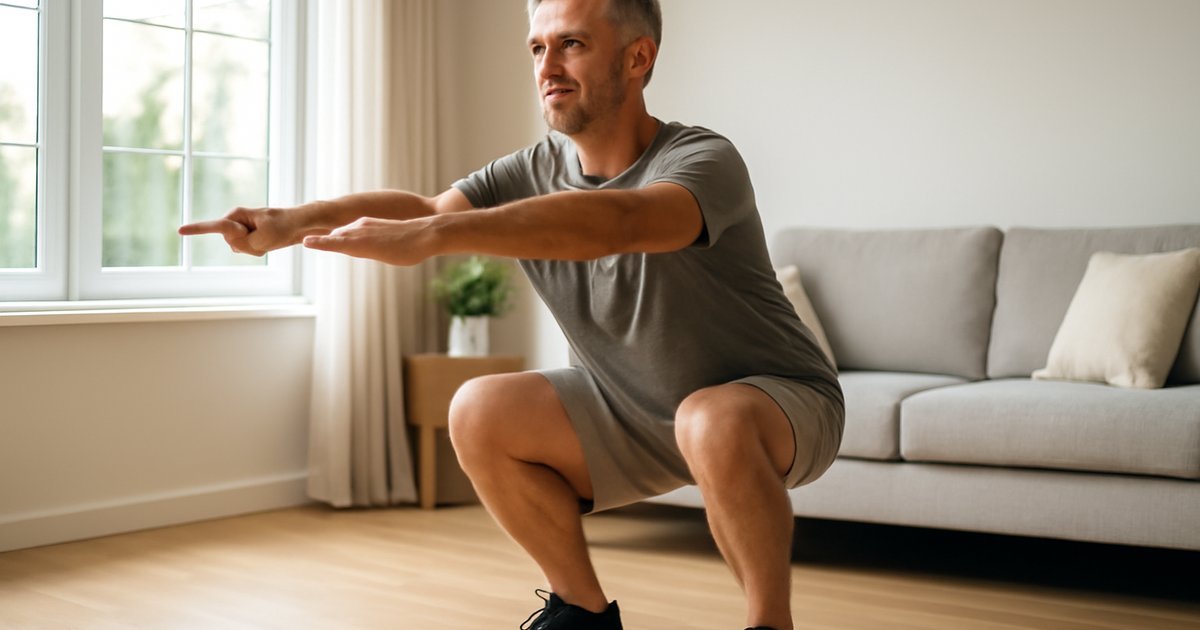
    Bodyweight training is a form of resistance exercise in which you use your own body weight — rather than external weights or machines — as the primary source of resistance. Movements like squats, push-ups, lunges, planks, and mountain climbers fall into this category.

    This type of exercise engages multiple muscle groups simultaneously, improves coordination, and can be scaled from beginner to advanced levels by adjusting leverage, tempo, and movement complexity.

    The American College of Sports Medicine (ACSM) recognizes bodyweight training as a valid and effective form of resistance exercise — the kind that the U.S. Department of Health and Human Services recommends adults perform at least two days per week.

    Despite its simplicity, bodyweight training is not just for beginners. Elite military units, professional athletes, and physical therapists use it as a cornerstone of functional fitness. For adults managing chronic conditions, recovering from injury, or just getting back into shape, it offers an entry point that is low-risk and immediately actionable.

    Research published in the Journal of Human Kinetics found that an eight-week bodyweight resistance training program produced significant improvements in muscular endurance, body composition, and cardiovascular fitness in sedentary adults — results comparable to those seen in machine-based training programs.

    Signs You May Be Ready — and Why This Matters

    You don’t need to be sick to benefit from bodyweight training. But you do need to understand what your body is telling you. Here are some signals that suggest your current activity level may be falling short:

    • You feel winded climbing two flights of stairs
    • You struggle to rise from a chair without using your arms
    • You experience frequent lower back or knee discomfort not related to injury
    • Your energy levels are consistently low by mid-afternoon
    • Your doctor has flagged pre-diabetes, early hypertension, or weight concerns
    • You’ve noticed a loss of muscle tone or increased body fat over the past few years

    These are not red flags requiring emergency care — they are warning signals that your musculoskeletal and cardiovascular systems would benefit from structured movement. The NIH reports that muscle mass naturally declines at a rate of 3 to 8 percent per decade after age 30, a condition called sarcopenia. Resistance training — including bodyweight exercise — is one of the most effective strategies for slowing this decline.

    Advanced signs that should prompt medical evaluation before starting any new exercise program include chest pain with exertion, unexplained shortness of breath at rest, severe joint pain, or recent surgery. Always consult your physician if any of these apply.

    Proven Health Benefits of Bodyweight Training

    The evidence base for bodyweight training has grown substantially over the past decade. Here is what clinical research consistently shows:

    Improved Muscle Strength and Endurance
    A meta-analysis published in the European Journal of Sport Science confirmed that progressive bodyweight resistance training produces meaningful gains in muscular strength and endurance across all adult age groups — including adults over 60.

    Better Cardiovascular Health
    Circuit-style bodyweight workouts — where exercises are performed back to back with minimal rest — elevate heart rate into aerobic training zones. The American Heart Association notes that muscle-strengthening activities contribute to cardiovascular risk reduction, particularly when combined with regular aerobic movement.

    Weight Management and Metabolic Health
    Resistance training increases resting metabolic rate (the number of calories your body burns at rest) by preserving and building lean muscle tissue. Clinical evidence indicates that even modest increases in muscle mass can improve insulin sensitivity — a key factor in preventing and managing type 2 diabetes.

    Improved Bone Density
    Weight-bearing exercises create mechanical stress on bones, stimulating the cells (osteoblasts) responsible for bone formation. According to the National Osteoporosis Foundation, resistance training is one of the most effective non-pharmacological strategies for maintaining bone density in adults over 40.

    Better Balance and Fall Prevention
    Bodyweight training frequently requires single-leg movements, stability holds, and core engagement — all of which improve proprioception (your body’s awareness of its position in space). The CDC reports that falls are the leading cause of injury-related death among adults 65 and older, making balance training a genuine life-saving priority. For more on this topic, see our guide on Resistance Band Training: A Complete Guide for Adults.

    Mental Health Benefits
    Research suggests that regular resistance exercise reduces symptoms of anxiety and depression, improves sleep quality, and supports cognitive function. A 2021 review in JAMA Psychiatry found significant associations between strength training and reduced depressive symptoms in adults.

    How to Get Started: Building Your Routine

    One of the greatest advantages of bodyweight training is that it requires no special equipment and can be done virtually anywhere — your living room, a hotel room, a park, or your backyard.

    Step 1: Start With a Movement Assessment
    Before jumping into a program, assess how your body moves. Can you perform a bodyweight squat without pain? Can you hold a plank for 20 seconds? Can you complete a single push-up? These benchmarks help you identify your starting level and avoid injury from overloading unprepared muscles or joints.

    Step 2: Choose a Frequency
    For beginners, two to three sessions per week on non-consecutive days is appropriate. This allows for adequate recovery between sessions. More advanced practitioners may train four to five days per week using split routines that target different muscle groups on different days.

    Step 3: Warm Up Every Session
    Spend five to ten minutes warming up with dynamic movement — leg swings, arm circles, marching in place, and gentle torso rotations. This increases blood flow to muscles, improves joint lubrication, and reduces injury risk. Cold muscles under load are significantly more vulnerable to strains and tears.

    Step 4: Learn the Foundational Movements
    Most bodyweight training programs are built around six fundamental movement patterns:

    • Squat pattern: Bodyweight squat, sumo squat, wall sit, split squat
    • Hip hinge pattern: Glute bridge, single-leg deadlift, hip thrust
    • Push pattern: Push-up (wall, incline, floor), dip
    • Pull pattern: Inverted row, doorframe pull, resistance band rows if available
    • Core stability: Plank, dead bug, bird dog, hollow hold
    • Locomotion: Lunges, step-ups, bear crawls

    Step 5: Apply Progressive Overload
    Progressive overload — gradually increasing the demand placed on your muscles over time — is the foundational principle behind all effective resistance training. With bodyweight training, you progress by increasing repetitions, slowing down the tempo (especially on the lowering phase), reducing rest intervals, or advancing to more challenging movement variations. A push-up done with a three-second lowering phase is significantly harder than one done quickly.

    For a complementary low-impact option to pair with your bodyweight routine, our article on Water Aerobics for Adults: Benefits, Tips & How to Start offers excellent guidance.

    Sample Beginner Bodyweight Workout

    This routine is designed for adults who are new to structured exercise or returning after a long break. Perform it two to three times per week with at least one rest day between sessions.

    Warm-Up (5-7 minutes): March in place, leg swings, arm circles, gentle torso twists

    Circuit (Repeat 2-3 rounds with 60 seconds rest between rounds):

    • Wall push-ups or incline push-ups — 10 to 15 reps
    • Bodyweight squats — 12 to 15 reps
    • Glute bridges — 12 to 15 reps
    • Standing marches (high knees) — 30 seconds
    • Plank hold — 15 to 30 seconds
    • Reverse lunges (alternating legs) — 8 to 10 reps each side
    • Bird dog — 8 reps each side

    Cool-Down (5 minutes): Gentle stretching targeting hips, hamstrings, chest, and shoulders.

    This workout takes approximately 25 to 35 minutes. As you grow stronger over several weeks, increase repetitions, add rounds, or transition to harder variations — such as regular push-ups instead of wall push-ups, or single-leg glute bridges instead of two-legged versions.

    Living With and Sticking to Bodyweight Training

    Consistency is the variable that separates results from good intentions. Clinical evidence indicates that most adults need approximately eight to twelve weeks of regular training before significant strength and fitness improvements become measurable. This is normal — and worth understanding so you don’t quit before the benefits arrive.

    Practical strategies to stay consistent:

    • Schedule workouts as calendar appointments, not open-ended intentions
    • Keep sessions to 30-40 minutes to reduce the mental barrier to starting
    • Track your progress with a simple notebook or fitness app
    • Find an accountability partner — even a virtual one
    • Pair exercise with an enjoyable podcast or playlist
    • Acknowledge every completed session as a win, regardless of performance

    This varies from person to person, but most adults report that motivation follows action — meaning the motivation to exercise often comes after you start moving, not before. Building a habit of showing up, even on days when energy is low, is more important than any single workout.

    If joint pain, fatigue, or other health factors make standard floor exercises challenging, you may find our guide on Chair Exercises for Seniors: Stay Active & Strong a helpful companion resource.

    When to Call Your Doctor: Red Flags and Checkpoints

    Bodyweight training is among the safest forms of exercise available, but there are situations that require medical attention before or during a training program.

    Seek emergency care immediately if during or after exercise you experience:

    • Chest pain, pressure, or tightness
    • Severe shortness of breath disproportionate to the exercise intensity
    • Dizziness, lightheadedness, or fainting
    • Sudden severe joint pain or a pop/snap sensation in a joint
    • Numbness or weakness in your arms or legs

    Schedule a visit with your doctor if you:

    • Have been sedentary for more than a year and are over 45
    • Have a diagnosed cardiovascular condition, type 2 diabetes, or osteoporosis
    • Are taking medications that affect heart rate or blood pressure
    • Experience persistent joint pain that doesn’t improve after a few days of rest
    • Notice unusual swelling, bruising, or skin changes in a limb after exercise

    At your next routine visit, tell your physician you’re beginning or maintaining a bodyweight training program. Most physicians will be encouraging — and knowing you exercise regularly helps them make more accurate assessments of your overall health.

    Frequently Asked Questions

    Can bodyweight training build real muscle, or do I need weights?
    Yes — research confirms that bodyweight training can stimulate meaningful muscle growth (hypertrophy) when progressive overload is applied. The key is continuously increasing the challenge over time through harder variations, slower tempos, or higher volume. That said, advanced exercisers may eventually benefit from adding external resistance to continue progressing.

    How long before I see results from bodyweight training?
    Most people notice improvements in energy, mood, and ease of movement within two to four weeks. Visible changes in muscle tone and body composition typically emerge between six and twelve weeks of consistent training. Strength gains often become measurable earlier, sometimes within the first three to four weeks, as the nervous system adapts.

    Is bodyweight training safe if I have bad knees or a bad back?
    Often, yes — but with modifications. Many bodyweight exercises can be adapted to reduce joint stress. For example, wall squats and seated leg raises place far less pressure on the knees than deep bodyweight squats. Always consult your physician or a physical therapist for personalized guidance if you have a diagnosed joint or spinal condition.

    How many days a week should I do bodyweight training?
    The U.S. Department of Health and Human Services recommends muscle-strengthening activities at least two days per week. Most adults benefit from two to four sessions weekly, with rest days between to allow muscle recovery. Overtraining without adequate rest can increase injury risk and impair progress.

    Can bodyweight training help with weight loss?
    Clinical evidence indicates that resistance training supports weight management primarily by preserving and building lean muscle mass, which increases your resting metabolic rate. Combined with a balanced, calorie-appropriate diet, bodyweight training can be an effective component of a weight management strategy — though diet quality remains the dominant factor in weight loss for most adults.

    Conclusion

    Bodyweight training is one of the most accessible, evidence-supported, and adaptable forms of exercise available to adults at any stage of life. Whether you’re 35 and looking to build foundational strength, 55 and managing early metabolic changes, or 68 and focused on maintaining independence and balance, this style of training offers something meaningful for you.

    The science is clear: consistent resistance exercise protects your muscles, bones, heart, and mind. The barrier to entry couldn’t be lower — no gym, no equipment, no commute. Just intentional movement, progressive effort, and a commitment to showing up regularly.

    Start where you are. Modify what you need to. And always loop in your healthcare provider to make sure your program aligns with your personal health history. The most effective workout is the one you actually do — and bodyweight training makes that easier than almost anything else.


    Medical Disclaimer: This article is for informational and educational purposes only. It does not constitute medical advice, diagnosis, or treatment. Always consult your physician or a qualified healthcare provider before making changes to your health routine or treatment plan.

    Medically reviewed by our editorial health team. Content follows evidence-based standards aligned with CDC and NIH guidelines.

  • Functional Fitness Training: The Complete Guide for Adults

    Functional Fitness Training: The Complete Guide for Adults

    The workout that makes real life easier — backed by science and designed for the way your body actually moves.

    Introduction

    Michael, 54, could bench press 200 pounds at the gym. But when he tried to lift a heavy box into the attic or get up quickly from the floor after playing with his grandkids, he struggled — and his back paid for it later. His strength was impressive on paper, but it wasn’t translating into his daily life.

    That’s exactly the problem that functional fitness training was designed to solve. According to the CDC, more than 36 million adults in the United States fall each year, and a significant portion of those injuries are linked to poor movement quality, weak stabilizer muscles, and a disconnect between gym performance and real-world physical demands.

    Functional fitness training focuses on movements that mirror what your body does every day — squatting, bending, pushing, pulling, twisting, and carrying. In this guide, you’ll learn what functional fitness is, why it matters for adults of all fitness levels, how to get started safely, and how to build a practical routine that supports a stronger, more independent life.

    What Is Functional Fitness Training?

    Functional fitness training is a style of exercise that trains your muscles to work together in coordinated, multi-joint movement patterns — the same patterns you use in everyday activities like climbing stairs, picking up groceries, getting out of a car, or reaching overhead.

    Unlike traditional machine-based gym exercises that isolate a single muscle group (like a leg extension or a bicep curl machine), functional training emphasizes compound movements that engage your core, challenge your balance, and replicate real-life biomechanics.

    The American College of Sports Medicine (ACSM) defines functional fitness as training designed to improve neuromuscular efficiency — meaning your nervous system and muscles communicate better, allowing for safer, more coordinated movement.

    Common functional training tools include your own bodyweight, resistance bands, dumbbells, kettlebells, medicine balls, and suspension trainers like TRX. But the real focus isn’t on the equipment — it’s on the movement quality.

    In the United States, functional fitness has become a cornerstone of physical therapy, athletic training, and senior wellness programs. The NIH recognizes it as one of the most effective training approaches for preserving physical independence in adults over 50.

    Signs You May Need Functional Fitness Training

    You don’t need to be injured or elderly to benefit from functional training. In fact, most adults would see meaningful improvements in daily life with this approach. Here are signs that your fitness routine may be missing a functional component:

    Early signs of poor functional fitness:

    • Stiffness or discomfort when getting up from a chair or the floor
    • Back pain after bending over or lifting common household items
    • Difficulty carrying groceries or luggage without straining
    • Feeling off-balance or unsteady on uneven surfaces
    • Knee or hip discomfort when walking up or down stairs
    • Fatigue after moderate physical activity that used to feel easy

    More advanced signs:

    • Frequent minor injuries from low-effort tasks
    • Chronic lower back or shoulder pain during routine movements
    • Noticeable decline in coordination or reaction time
    • Fear of falling or reluctance to perform physical tasks

    A 2023 study published in the Journal of Aging and Physical Activity found that adults who engaged in functional movement training at least twice per week showed significantly greater improvements in daily task performance than those who performed isolated strength training alone.

    Causes of Poor Functional Movement in Adults

    Poor functional movement rarely has a single cause. It’s typically the result of a combination of factors that compound over time — especially as we age.

    Sedentary lifestyle: The CDC reports that only 24% of American adults meet both the aerobic and muscle-strengthening guidelines set by the Physical Activity Guidelines for Americans. Prolonged sitting leads to tight hip flexors, weak glutes, and an overworked lower back — all of which impair functional movement.

    Muscle imbalances: Traditional gym routines that favor mirror muscles (chest, biceps, quads) while neglecting stabilizers (rotator cuff, glute medius, deep core) create imbalances that show up in daily movement as compensation patterns and injury risk.

    Age-related muscle changes: Sarcopenia — the gradual loss of muscle mass and strength that begins around age 30 and accelerates after 50 — reduces the body’s ability to generate force and maintain coordination. The NIH estimates that sarcopenia affects 10 to 25% of adults over 60.

    Neurological deconditioning: The pathways between your brain and your muscles weaken without regular use. This affects proprioception (your body’s sense of its own position in space), which is critical for balance and coordination.

    Previous injuries: Old sprains, joint surgeries, or chronic pain often lead to compensatory movement patterns that persist long after the original injury heals.

    Obesity and excess body weight: Carrying excess weight changes movement mechanics and increases joint stress, often forcing the body into inefficient movement patterns over time.

    Getting Started: What to Expect

    Before beginning any new exercise program, especially if you are managing a chronic health condition, recovering from injury, or have been sedentary for an extended period, it’s essential to consult your primary care physician or a licensed physical therapist.

    A functional fitness assessment may include:

    • Movement screening: A certified trainer or physical therapist may use tools like the Functional Movement Screen (FMS) to identify asymmetries, mobility restrictions, and compensatory patterns
    • Balance testing: Simple tests like the single-leg stance or timed up-and-go test help establish a baseline
    • Strength and mobility evaluation: Assessing your ability to perform fundamental movements like a squat, hinge, and overhead reach
    • Medical clearance: Your physician may order labs or imaging if you have cardiovascular concerns, joint pain, or other risk factors

    Most healthy adults can begin with beginner-level bodyweight movements and progress gradually. The Cleveland Clinic recommends starting with two to three sessions per week, each lasting 30 to 45 minutes, with at least 48 hours of recovery between full-body sessions.

    If you’re already active, you can likely integrate functional movements into your existing routine. If balance or joint health is a concern, our guides on Balance Training for Adults and Low-Impact Exercise for Joint Health provide excellent complementary starting points.

    Functional Fitness Exercises: A Practical Framework

    Functional training is built around seven foundational movement patterns. Every exercise you do should map to one or more of these patterns:

    1. Squat (knee-dominant)
    Mirrors sitting down and standing up. Strengthens quads, glutes, hamstrings, and core.
    Examples: Bodyweight squat, goblet squat, split squat

    2. Hinge (hip-dominant)
    Mirrors picking something up from the floor safely. Primarily targets glutes, hamstrings, and lower back.
    Examples: Romanian deadlift, kettlebell deadlift, single-leg hinge

    3. Push (horizontal and vertical)
    Mirrors pushing a door open or lifting overhead. Works chest, shoulders, and triceps.
    Examples: Push-up, dumbbell press, wall push-up (modified)

    4. Pull (horizontal and vertical)
    Mirrors pulling open a heavy door or reaching and pulling objects toward you. Works back, biceps, and rear shoulders.
    Examples: Resistance band row, dumbbell row, lat pulldown

    5. Carry (loaded locomotion)
    Mirrors carrying groceries or luggage. Engages the entire body — especially core, grip, and shoulder stability.
    Examples: Farmer’s carry, suitcase carry, overhead carry

    6. Rotate (rotational and anti-rotational)
    Mirrors twisting to look behind you, swinging, or reaching across your body. Core-dominant.
    Examples: Pallof press, woodchop, rotational medicine ball throw

    7. Gait and locomotion
    Mirrors walking, stepping, climbing, and lunging in varied directions.
    Examples: Reverse lunge, lateral step-up, step-over

    A well-designed functional fitness session typically includes movements from three to five of these categories. You don’t need to hit all seven in every workout — variety across the week is what matters.

    Research published in the journal PLOS ONE found that adults who trained all seven movement patterns regularly over 12 weeks showed statistically significant improvements in functional independence scores, grip strength, and reported quality of life compared to a control group.

    Living With Functional Fitness: Long-Term Management and Prevention

    One of the greatest strengths of functional fitness training is that it’s inherently sustainable. Because it reinforces movements you already do every day, it doesn’t feel disconnected from real life — and that makes it easier to stick with over the long term.

    Building a consistent habit:

    • Aim for 2 to 4 functional training sessions per week, depending on your recovery capacity
    • Pair functional training with cardiovascular activity — walking, swimming, or cycling — for comprehensive health benefits
    • Use daily activities as mini training opportunities: practice good hinge mechanics when picking up objects, engage your core while standing in line, take stairs deliberately and mindfully

    Progression principles: Clinical evidence from Mayo Clinic indicates that gradual, progressive overload — slowly increasing resistance, complexity, or range of motion over time — is the most effective and safest way to build functional strength. Rushing progression is one of the most common causes of injury in adults returning to exercise.

    Recovery matters: Functional training still creates muscular stress and demands proper recovery. Make sure you’re getting 7 to 9 hours of sleep, staying hydrated, and consuming adequate protein (most physicians recommend 0.7 to 1.0 grams per pound of body weight daily for active adults). For more detail on smart recovery strategies, see our guide on Exercise Recovery: How to Recover Faster and Train Smarter.

    Prevention through movement quality: Research from Johns Hopkins suggests that adults who maintain consistent functional movement training significantly reduce their risk of age-related disability, fall-related injury, and loss of independence. The investment made in movement quality in your 40s and 50s pays substantial dividends in your 60s and 70s.

    This varies from person to person: Your ideal functional training frequency, intensity, and exercise selection depends on your current fitness level, health history, and goals. Working with a certified personal trainer (look for NASM, ACE, or NSCA credentials) or a licensed physical therapist can help you build a program tailored to your needs.

    When to Call Your Doctor or Seek Emergency Care

    Functional fitness is generally very safe for most adults, but there are situations where medical guidance is essential before or during training.

    Consult your doctor before starting if you have:

    • Uncontrolled hypertension or a recent cardiac event
    • A current or recent joint injury (knee, hip, shoulder, or spine)
    • Osteoporosis or a history of stress fractures
    • Diabetes with neuropathy or balance-affecting complications
    • Any condition where physical activity is currently restricted

    Stop exercising and seek immediate care if you experience:

    • Chest pain, chest tightness, or pressure during or after exercise
    • Shortness of breath disproportionate to your exertion level
    • Sudden severe joint pain, especially with swelling or inability to bear weight
    • Dizziness, lightheadedness, or near-fainting
    • Heart palpitations (irregular or racing heartbeat)
    • Sudden or severe headache during exercise

    At your next routine appointment, mention:

    • Any persistent joint soreness lasting more than 72 hours after a session
    • Recurring lower back pain or sciatic-type symptoms
    • Gradual loss of balance or increasing unsteadiness
    • Fatigue that seems out of proportion to your activity level

    Frequently Asked Questions

    Q: Is functional fitness training appropriate for beginners?
    A: Yes — functional training is highly adaptable. Many foundational movements can be modified to any fitness level. Beginners typically start with bodyweight-only exercises and gradually add resistance as strength and coordination improve. The key is mastering movement quality before adding load.

    Q: How is functional fitness different from strength training?
    A: Traditional strength training often isolates individual muscles using machines or fixed movement planes. Functional training emphasizes multi-joint, multi-plane movements that train muscles to work together in coordination. Both have value, and many evidence-based programs combine elements of both. You can learn more in our guide to Strength Training After 50.

    Q: How quickly will I see results from functional fitness training?
    A: Most people begin to notice improvements in daily movement quality and energy within 4 to 6 weeks of consistent training. Measurable strength and balance gains are typically evident at 8 to 12 weeks. This varies from person to person based on starting fitness level, age, consistency, and nutrition.

    Q: Can I do functional fitness training if I have joint pain or arthritis?
    A: Research suggests that appropriately modified functional training can actually help reduce joint pain and stiffness associated with osteoarthritis. However, you should always consult your physician or a physical therapist before beginning if you have active joint disease. Low-impact modifications and reduced range of motion are commonly used to make functional training safe and effective for adults managing joint conditions.

    Q: Do I need special equipment for functional fitness?
    A: No. Your own bodyweight is sufficient to build a highly effective functional fitness routine, especially in the early stages. As you progress, resistance bands, dumbbells, or kettlebells can add variety and challenge. Many physical therapists and certified trainers design full functional programs requiring no equipment at all.

    Conclusion

    Functional fitness training isn’t just another fitness trend — it’s a scientifically grounded approach to exercise that prepares your body for the demands of real life. Whether you’re 35 and trying to move better, 55 and focused on preserving independence, or 68 and working to stay active on your own terms, functional training offers practical, measurable benefits.

    The movements are accessible, the progressions are clear, and the results show up not just in the gym, but in every box you lift, every staircase you climb, and every moment you move with confidence and ease.

    Start where you are. Move with intention. And always work with your healthcare provider to make sure your program is right for your individual health profile.


    Medical Disclaimer: This article is for informational and educational purposes only. It does not constitute medical advice, diagnosis, or treatment. Always consult your physician or a qualified healthcare provider before making changes to your health routine or treatment plan.

    Medically reviewed by our editorial health team. Content follows evidence-based standards aligned with CDC and NIH guidelines.