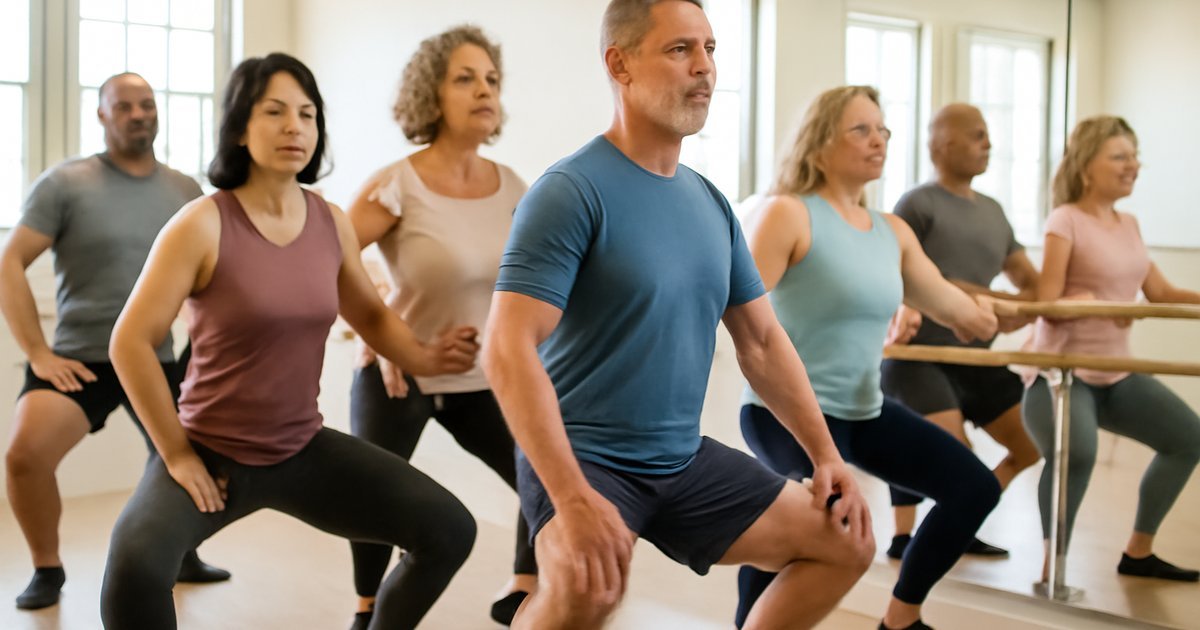
A low-impact workout rooted in ballet technique that builds strength, flexibility, and balance — without a single grand jeté required.
Introduction
Lisa, 47, had been dealing with chronic knee pain that made running feel impossible. Her physical therapist suggested something unexpected: barre class. Within eight weeks, her knee stability had improved, her posture was noticeably better, and she was standing taller than she had in years.
She is far from alone. According to the American College of Sports Medicine, low-impact group fitness modalities — including barre — have surged in popularity among adults aged 30 to 65 seeking effective alternatives to high-intensity or joint-stressing exercise. And the science behind barre workouts supports the enthusiasm.
Barre combines elements of ballet, Pilates, yoga, and functional strength training into a structured, music-driven workout. Most movements are small, controlled, and deliberate — targeting the muscles that standard gym routines often miss.
In this guide, you will learn what barre actually is, what the research says about its health benefits, how to get started safely, and what to realistically expect from your first few sessions. Whether you have never exercised consistently or you are looking for a smarter complement to your current routine, barre may be exactly what your body needs.
What Is a Barre Workout?
Barre is a fitness method inspired by classical ballet training but designed for everyday people — no dance experience required. The name comes from the ballet barre, the horizontal handrail dancers use for balance during exercises. In a barre workout, you use a wall-mounted bar, a sturdy chair, or even a countertop as your support.
The workout blends four disciplines:
- Ballet technique — small isometric movements, turnout positioning, and posture alignment
- Pilates — core engagement, breath control, and precision
- Yoga — flexibility, mindfulness, and stretching sequences
- Functional strength training — bodyweight resistance, light dumbbells, and resistance bands
A typical barre class lasts 45 to 60 minutes and moves through sections targeting the arms, core, glutes, and legs — with frequent stretching intervals in between. The movements are low-impact but surprisingly intense, relying on small pulses, isometric holds, and precise muscle engagement.
According to the National Academy of Sports Medicine (NASM), isometric exercise — where a muscle contracts without changing length — has been shown to improve muscular endurance and joint stability, two key components of functional fitness for adults over 30.
What makes barre distinctive is its focus on the smaller stabilizer muscles that larger compound exercises tend to overlook — the inner thighs, the deep core, the rotator cuff, and the glute medius (the side of your hip). These muscles are critical for posture, balance, and injury prevention.
Health Benefits of Barre for Adults
Barre is not just a trendy fitness class — there is a growing body of evidence supporting its benefits for adult health. Here is what the research and clinical experience tell us:
Builds Muscular Strength and Endurance
A 2018 study published in the Journal of Strength and Conditioning Research found that participants who completed an eight-week barre program showed significant improvements in muscular endurance, particularly in the core, glutes, and lower extremities. Research suggests that the high-repetition, low-load approach used in barre is especially effective for building endurance in postural and stabilizer muscles.
Improves Posture and Spinal Alignment
Poor posture is a leading contributor to neck pain, lower back pain, and headaches — all increasingly common among adults who spend hours sitting at desks. Barre’s constant emphasis on spinal lengthening, shoulder retraction, and core bracing trains the body to maintain better alignment throughout the day. Clinical evidence from the Cleveland Clinic indicates that strengthening the deep core muscles significantly reduces chronic low back pain episodes.
Enhances Balance and Reduces Fall Risk
The CDC reports that falls are the leading cause of injury-related death among adults 65 and older, and that one in four Americans over 65 falls each year. Balance deteriorates with age, but it can be trained. Barre’s single-leg exercises, narrow-stance movements, and proprioceptive challenges (movements that require your body to sense its position in space) directly target the neuromuscular pathways responsible for balance. This makes barre an excellent choice for adults in their 40s, 50s, and 60s as a proactive fall-prevention strategy.
Increases Flexibility
Every barre session includes meaningful stretching sequences for the hamstrings, hip flexors, calves, and chest — areas that become chronically tight with age and sedentary habits. Regular stretching improves joint range of motion and may reduce the risk of musculoskeletal injuries, according to guidelines from the American College of Sports Medicine.
Supports Mental Well-Being
Like other mind-body forms of exercise, barre requires sustained focus and concentration — leaving little mental space for rumination or stress. Research published by the NIH suggests that exercise involving coordination and deliberate movement patterns provides greater mood-boosting effects than purely aerobic activity, partly because it engages more cognitive resources. Many participants report reduced anxiety and improved body confidence after consistent barre practice.
Joint-Friendly and Low-Impact
Barre places minimal stress on the knees, hips, and ankles compared to high-impact activities like running or jumping. For adults managing osteoarthritis, recovering from a lower extremity injury, or simply trying to protect their joints as they age, barre offers a meaningful training stimulus without the wear-and-tear risk. If you are interested in other low-impact options, you may also want to explore rowing machine workouts for adults or circuit training designed for adults.
Who Is Barre Best For?
Barre is remarkably inclusive — but it is not equally ideal for everyone’s primary fitness goal. Here is a breakdown:
Barre is particularly well-suited for:
- Adults returning to exercise after a break or injury
- People managing joint pain, arthritis, or orthopedic limitations
- Those who want to complement a high-intensity routine (such as running or weight training) with restorative, precise movement
- Adults over 50 focused on balance, posture, and functional mobility
- People who prefer a structured, instructor-led class environment
- Postpartum individuals cleared by their OB-GYN for exercise (with modifications)
Barre alone may not be sufficient for:
- Individuals whose primary goal is significant cardiovascular fitness improvement (barre is generally low to moderate intensity aerobically)
- Those focused exclusively on building maximal muscle mass or heavy-load strength
This varies from person to person, and many fitness professionals recommend using barre as one component of a well-rounded weekly exercise plan rather than as a sole training method.
How to Get Started: A Practical Guide
Starting barre does not require special equipment, prior dance experience, or even a studio membership. Here is what to expect and how to set yourself up for success.
What You Need
- Footwear: Most barre classes are done barefoot or in grip socks (socks with rubberized bottoms). These are inexpensive and widely available online or at studio front desks.
- Clothing: Form-fitting athletic wear helps instructors see your alignment, but anything comfortable and non-restrictive works.
- Support: A ballet barre, the back of a sturdy chair, or a countertop serves the same purpose at home.
- Optional equipment: Light dumbbells (1 to 5 pounds), a resistance band, and a small exercise ball (playground ball) are used in many classes.
Finding the Right Class or Program
Many national studio chains — including Pure Barre, Barre3, and CorePower — offer introductory classes or beginner series. Most also offer online streaming options, which is ideal if you prefer to start at home before joining a studio. Many community recreation centers and YMCAs now offer barre classes as well, often at lower cost than boutique studios.
If you are new to exercise entirely, look for classes specifically labeled "Barre Foundations," "Barre Basics," or "Intro to Barre." These classes move more slowly and spend more time explaining proper form.
What a Typical Class Looks Like
Most barre classes follow a predictable structure, which helps you build familiarity quickly:
- Warm-up (5-8 minutes): Standing movements, shoulder rolls, spinal mobilization, light cardio to elevate heart rate
- Arms section (8-10 minutes): Light weights for tricep presses, bicep curls, overhead movements — high reps to fatigue the smaller muscles
- Core section (8-10 minutes): Planks, curl-ups, and Pilates-inspired abdominal work
- Barre section — legs and glutes (15-20 minutes): The core of the class; includes plié variations, relevés (rising onto the balls of your feet), and targeted glute work in positions like standing, kneeling, or lying flat
- Cool-down and stretch (8-10 minutes): Long-hold stretches for major muscle groups
Beginner Tips for Your First Sessions
- Arrive early and introduce yourself to the instructor. Let them know it is your first class — a good instructor will offer modifications and check in on you.
- Expect muscle fatigue in unusual places. The small, repetitive movements in barre create a "burn" in muscles you may not have felt before — this is normal and not harmful.
- Use modifications freely. Reducing your range of motion, holding the barre with two hands instead of one, or skipping a balance challenge is perfectly appropriate in the beginning.
- Be patient. Most participants begin to feel significantly more comfortable and capable after three to five sessions, as coordination and muscle memory develop.
- Consistency matters more than intensity. Research suggests that two to three barre sessions per week is sufficient to produce measurable improvements in strength and flexibility over 6 to 8 weeks.
If you enjoy structured workout plans, you might also benefit from reading about how to build a gym routine that actually sticks.
Barre and Specific Health Conditions
If you are managing a chronic health condition, barre can often be adapted safely — but always consult your physician before beginning any new exercise program.
Osteoporosis or low bone density: Barre’s weight-bearing movements (standing exercises) stimulate bone tissue, which the NIH recognizes as an important component of bone health maintenance. However, avoid deep forward flexion movements if you have been advised to limit spinal flexion.
Osteoarthritis of the hips or knees: The low-impact nature of barre makes it generally appropriate, but inform your instructor of your condition so they can recommend modifications — particularly for pliés and seated positions.
Hypertension: Barre’s moderate aerobic demand and stress-reducing qualities make it a reasonable choice. The American Heart Association recommends that adults with hypertension engage in at least 150 minutes of moderate-intensity activity per week — barre can contribute meaningfully to that goal.
Diastasis recti (abdominal separation): Common postpartum, this condition requires specific core exercise modifications. Traditional crunches and some barre curl-up variations may be contraindicated — consult a pelvic floor physical therapist for guidance.
How Often Should You Do Barre?
Most fitness professionals and barre instructors recommend the following for adult beginners:
- Weeks 1-2: One to two classes per week, allowing 48 hours of recovery between sessions
- Weeks 3-8: Two to three classes per week as your body adapts
- Ongoing: Two to four classes per week, potentially mixed with other modalities such as cardio or strength training
Because barre targets muscular endurance rather than maximal strength, you can practice it more frequently than heavy resistance training without the same recovery demands. That said, soreness is normal in the first two to three weeks, particularly in the glutes, inner thighs, and core. This varies from person to person based on prior fitness level.
When to Call Your Doctor
Barre is generally considered very safe for most adults. However, stop exercise immediately and seek medical attention if you experience:
- Chest pain, pressure, or tightness during or after a class
- Sudden shortness of breath that is disproportionate to effort
- Dizziness, fainting, or near-fainting episodes
- Sudden severe joint pain — particularly in the knees or hips — that is different from normal exercise soreness
- Heart palpitations or a racing heartbeat that does not resolve with rest
Before starting barre, talk to your doctor if you:
- Have not exercised regularly in more than six months
- Are managing a cardiovascular condition, recent surgery, or orthopedic injury
- Are pregnant (modifications exist, but physician clearance is important)
- Have severe osteoporosis or a history of stress fractures
Frequently Asked Questions
Q: Can I do barre if I have no dance background?
Absolutely. Barre classes are designed for non-dancers. The instructor cues every movement clearly, and you will not be expected to know any dance terminology or steps. Most participants have zero dance experience. The ballet barre is simply a tool for balance and support — not a performance requirement.
Q: Will barre help me lose weight?
Barre can support weight management as part of a healthy lifestyle, but it burns fewer calories than high-intensity cardio workouts. A 45-minute barre class typically burns between 200 and 350 calories, depending on intensity and individual factors. Its primary contribution to body composition is building lean muscle, which supports a healthier metabolic rate over time. Clinical evidence indicates that combining barre with moderate cardio activity produces better body composition results than either alone.
Q: Is barre safe for adults with knee problems?
For many people, yes — but this depends on the specific nature and severity of your knee condition. Barre avoids high-impact movements and excessive knee flexion when performed correctly. Inform your instructor of any knee issues before class, and always prioritize a shallower range of motion if deep pliés cause discomfort. Your orthopedist or physical therapist is the best resource for clearance and specific modifications.
Q: How long before I see results from barre?
Most adults report noticeable improvements in posture and body awareness within two to three weeks of consistent practice. Measurable strength and flexibility improvements typically emerge after six to eight weeks, consistent with findings from published barre research. Be realistic: results depend on frequency, consistency, nutrition, and your baseline fitness level.
Q: Can I do barre at home without a studio?
Yes. Dozens of reputable online platforms offer high-quality barre classes for home use. You can use the back of a sturdy chair or kitchen counter as your barre. Most beginner classes require no equipment at all, making it one of the most accessible workout formats available. For those who prefer a mix of home and gym-based fitness, you might find it helpful to read about how to build a sustainable morning exercise routine.
Conclusion
Barre is one of the most underrated fitness tools available to adults navigating the physical challenges of midlife and beyond. It demands focus, builds real strength in the muscles that matter most for long-term function, and does all of this without punishing your joints.
Whether you are 35 and looking for something new, 52 and managing an achy hip, or 67 and focused on staying independent and strong, barre offers a science-supported path forward. The most important step is simply getting started — and talking with your healthcare provider about whether it is the right fit for your specific health needs.
Progress in barre is quiet and cumulative. But over weeks and months, it shows up clearly: in how you stand, how you move, and how you feel.
Medical Disclaimer: This article is for informational and educational purposes only. It does not constitute medical advice, diagnosis, or treatment. Always consult your physician or a qualified healthcare provider before making changes to your health routine or treatment plan.
Medically reviewed by our editorial health team. Content follows evidence-based standards aligned with CDC and NIH guidelines.
Leave a Reply