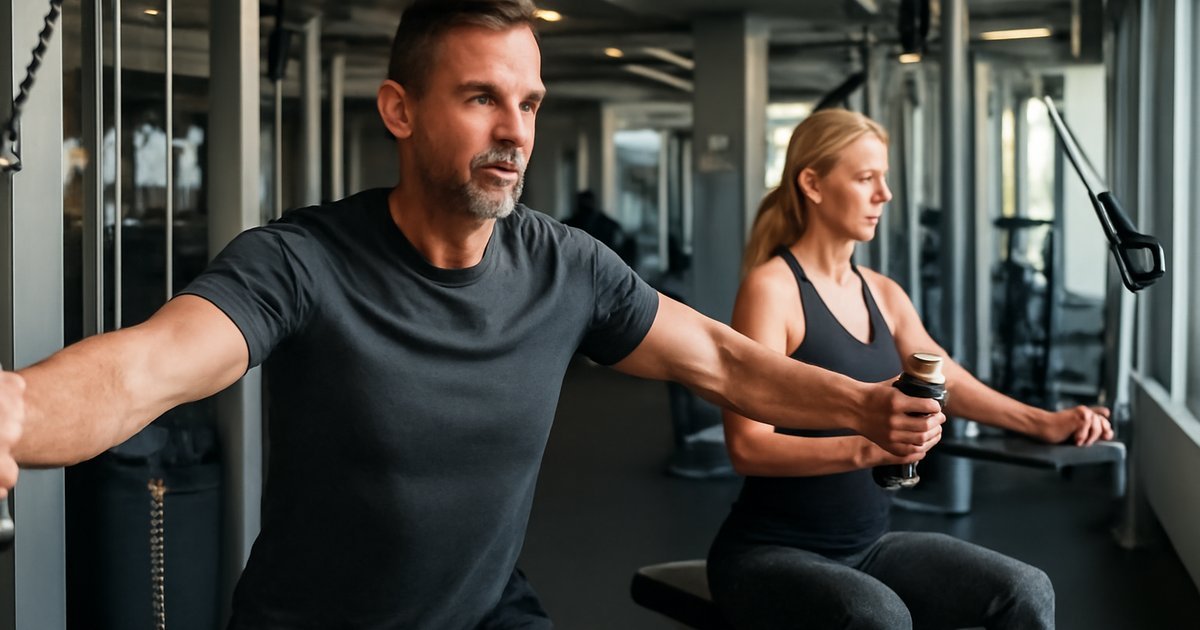
Cable Machine Workouts: Benefits & How to Start
Cable machines offer constant muscle tension through every rep — making them one of the most effective tools in any adult fitness routine.
Introduction
Mark, 47, had been lifting free weights for years with decent results — but a persistent shoulder ache kept derailing his progress. His physical therapist suggested something he hadn’t considered: cable machine training. Within three months, his shoulder pain had decreased, his posture had improved, and he was stronger than he’d been in his thirties.
Cable machines are a staple in nearly every commercial gym, yet many adults walk right past them, unsure how to use them or what they actually do. That’s a missed opportunity. According to the American College of Sports Medicine, adults who incorporate varied resistance training modalities see significantly greater long-term adherence and functional strength gains compared to those who rely on a single method.
In this guide, you’ll learn exactly what cable machine workouts are, why they’re especially effective for adults aged 30 to 70, how to get started safely, and which exercises deliver the most health value. Whether you’re managing joint sensitivity, working on injury prevention, or simply looking for a smarter way to build strength, cable training may be the missing piece in your fitness routine.
What Are Cable Machine Workouts?
A cable machine — also called a cable pulley system — is a piece of gym equipment that uses a weight stack connected to a cable running through an adjustable pulley. Unlike dumbbells or barbells, cable machines provide constant resistance throughout the full range of motion, meaning your muscles stay under tension even when the movement reaches its endpoint.
Most cable machines allow you to adjust the pulley height from low (near the floor) to high (above your head) and everything in between. You can attach a variety of handles, ropes, bars, or ankle cuffs to customize the exercise for virtually any muscle group.
This versatility is one reason cable machines appear in physical therapy clinics, athletic training centers, and standard gyms alike. The adjustable angles allow users to replicate natural movement patterns — pulling, pushing, rotating — in ways that free weights sometimes cannot.
According to the NIH National Library of Medicine, resistance training with consistent tension — a hallmark of cable training — activates muscles more uniformly across the entire movement arc compared to gravity-dependent free-weight exercises. For adults managing joint issues, this can translate to a more controlled, lower-impact workout experience.
Health Benefits of Cable Machine Training for Adults
Cable machines aren’t just convenient — research suggests they offer specific physiological advantages that are especially meaningful for adults in the 30-to-70 age range.
Builds Functional Strength
Functional strength refers to the kind of power your body uses in everyday life — lifting grocery bags, reaching overhead, twisting to look behind you. Cable machines train muscles through multi-planar movements that mimic real-world activities far more closely than machine exercises locked into a single plane.
Clinical evidence from the Journal of Strength and Conditioning Research indicates that cable-based exercises activate stabilizer muscles — the smaller, deep muscles that support joints and posture — at higher rates than comparable Smith machine exercises.
Supports Joint Health and Injury Prevention
One of the most frequently cited benefits among physical therapists is that cable machines allow controlled, low-impact loading. Because resistance is applied through a cable rather than gravity alone, the force on your joints can be more precisely managed. This is particularly relevant for adults with early-stage arthritis, rotator cuff sensitivity, or knee discomfort.
The Arthritis Foundation notes that resistance training with controlled, adjustable loads helps preserve joint cartilage integrity and strengthens the surrounding muscles that protect those joints.
Improves Muscle Coordination and Balance
Because cable training requires you to stabilize your body against directional resistance — rather than simply pushing up against gravity — it demands greater neuromuscular coordination. Over time, this translates to better balance, more refined movement patterns, and a reduced risk of falls.
The CDC reports that falls are the leading cause of injury among adults over 65, responsible for more than 36 million fall incidents annually in the United States. Resistance training that emphasizes balance and coordination, such as cable work, is one of the most evidence-supported strategies for fall prevention.
Promotes Lean Muscle Maintenance
Adults naturally lose three to five percent of muscle mass per decade after age 30, a process called sarcopenia. Cable training, like other forms of progressive resistance exercise, directly counters this decline. Clinical evidence from the NIH suggests that adults who engage in two or more sessions of resistance training per week preserve significantly more lean muscle mass than sedentary peers.
Who Should Consider Cable Machine Training
Cable machines are suitable for a wide range of adults, but they may be especially beneficial if you:
- Are returning to exercise after an injury or surgery and need low-impact options
- Experience joint sensitivity in the shoulders, knees, or hips
- Want to improve posture and reduce back pain
- Are over 50 and prioritizing functional movement over pure muscle bulk
- Feel intimidated by free weights and want a more guided resistance experience
- Are looking to add variety to an existing strength training routine
This varies from person to person. If you have a pre-existing orthopedic condition or have been cleared for exercise following a cardiac event, speak with your physician or a certified personal trainer before beginning any new resistance training program.
Getting Started: What to Know Before Your First Cable Workout
The learning curve with cable machines is gentler than many people expect. Here’s what to keep in mind as you begin.
Start With a Light Weight Stack
Because cable machines provide constant tension, muscles fatigue differently than they do with free weights. Most first-time users are surprised by how challenging even a modest weight feels. Starting lighter than you think you need is the right approach — it allows you to focus on proper form before adding load.
Learn the Pulley Adjustment System
The pulley height dictates which movement pattern you’re training. In general:
- High pulley: Exercises like lat pulldowns, face pulls, triceps pushdowns
- Mid pulley: Chest flyes, rows, rotational core exercises
- Low pulley: Bicep curls, upright rows, glute kickbacks, squats
Most gyms have a functional trainer — a dual-cable machine with two adjustable pulleys facing each other — which offers the greatest versatility. Single-stack cable machines work just as well for most exercises.
Master Your Stance and Core Engagement
Because cable machines pull in a specific direction, your stance matters more than it does with machine equipment. Keep your feet hip-width apart, engage your core before every rep, and avoid letting the cable pull you off balance. Maintaining a neutral spine is critical, especially when pulling from low or high angles.
Work With a Trainer for Your First Session
Most physicians and physical therapists recommend at least one guided session with a certified personal trainer when learning cable exercises. The American College of Sports Medicine certification (ACSM-CPT) or the National Academy of Sports Medicine (NASM-CPT) credential are solid markers of qualified instruction.
Essential Cable Machine Exercises for Adults
Below are eight foundational cable exercises recommended for adults across a range of fitness levels. These movements target major muscle groups and support the functional strength, posture, and stability goals most relevant to this age group.
1. Cable Chest Fly (Mid Pulley)
Stand between two cable stations with pulleys at chest height. Hold a handle in each hand, step slightly forward, and bring your hands together in an arc in front of your chest. This movement isolates the pectoral muscles while keeping shoulder stress low compared to barbell pressing movements.
2. Cable Lat Pulldown (High Pulley)
Attach a wide bar or rope to a high pulley. Sit or kneel and pull the bar toward your upper chest while keeping your elbows pointed downward. This targets the latissimus dorsi — the large back muscles essential for posture and shoulder stability.
3. Seated Cable Row (Low Pulley)
Using a low pulley with a V-bar or rope handle, sit upright and pull the handle toward your lower ribcage. This exercise strengthens the mid-back, rhomboids, and rear deltoids — muscles that directly counteract the forward-hunching posture many desk workers develop.
4. Cable Face Pull (High Pulley)
Attach a rope to a high pulley at eye level. Pull the rope toward your face, separating the ends as you pull. This movement targets the rear deltoids and external rotators of the shoulder — among the most important muscles for rotator cuff health and injury prevention.
Many physical therapists include face pulls as a therapeutic exercise for adults with shoulder impingement or rotator cuff issues.
5. Cable Bicep Curl (Low Pulley)
Stand facing a low pulley with a straight or EZ-curl bar. Curl the handle upward, keeping your elbows stationary at your sides. The constant cable tension provides greater muscle activation throughout the curl compared to traditional dumbbell curls, research suggests.
6. Cable Triceps Pushdown (High Pulley)
Attach a rope or straight bar to a high pulley. Stand upright and push the handle downward by extending your elbows. Keep your elbows at your sides throughout the movement. This is one of the most effective isolation exercises for the triceps and is easy to load progressively.
7. Cable Woodchop (High to Low or Low to High)
Attach a single handle to a high or low pulley. Stand sideways to the machine and rotate your torso, pulling the cable diagonally across your body. This exercise trains rotational core strength — the kind of power needed for everyday twisting movements like getting in and out of a car or reaching across your body.
A 2022 study published in the Journal of Human Kinetics found that rotational cable exercises produced significantly greater oblique muscle activation than traditional floor-based core exercises.
8. Cable Glute Kickback (Low Pulley)
Attach an ankle cuff to a low pulley. Stand facing the machine, hold the frame for balance, and kick your leg backward in a controlled arc. This isolates the gluteus maximus — the largest muscle in the body and a key stabilizer for the lower back, hips, and knees.
Sample Beginner Cable Machine Workout
This three-day-per-week program is designed for adults who are new to cable training or returning after a break. Perform each session with at least one rest day between sessions.
Day A — Upper Body Focus
- Cable Lat Pulldown — 3 sets x 12 reps
- Seated Cable Row — 3 sets x 12 reps
- Cable Chest Fly — 3 sets x 12 reps
- Cable Face Pull — 3 sets x 15 reps
- Cable Triceps Pushdown — 3 sets x 12 reps
Day B — Lower Body and Core Focus
- Cable Glute Kickback — 3 sets x 12 reps each leg
- Cable Woodchop (High to Low) — 3 sets x 12 reps each side
- Cable Bicep Curl — 3 sets x 12 reps
- Cable Pull-Through (Low Pulley, Hip Hinge) — 3 sets x 12 reps
Rest 60 to 90 seconds between sets. As the exercises feel manageable, increase the weight by the smallest increment available on the stack — typically five pounds.
For complementary training ideas, consider reading about dumbbell training for adults or exploring resistance band training as an accessible alternative when cable machines are unavailable.
Cable Training vs. Free Weights: Which Is Better?
This is a question many adults ask when designing their fitness routine. The honest answer is that most physicians and exercise scientists recommend a combination of both, rather than choosing one exclusively.
Cable machines excel at:
- Providing constant, consistent muscle tension
- Allowing a greater variety of movement angles
- Reducing injury risk for those with joint sensitivity
- Training stabilizer muscles alongside primary movers
Free weights excel at:
- Building raw, compound strength through multi-joint movements
- Improving grip strength and wrist stability
- Greater transferability to real-world lifting tasks
- Accessibility for home gym setups
Clinical evidence from Mayo Clinic suggests that a mixed-modality resistance training program — combining cables, free weights, and bodyweight exercises — produces the best overall outcomes for muscular strength, balance, and injury prevention in adults over 40.
If you’re already incorporating strength training after 50, adding cable exercises can meaningfully enhance your results without dramatically increasing injury risk.
Safety Guidelines and When to See a Doctor
Cable machine training is generally considered safe for most healthy adults. However, there are important safety practices and red flags to keep in mind.
Standard Safety Practices
- Always inspect the cable and attachment point before each use
- Never let the weight stack slam down — control the return phase of every rep
- Keep your lower back neutral during all pulling and pushing movements
- Stop immediately if you feel sharp, shooting, or joint pain — not to be confused with normal muscle fatigue
- Warm up with five to ten minutes of light cardio before beginning
When to Call Your Doctor Before Starting
Seek medical clearance before beginning a cable training program if you:
- Have been diagnosed with a heart condition or have cardiovascular risk factors
- Are recovering from orthopedic surgery within the past six months
- Experience chest pain, dizziness, or shortness of breath during light exertion
- Have uncontrolled hypertension (high blood pressure)
- Are pregnant or in the early postpartum period
Emergency Signs — Stop and Seek Immediate Care If:
- You feel chest pain or tightness during or immediately after exercise
- You experience sudden, severe joint pain with swelling or instability
- You feel numbness, tingling, or weakness radiating down an arm or leg
- You feel dizzy, faint, or nauseous and the feeling does not resolve with rest
The American Heart Association recommends that all adults over 40 who are beginning a new moderate-to-vigorous exercise program discuss their readiness with a physician, particularly if they have been sedentary for an extended period.
Frequently Asked Questions
How many days per week should I do cable machine workouts?
Most physicians and exercise scientists recommend two to three days per week of resistance training for adults, with at least 48 hours of recovery between sessions targeting the same muscle groups. Cable training fits naturally into this framework, either as a standalone routine or combined with other forms of exercise.
Can I use a cable machine if I have lower back pain?
Research suggests that properly performed cable exercises — particularly rows, face pulls, and cable woodchops with controlled loads — can actually strengthen the muscles that support the spine and reduce chronic low back pain over time. However, you should consult your physician or physical therapist before beginning if you have an active or recently diagnosed back condition.
Are cable machines safe for older adults over 60?
Yes — in fact, cable machines are often recommended by physical therapists for older adults precisely because the resistance is adjustable, the range of motion can be controlled, and the risk of dropping a weight is eliminated. Adults over 60 should begin with very light resistance, prioritize form, and consider working with a certified trainer initially.
Can I lose weight with cable machine training alone?
Cable training builds lean muscle, and lean muscle increases your resting metabolic rate — the number of calories your body burns at rest. Clinical evidence indicates that resistance training contributes meaningfully to weight management. However, most clinical guidelines recommend combining resistance training with regular cardiovascular exercise and a balanced diet for sustainable weight loss outcomes.
Do I need to go to a gym, or can I use cable machines at home?
Most full cable machine setups require a gym membership. However, compact home cable pulley systems and cable attachments compatible with standard door frames are commercially available. Resistance bands can simulate cable tension for many exercises and are a practical home alternative. For a full comparison, speak with a certified personal trainer about what setup fits your goals and budget.
Conclusion
Cable machine workouts offer a versatile, joint-friendly, and scientifically supported path to building strength, improving posture, and maintaining muscle mass as you age. Whether you’re 35 and looking to enhance your gym routine or 65 and focused on fall prevention and functional independence, cable training adapts to your level and goals in ways that few other modalities can match.
The key is to start conservatively, focus on form before load, and give your body time to adapt. Small, consistent efforts with cable machines compound into meaningful health outcomes over months and years — not just stronger muscles, but better balance, less joint pain, and greater confidence in your body’s ability to move through everyday life.
As always, your best first step is a conversation with your doctor or a qualified fitness professional. They can help you identify which exercises align with your current health status, any conditions you’re managing, and the goals that matter most to you.
Medical Disclaimer: This article is for informational and educational purposes only. It does not constitute medical advice, diagnosis, or treatment. Always consult your physician or a qualified healthcare provider before making changes to your health routine or treatment plan.
Medically reviewed by our editorial health team. Content follows evidence-based standards aligned with CDC and NIH guidelines.
Leave a Reply