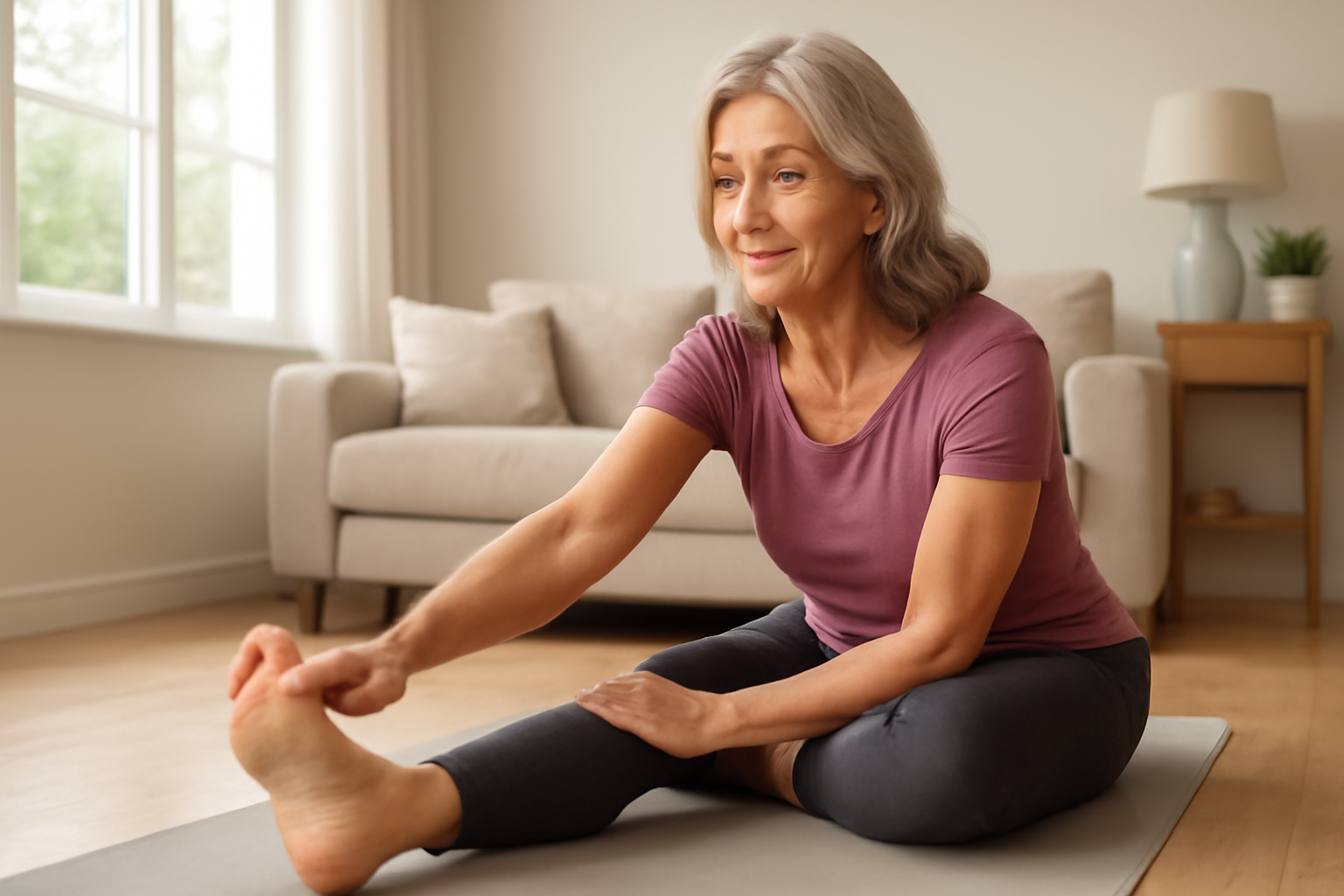
Most adults lose up to 50% of their flexibility between ages 30 and 70 — but the right stretching routine can turn that around at any age.
Michael, 54, had lived with tight hamstrings and a stiff lower back for so long he assumed it was just part of getting older. After his annual physical, his doctor recommended adding a daily flexibility routine to his exercise plan. Within eight weeks, Michael was sleeping better, moving with less discomfort, and had shaved 20 seconds off his morning routine just by being able to tie his shoes without straining.
Flexibility training is one of the most overlooked pillars of physical fitness — and one of the most impactful for long-term health. According to the American College of Sports Medicine, fewer than 30% of American adults perform any regular stretching, yet clinical evidence links poor flexibility to increased injury risk, chronic pain, reduced balance, and even cardiovascular strain.
In this complete guide, you’ll learn what flexibility training actually is, why it matters more as you age, which stretching methods work best, how to build a safe routine, and when to talk to your doctor. Whether you’re brand new to exercise or returning after a long break, this guide is designed to meet you exactly where you are.
What Is Flexibility Training?
Flexibility refers to the ability of your joints and muscles to move through their full range of motion (ROM). Flexibility training — sometimes called stretching or mobility work — is any structured practice designed to lengthen muscles, improve joint movement, and reduce muscular tension.
There are four primary types of flexibility training recognized by sports medicine professionals:
- Static stretching: Holding a stretch in a fixed position for 15 to 60 seconds. This is the most familiar type and is best performed after a workout or as a standalone session.
- Dynamic stretching: Controlled, repetitive movements that gently take joints through their range of motion. Ideal as a warm-up before exercise.
- PNF stretching (Proprioceptive Neuromuscular Facilitation): A technique involving alternating muscle contraction and relaxation, often done with a partner or therapist. Research suggests this is the most effective method for increasing ROM rapidly.
- Myofascial release: Using tools like foam rollers to reduce tension in the connective tissue surrounding muscles. Commonly used by physical therapists and personal trainers.
According to the National Institutes of Health, flexibility declines significantly after age 30 due to changes in muscle fiber composition, reduced collagen elasticity, and decreased physical activity. In the United States, this decline contributes to roughly 8.6 million musculoskeletal injuries annually, many of which involve strain and sprain in preventable scenarios.
Flexibility is not the same as being able to do the splits. It simply means your body can move the way it was designed to — without pain, compensation, or restriction.
Signs You May Have Poor Flexibility
Poor flexibility often develops gradually, which is why many people don’t recognize it until a significant problem arises. Here are common signs that your flexibility may need attention:
Early signs:
- Stiffness in the morning that takes more than 20 minutes to ease
- Difficulty bending over to pick things up from the floor
- Tightness in the hips, hamstrings, or shoulders during everyday tasks
- Noticeable muscle soreness after mild activity
- Reduced stride length when walking
Advanced signs that warrant medical evaluation:
- Joint pain that does not improve with gentle movement
- Muscle spasms that occur regularly or without clear cause
- Limited range of motion that interferes with daily tasks like dressing or driving
- Recurring injuries to the same muscles or joints
- Balance problems or frequent tripping
A 2023 meta-analysis published in the Journal of Aging and Physical Activity found that adults over 50 with clinically low hip flexor flexibility were 2.4 times more likely to experience a fall-related injury compared to those with average ROM. This highlights that flexibility is not a cosmetic concern — it’s a meaningful safety issue.
Causes and Risk Factors for Reduced Flexibility
Reduced flexibility is rarely the result of just one thing. It’s typically a combination of biological changes and lifestyle habits that compound over time.
Biological and age-related factors:
- Collagen changes: As you age, collagen — the protein that gives connective tissue its elasticity — becomes stiffer and less resilient, limiting joint mobility.
- Muscle fiber shifts: The ratio of slow-twitch to fast-twitch fibers changes with age, affecting how muscles respond to lengthening.
- Hormonal shifts: Estrogen and testosterone both play roles in muscle and connective tissue health. Declines during perimenopause or andropause can accelerate stiffness.
- Inflammatory conditions: Arthritis, fibromyalgia, and other inflammatory conditions directly reduce ROM and make stretching more challenging.
Lifestyle and environmental factors:
- Prolonged sitting: The CDC reports that American adults sit an average of 6.5 hours per day. Sustained sitting tightens the hip flexors, hamstrings, and thoracic spine.
- Inadequate hydration: Muscles and fascia (connective tissue) require proper hydration to maintain pliability.
- Skipping warm-ups and cool-downs: Exercising without properly preparing or recovering the body accelerates muscular tightness over time.
- High-stress lifestyle: Chronic psychological stress causes elevated cortisol levels, which can increase muscular tension and inflammation.
- Previous injuries: Scar tissue from old injuries frequently limits mobility in the surrounding area.
Individual variation is real here: some people naturally have greater joint laxity (looseness), while others are hypomobile from birth. This is why a cookie-cutter stretching program doesn’t work for everyone.
Diagnosis: What to Expect From a Flexibility Assessment
Most adults don’t visit a doctor specifically for poor flexibility — it’s often identified during a physical exam, sports medicine evaluation, or physical therapy intake. However, if stiffness is significantly impacting your daily life or exercise ability, a formal assessment is valuable.
Common flexibility assessments include:
- Sit-and-reach test: Measures hamstring and lower back flexibility. It’s frequently used in clinical settings and fitness assessments.
- Thomas test: A physical therapy evaluation for hip flexor tightness, often used to identify contributors to lower back pain.
- Shoulder mobility test: Checks the ability to reach across the upper back — a key indicator of shoulder joint health.
- Goniometry: A clinical tool where a goniometer (a hinged device) measures the precise angle of joint movement. Used by physical therapists and orthopedic specialists.
If your physician suspects an underlying cause of inflexibility — such as osteoarthritis, ankylosing spondylitis, or a rotator cuff injury — they may order imaging (X-rays or MRI) to get a clearer picture.
Mayo Clinic recommends that adults who experience persistent stiffness lasting more than six weeks, or stiffness accompanied by joint swelling, warmth, or redness, seek medical evaluation rather than assuming it’s normal aging.
Treatment and Training Options: What the Evidence Says
The good news is that flexibility can be improved at virtually any age with consistent, appropriate training. Most physicians and physical therapists recommend a multi-modal approach — combining different stretching methods and addressing lifestyle factors simultaneously.
Static Stretching
Static stretching remains the most widely studied and recommended method for improving overall flexibility in adults. Clinical guidelines from the American College of Sports Medicine suggest holding each stretch for 15 to 60 seconds and repeating two to four times per muscle group, at least two to three days per week.
Research published in the Physical Therapy Journal found that a consistent static stretching program of just 10 minutes per day produced measurable gains in hamstring flexibility within four weeks in adults aged 40 to 65.
Dynamic Stretching
Dynamic stretching — such as leg swings, arm circles, and hip circles — is most effective when used as a warm-up before cardio or strength training. It increases blood flow, activates the nervous system, and prepares joints for load without the risk of over-lengthening cold muscles.
If you’re looking to build a heart-healthy fitness routine, Cardio Exercise for Heart Health: The Complete Guide offers an evidence-based starting point that pairs well with a flexibility warm-up protocol.
PNF Stretching
PNF techniques produce the fastest gains in ROM, according to a systematic review by the Cleveland Clinic. They work by temporarily inhibiting the muscle’s stretch reflex, allowing the tissue to lengthen more than it would through passive stretching alone. This method is commonly used in physical therapy for post-injury rehabilitation.
Yoga and Pilates
Both yoga and Pilates incorporate flexibility work as a core component. A 2024 NIH-funded study found that adults over 50 who practiced yoga two to three times per week showed significant improvements in spinal flexibility, balance, and self-reported pain scores over 12 weeks. These practices also support the mind-body connection, which research suggests reduces cortisol-related muscular tension.
Foam Rolling and Myofascial Release
Clinical evidence indicates that foam rolling before stretching can enhance the effectiveness of your stretching session by reducing myofascial restriction. Most physical therapists recommend rolling slowly over tight areas for 30 to 90 seconds per site before performing static stretches.
Conventional Medical Treatments
For flexibility issues tied to underlying conditions — such as arthritis, fibromyalgia, or post-surgical stiffness — medical treatments may include:
- Physical therapy with a licensed therapist
- Anti-inflammatory medications as prescribed by your physician
- Corticosteroid injections for joint inflammation in severe cases
- Occupational therapy to adapt daily tasks during recovery
Always consult your doctor before beginning a new exercise program, particularly if you have a diagnosed musculoskeletal or inflammatory condition.
Building a Daily Flexibility Routine: Practical Guidance
You don’t need a gym, special equipment, or hours of free time to meaningfully improve your flexibility. The key is consistency over intensity — doing a little every day is far more effective than one long session per week.
Sample beginner flexibility routine (10-15 minutes daily):
- Seated hamstring stretch: Sit on the floor with legs extended, reach toward your toes, hold 30 seconds each leg
- Hip flexor lunge stretch: From a kneeling lunge position, shift forward gently to stretch the front of the hip, 30 seconds per side
- Cat-cow spinal stretch: On hands and knees, alternate between arching and rounding the spine, 10 slow repetitions
- Doorway chest opener: Place forearms on a door frame, lean forward gently to stretch the chest and shoulders, 30 seconds
- Seated piriformis stretch: Cross one ankle over the opposite knee while seated, gently press the raised knee down, 30 seconds per side
Practical tips for success:
- Stretch after a warm shower when muscles are already warmed and more pliable
- Never stretch to the point of sharp or stabbing pain — mild tension is the goal
- Breathe steadily throughout; never hold your breath during a stretch
- Track your progress by noting how far you can reach or how long you can hold comfortably — improvement motivates continued effort
- If you also strength train, consider pairing your flexibility work with your existing program. Strength Training After 50: The Complete Guide covers how to safely combine modalities for maximum benefit.
Prevention strategies: Regular flexibility work is one of the most evidence-backed strategies for fall prevention in older adults. The CDC’s STEADI (Stopping Elderly Accidents, Deaths, and Injuries) program specifically identifies hip and ankle flexibility as modifiable risk factors for falls among adults over 65.
When to Call Your Doctor or Seek Emergency Care
Stretching is generally very safe, but certain symptoms should prompt you to seek medical attention promptly.
Call your doctor if you experience:
- Persistent joint stiffness lasting longer than six weeks despite regular stretching
- Stiffness that is worse in the morning and improves throughout the day (this pattern can indicate inflammatory arthritis)
- New or worsening numbness or tingling in the arms or legs during stretching
- Visible joint swelling alongside reduced range of motion
- Muscle weakness that appears alongside tightness
Seek emergency care immediately if:
- You experience a sudden, severe muscle tear or hear a "pop" during stretching
- You have significant swelling, bruising, or inability to bear weight after a stretch-related injury
- You develop sudden chest pain, dizziness, or shortness of breath during exercise
When preparing for your next doctor’s visit, bring notes about which areas feel tightest, how long stiffness lasts, and whether it interferes with specific daily activities. This helps your physician determine whether a referral to physical therapy or a musculoskeletal specialist is appropriate.
Frequently Asked Questions
How long does it take to improve flexibility in adults?
Most clinical evidence suggests that noticeable improvements in range of motion can occur within four to eight weeks of consistent stretching — typically two to five sessions per week. Individual results vary based on age, starting flexibility level, and the specific muscles being targeted. Progress may be slower in older adults or those with inflammatory conditions, but improvement is still achievable.
Is it safe to stretch every day?
For most adults, daily stretching is not only safe but beneficial. Static stretching performed with proper form and moderate intensity poses minimal injury risk. The key is not overstretching — you should feel tension, not pain. Individuals with specific injuries or conditions should consult a physical therapist before beginning daily routines.
Does flexibility training help with lower back pain?
Research suggests yes, in many cases. Clinical evidence from Johns Hopkins Medicine indicates that stretching the hamstrings, hip flexors, and piriformis muscles can meaningfully reduce tension on the lumbar spine, which is a common contributor to lower back pain. However, back pain has many causes, and stretching is a complement to — not a replacement for — medical evaluation and treatment.
Can I improve flexibility if I have arthritis?
Yes. The Arthritis Foundation and the American College of Rheumatology both recommend gentle range-of-motion exercises and stretching for people with osteoarthritis and rheumatoid arthritis. These activities help maintain joint function and reduce stiffness. The intensity and type of stretching may need to be modified — your physician or physical therapist can provide personalized guidance.
Should I stretch before or after exercise?
Current clinical guidance recommends dynamic stretching before exercise (to warm up muscles and joints) and static stretching after exercise (when muscles are warm and most receptive to lengthening). Performing intense static stretching before exercise on cold muscles has been shown in some studies to temporarily reduce muscle strength output, so sequencing matters.
Moving Forward With More Freedom
Flexibility training isn’t about achieving gymnast-level splits or impressing anyone at the gym. It’s about preserving your ability to move confidently, reduce pain, prevent injury, and maintain independence as you age — and the evidence strongly supports its value at every stage of adult life.
Starting with just 10 minutes a day is enough to begin making a meaningful difference. The muscles and joints respond to consistent, gentle encouragement — and so does your overall sense of physical well-being.
As with any fitness change, the most important first step is talking to your doctor or a licensed physical therapist, especially if you have a chronic condition, recent injury, or haven’t been active in a while. With proper guidance, flexibility training can be one of the safest and most rewarding investments you make in your long-term health.
Medical Disclaimer: This article is for informational and educational purposes only. It does not constitute medical advice, diagnosis, or treatment. Always consult your physician or a qualified healthcare provider before making changes to your health routine or treatment plan.
Medically reviewed by our editorial health team. Content follows evidence-based standards aligned with CDC and NIH guidelines.