
Tag: strength training

  • Strength Training for Adults: Benefits, How to Start & Tips

    Strength Training for Adults: Benefits, How to Start & Tips

    Building muscle isn’t just about aesthetics — it’s one of the most powerful things you can do for your long-term health, metabolic function, and independence as you age.

    Why Strength Training Deserves a Spot in Your Weekly Routine

    Consider Michael, a 47-year-old accountant who spent most of his adult life doing cardio — running, biking, the occasional spin class. He felt reasonably fit, but his doctor flagged something unexpected at his annual checkup: he was losing muscle mass at a rate typical of someone sedentary, and his blood sugar levels were creeping upward.

    His physician’s recommendation? Start lifting weights.

    Michael’s story isn’t unusual. According to the CDC, adults lose between 3% and 8% of their muscle mass per decade after age 30 — a process called sarcopenia — and that rate accelerates after 60. This loss doesn’t just affect how you look. It affects your metabolism, your blood sugar regulation, your bone density, your balance, and your risk of falls and chronic disease.

    In this guide, you’ll learn exactly what strength training is, what the science says about its benefits, how to get started safely regardless of your fitness level, and what to watch for if you’re managing a health condition. Whether you’re 32 or 68, this information is designed to help you make confident, doctor-friendly decisions about adding resistance exercise to your life.

    What Is Strength Training?

    Strength training — also called resistance training or weight training — is any form of exercise that causes your muscles to contract against an external resistance. That resistance can come from free weights (dumbbells, barbells), machines, resistance bands, your own body weight, or even everyday objects.

    The goal is to progressively challenge your muscles so they adapt, grow stronger, and become more metabolically active over time. This process is called progressive overload, and it’s the foundational principle behind virtually every effective strength program.

    The American College of Sports Medicine (ACSM) recommends that adults perform strength training exercises for all major muscle groups at least two days per week. Yet according to the CDC, only about 24% of American adults meet this guideline — meaning the vast majority are missing out on significant health benefits.

    Strength training is not the same as bodybuilding. You don’t need to lift heavy weights, look a certain way, or spend hours in a gym. Even moderate resistance exercise — done consistently — produces meaningful improvements in health outcomes across virtually every major body system.

    Health Benefits of Strength Training: What the Research Shows

    The evidence base for strength training is remarkably robust. Here’s what clinical research consistently finds:

    Metabolic and Blood Sugar Control

    Skeletal muscle is the largest site of glucose disposal in the body. When you build more muscle, your body becomes better at clearing sugar from your bloodstream. A meta-analysis published in the journal Diabetes Care found that resistance training significantly reduces HbA1c (a marker of long-term blood sugar) in people with type 2 diabetes — comparable in some cases to the effects of aerobic exercise.

    For adults at risk of diabetes or metabolic syndrome, this is particularly meaningful. More muscle means a more efficient metabolic engine — even at rest.

    Bone Density and Fracture Prevention

    Bone responds to mechanical stress by becoming denser. Weight-bearing and resistance exercises stimulate bone-forming cells called osteoblasts. The NIH reports that resistance training is one of the most effective non-pharmacological strategies for preventing osteoporosis, particularly in postmenopausal women and older men.

    Research from the Journal of Bone and Mineral Research found that progressive resistance training can increase bone mineral density by 1% to 3% per year in older adults — a meaningful gain when the alternative is gradual loss.

    If you want to dive deeper into this topic, our article on Foam Rolling Benefits: Self-Myofascial Release Guide also covers how complementary recovery practices support your musculoskeletal health.

    Cardiovascular Health

    Strength training isn’t just for muscles. A 2023 review in the British Journal of Sports Medicine found that resistance training performed two or more times per week was associated with a 17% reduction in cardiovascular disease risk, independent of aerobic exercise. It also helps reduce resting blood pressure and improves cholesterol profiles in many individuals.

    Mental Health and Cognitive Function

    A landmark meta-analysis published in JAMA Psychiatry found that resistance training significantly reduced symptoms of depression in adults, with greater benefits seen at moderate-to-high intensity. Strength training also appears to reduce anxiety, improve sleep quality, and is associated with better executive function and memory in older adults.

    Weight Management

    While cardio burns more calories during exercise, strength training raises your resting metabolic rate — the number of calories you burn at rest — by increasing lean muscle mass. Research suggests that each pound of muscle burns roughly 6 calories per day at rest, compared to 2 calories for fat tissue. Over time, this metabolic advantage adds up significantly.

    Signs You May Especially Benefit from Strength Training

    Not everyone comes to strength training for the same reason. Here are common signs that your body may be particularly primed to respond:

    • Unexplained weight gain or difficulty losing weight — especially around the midsection, which may signal metabolic slowdown from muscle loss
    • Fatigue with everyday activities — climbing stairs, carrying groceries, or getting up from a chair feeling harder than it used to
    • Joint pain or stiffness — strengthening the muscles around joints often reduces pain and improves stability (always confirm with your doctor first)
    • History of falls or balance issues — clinical evidence indicates that resistance training improves neuromuscular control, reducing fall risk in older adults
    • Elevated blood sugar or pre-diabetes diagnosis — strength training improves insulin sensitivity measurably
    • Low bone density or osteopenia — weight-bearing resistance exercises are among the most recommended lifestyle interventions
    • Low mood or persistent anxiety — growing evidence supports strength training as a meaningful mental health tool

    This list is not exhaustive, and individual responses vary. If you recognize several of these signs, a conversation with your physician about adding resistance training to your routine is a logical next step.

    Getting Started Safely: What Adults Need to Know

    Starting a strength training program doesn’t require a gym membership, a personal trainer, or expensive equipment — though all of these can help. What matters most is beginning with appropriate intensity, learning correct form, and progressing gradually.

    Before You Begin

    If you are over 45, sedentary, or managing a chronic condition such as heart disease, diabetes, arthritis, or osteoporosis, speak with your doctor before starting. Most physicians actively encourage strength training but may have specific modifications based on your health status. The American Heart Association recommends a medical evaluation for adults with significant cardiovascular risk factors before beginning vigorous exercise programs.

    Choosing Your Format

    There’s no single "right" way to strength train. Options include:

    • Free weights (dumbbells, barbells): versatile, functional, and available in most gyms and homes
    • Resistance machines: excellent for beginners because they guide movement patterns and reduce injury risk
    • Resistance bands: low-cost, joint-friendly, and highly portable — ideal for home workouts or travel
    • Bodyweight exercises: push-ups, squats, lunges, and planks require no equipment and can be highly effective
    • Kettlebells: combine strength and cardiovascular conditioning; our detailed guide on Kettlebell Training for Adults covers this format in depth

    A Simple Starter Program

    Most physicians and exercise physiologists recommend beginning with two to three sessions per week, targeting all major muscle groups. Here’s a basic full-body framework appropriate for beginners:

    • Squats or chair squats: lower body, glutes, quads
    • Push-ups (modified if needed): chest, shoulders, triceps
    • Dumbbell rows: upper back, biceps
    • Overhead press: shoulders, upper arms
    • Planks: core stabilization
    • Glute bridges: posterior chain, lower back support

    Start with one to two sets of 10 to 15 repetitions at a weight or resistance level that feels challenging by the final few reps. As that becomes manageable, gradually increase either the weight, the number of sets, or the difficulty of the movement. This is progressive overload in practice.

    Rest at least 48 hours between sessions working the same muscle groups. Muscle repair and growth happen during recovery — not during the workout itself.

    Special Considerations for Different Age Groups

    Adults in Their 30s and 40s

    This is the ideal time to build your "muscle bank." Research suggests that the muscle mass you accumulate during your 30s and 40s directly influences your functional independence in your 60s and 70s. Higher-intensity training with heavier loads is generally appropriate, provided technique is sound. Focus on compound movements — squats, deadlifts, rows, presses — that recruit multiple muscle groups simultaneously.

    Adults in Their 50s

    Hormonal changes — declining estrogen in women and testosterone in men — accelerate muscle loss and fat redistribution during this decade. Strength training is particularly critical here. Clinical evidence suggests that consistent resistance training can partially offset age-related hormonal muscle loss. Recovery may take slightly longer than in younger years; build in adequate rest and prioritize sleep.

    Adults in Their 60s and Beyond

    The focus shifts somewhat from performance to functional strength — the ability to carry groceries, rise from chairs, climb stairs, and maintain balance. Lower-load training with higher repetitions (12 to 20 reps) is often appropriate and safe. Exercises that improve stability and coordination are particularly valuable. A 2019 Cochrane Review found that progressive resistance training reduced falls in community-dwelling older adults — a finding with enormous implications for quality of life and healthcare costs.

    For adults with significant mobility limitations, our guide on Bodyweight Training for Adults offers excellent starting-point options that require no equipment and can be modified for various ability levels.

    Common Mistakes to Avoid

    • Skipping warm-up: Spend 5 to 10 minutes on light cardio or dynamic stretching before lifting. Cold muscles are more prone to injury.
    • Ego lifting: Using weight that’s too heavy compromises form and dramatically increases injury risk. The goal is controlled, deliberate movement.
    • Neglecting recovery: Overtraining — especially in motivated beginners — is a real risk. More is not always better.
    • Ignoring pain signals: Muscle fatigue is expected. Sharp, joint-specific, or sudden pain is not. Stop and consult a professional.
    • Inconsistency: Sporadic training produces limited results. Two to three consistent sessions per week outperforms five sessions one week and none the next.
    • No nutritional support: Protein is essential for muscle repair and growth. Most adults benefit from 1.2 to 1.6 grams of protein per kilogram of body weight daily, per research guidelines — confirm the right amount with your physician or registered dietitian.

    When to Call Your Doctor or Seek Emergency Care

    Strength training is safe for the vast majority of adults when performed correctly and progressed appropriately. However, certain symptoms warrant immediate medical attention:

    Call emergency services (911) immediately if you experience:

    • Chest pain, pressure, or tightness during or after exercise
    • Difficulty breathing disproportionate to exertion
    • Sudden dizziness, fainting, or loss of consciousness
    • Pain radiating to the arm, jaw, or neck
    • Sudden severe headache during exercise

    Schedule a prompt physician visit if you notice:

    • Joint swelling, significant bruising, or inability to bear weight after an exercise session
    • Persistent muscle soreness lasting more than 5 to 7 days
    • Dark, cola-colored urine after intense exercise (a possible sign of rhabdomyolysis, a rare but serious muscle breakdown condition)
    • Sudden new pain at a bone site, particularly in adults with osteoporosis or low bone density history

    Discuss with your doctor before starting if you have:

    • Uncontrolled hypertension or recent cardiac event
    • Herniated disc or chronic back condition
    • Recent joint replacement surgery
    • Poorly controlled blood sugar

    Frequently Asked Questions

    How long before I see results from strength training?

    Most adults notice improvements in strength and endurance within four to six weeks of consistent training, even before visible muscle changes. This early strength gain is largely neurological — your nervous system becomes more efficient at activating muscle fibers. Visible muscle development typically becomes apparent after eight to twelve weeks of consistent effort. Results vary based on age, genetics, nutrition, sleep, and training consistency.

    Is strength training safe if I have arthritis?

    Research suggests that appropriately designed resistance training can actually reduce arthritis pain and improve joint function by strengthening the muscles that support affected joints. The Arthritis Foundation recommends strength training as a cornerstone of arthritis management. However, the specific exercises and load should be discussed with your doctor or a physical therapist, particularly for those with severe joint damage or recent flares.

    Do I need a gym or can I train at home?

    Home training can be highly effective, particularly with resistance bands, dumbbells, and bodyweight exercises. A basic set of adjustable dumbbells and a resistance band kit provides enough variety to follow a complete strength program. That said, gym environments offer access to heavier weights, machines that support learning proper form, and potentially a trainer or class structure that improves adherence.

    How does strength training differ from cardio, and do I need both?

    Cardio primarily challenges your cardiovascular system — heart, lungs, and circulation — and is excellent for aerobic capacity and calorie burning during exercise. Strength training primarily challenges your musculoskeletal system and raises your resting metabolic rate. The research consensus, endorsed by both the American Heart Association and the ACSM, is that a combination of both provides the greatest overall health benefit. If time is limited, even one to two strength sessions and two to three cardio sessions per week produces meaningful health improvements.

    Can strength training help with weight loss?

    Yes, though the mechanism differs from cardio. Strength training builds muscle mass, which raises your resting metabolic rate — meaning you burn more calories throughout the day even when not exercising. Combined with adequate protein intake and modest caloric balance, resistance training is a well-documented component of sustainable weight management. Clinical evidence suggests that combined aerobic and resistance training produces better body composition outcomes than either modality alone.

    Building a Stronger, Healthier Future

    Strength training is not a niche activity for athletes or bodybuilders. It is one of the most evidence-backed, physician-endorsed forms of exercise available to adults at every age and fitness level. From better blood sugar control and stronger bones to improved mood and a reduced risk of falls, the benefits compound year after year when you stay consistent.

    You don’t need to lift heavy, look a certain way, or commit to daily gym sessions. Two to three focused sessions per week — done consistently and progressed thoughtfully — can meaningfully change your health trajectory. The best program is the one you’ll actually follow.

    Start where you are. Progress from there. And work with your healthcare provider to make sure your program fits your individual health picture.


    Medical Disclaimer: This article is for informational and educational purposes only. It does not constitute medical advice, diagnosis, or treatment. Always consult your physician or a qualified healthcare provider before making changes to your health routine or treatment plan.

    Medically reviewed by our editorial health team. Content follows evidence-based standards aligned with CDC and NIH guidelines.

  • Group Fitness Classes: Benefits, Types & How to Start

    Group Fitness Classes: Benefits, Types & How to Start

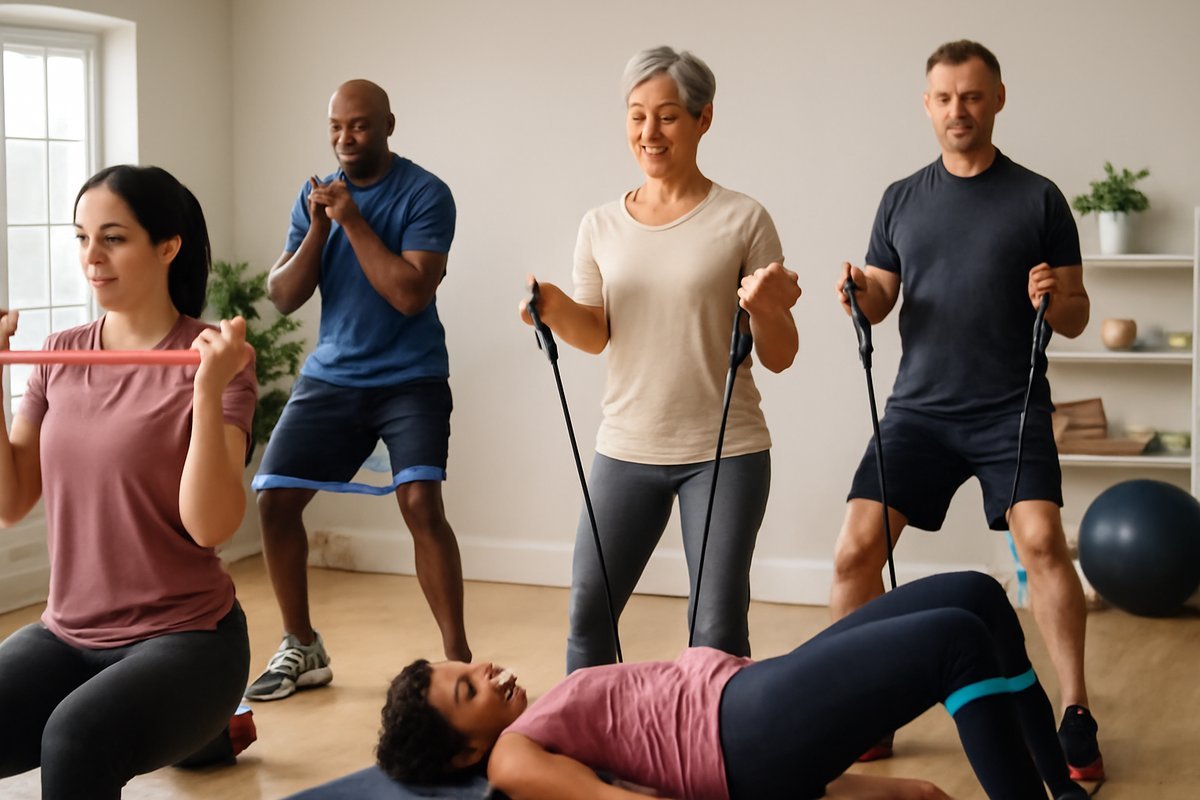
    Joining a group fitness class could be one of the most effective health decisions you make this year — and the science backs it up.

    Introduction

    Mark, 52, had been meaning to exercise more seriously for years. He owned a treadmill that mostly collected dust, had downloaded three workout apps he never opened, and knew — intellectually — that he needed to move more. Then a coworker invited him to a Saturday morning group fitness class at their local gym. Within six weeks, he hadn’t missed a single session.

    Mark’s story isn’t unusual. According to the Physical Activity Council’s annual report, Americans who participate in group fitness are significantly more likely to meet the recommended 150 minutes of moderate aerobic activity per week compared to solo exercisers. Yet the CDC estimates that fewer than 25% of U.S. adults currently meet both aerobic and muscle-strengthening guidelines.

    Group fitness classes — structured, instructor-led workouts offered in a shared setting — represent one of the most underutilized tools in adult health. Whether you’re brand new to exercise or returning after a long break, this guide will walk you through what the research says, what types of classes exist, how to choose the right one for your body, and how to get started safely.

    What Are Group Fitness Classes?

    Group fitness classes are organized exercise sessions led by a certified instructor, typically held in gyms, community centers, YMCAs, studios, or even online platforms. They range from high-energy cardio formats to gentle, restorative practices — and nearly every format has been adapted for different fitness levels, ages, and physical abilities.

    The defining feature is the shared environment. You exercise alongside other participants, follow an instructor’s cueing, and move through a structured sequence of activities — all within a set time window, usually 30 to 60 minutes.

    According to the American College of Sports Medicine (ACSM), group fitness has been one of the top fitness trends in the U.S. for over a decade, reflecting both its accessibility and its measurable outcomes. Research published in the Journal of the American Osteopathic Association found that people who participated in group fitness classes showed significant improvements in stress levels, quality of life, and physical fitness — outperforming solo exercisers in all three categories.

    This isn’t just about motivation. Group settings create accountability structures, social bonds, and instructor-guided safety that many people simply can’t replicate on their own.

    Health Benefits Supported by Research

    The benefits of group fitness go well beyond the calories burned during a single class. Clinical evidence suggests that regular participation produces meaningful improvements across multiple health domains.

    Cardiovascular health: The American Heart Association recommends at least 150 minutes of moderate-intensity aerobic activity per week for cardiovascular protection. Many group fitness formats — including cycling, aerobics, and dance cardio — meet this threshold efficiently. Studies indicate that consistent participation lowers resting heart rate and improves VO2 max (a measure of cardiovascular fitness) over time.

    Mental health and stress reduction: A landmark study published in the Journal of the American Osteopathic Association involving medical students found that group exercisers reported a 26.2% reduction in perceived stress after 12 weeks — compared to no significant improvement in solo exercisers. Group fitness appears to trigger a stronger release of endorphins through what researchers call “synchronized movement,” which also enhances mood.

    Musculoskeletal strength and flexibility: Formats like Pilates, yoga-based classes, and resistance-focused group training improve muscle strength, joint mobility, and bone density — key concerns for adults over 40. The NIH notes that muscle-strengthening activities at least twice per week are essential for preventing age-related muscle loss (sarcopenia) and reducing fall risk.

    Weight management: While no exercise alone guarantees weight loss, group fitness classes — particularly those combining cardiovascular and resistance work — support caloric expenditure and metabolic function when paired with appropriate nutrition. Research suggests that the accountability of a class environment increases adherence, which is the single strongest predictor of long-term results.

    Social connection and longevity: The social dimension of group fitness is increasingly recognized as a health factor in its own right. Research from Brigham Young University and Harvard’s ongoing studies link social connectedness with reduced all-cause mortality. Group exercise creates consistent human interaction — something many adults, especially those over 50, report lacking.

    Types of Group Fitness Classes: Finding Your Fit

    One of the great strengths of group fitness is its variety. There is almost certainly a format suited to your current fitness level, physical limitations, and personal preferences.

    Cardio-Based Classes

    • Step aerobics: A classic format using an elevated platform to increase intensity. Moderate impact; good for adults with no significant joint issues.
    • Kickboxing fitness: Combines martial arts movements with cardio sequences. High energy, high calorie burn, and excellent for stress relief.
    • Zumba and dance fitness: Latin-inspired rhythmic movement. Beginner-friendly, joyful, and effective for cardiovascular conditioning. (Learn more about dance fitness for adults here.)
    • Indoor cycling (spin classes): Stationary bike riding with music and instructor pacing. Low impact on joints while delivering high cardiovascular output. (See our complete guide to cycling for fitness.)

    Strength and Conditioning Classes

    • BodyPump and barbell classes: High-rep, low-weight training to music. Effective for muscle endurance and bone health.
    • Kettlebell classes: Functional strength and conditioning using kettlebells in a group format. Moderate to high intensity.
    • Circuit training: Rotating stations of strength and cardio exercises. Time-efficient and adaptable for various fitness levels.
    • Boot camp classes: Military-inspired high-intensity intervals combining body weight and equipment. Not ideal for complete beginners without modification.

    Mind-Body and Low-Impact Classes

    • Group yoga: Multiple styles available (Hatha, Vinyasa, Restorative). Excellent for flexibility, stress, and mindfulness. (Read our full yoga for adults guide.)
    • Pilates mat classes: Core-focused, low-impact, and highly adaptable. Ideal for adults with back pain or rehabilitation needs.
    • Tai chi classes: Slow, flowing movement sequences shown to improve balance, reduce fall risk, and lower blood pressure.
    • Stretch and mobility classes: Guided flexibility work. Often recommended by physical therapists as supplemental care.

    Aquatic Group Classes

    • Water aerobics: High resistance, zero impact. Ideal for adults with arthritis, joint replacements, or obesity-related joint stress.
    • Aqua cycling: Stationary cycling submerged in a pool. An emerging format with excellent cardiovascular and joint-friendly benefits.

    How to Choose the Right Class for Your Health Goals

    Choosing a group fitness class isn’t one-size-fits-all — and that’s a good thing. Your choice should be guided by your current fitness level, any health conditions or physical limitations, your goals, and honestly, what you think you’ll enjoy enough to keep showing up for.

    Here’s a practical framework:

    If you’re new to exercise or returning after a long break: Start with low-to-moderate intensity formats like yoga, beginner Pilates, walking-based group classes, or water aerobics. Avoid high-intensity boot camps or advanced spin classes until your cardiovascular fitness and movement patterns are established.

    If you have joint pain or arthritis: Prioritize aquatic classes, chair-based classes, or gentle yoga. The Arthritis Foundation specifically recommends low-impact group exercise for managing joint inflammation and maintaining mobility. Always inform the instructor of your condition before class begins.

    If your primary goal is weight management: Look for cardio-heavy formats (cycling, dance fitness, aerobics) combined with strength components (circuit training, body pump). Consistency matters more than intensity — choose a format you genuinely like.

    If you’re managing cardiovascular disease or hypertension: Consult your physician before starting any new exercise program. Many cardiac rehabilitation programs incorporate group fitness elements. Moderate-intensity cardio classes are generally appropriate with medical clearance, but confirm with your care team.

    If you’re over 60 or concerned about balance and falls: Tai chi, Pilates, and yoga classes that emphasize balance and proprioception (awareness of body position) are especially beneficial. The CDC’s STEADI program (Stopping Elderly Accidents, Deaths, and Injuries) highlights exercise as a primary fall-prevention strategy.

    If stress and mental health are your main concern: Mind-body formats — yoga, tai chi, Pilates, and even rhythmic dance classes — have the strongest evidence base for reducing cortisol (the stress hormone) and improving mood and sleep quality.

    Getting Started: A Practical Step-by-Step Guide

    Taking that first class can feel intimidating. Here’s how to approach it in a way that sets you up for a positive experience.

    Step 1: Get medical clearance if needed. If you are over 45, sedentary, managing a chronic condition, or have had a recent injury or surgery, speak with your physician before starting a new fitness program. This isn’t about limiting you — it’s about protecting you and helping you choose the most appropriate format.

    Step 2: Look for beginner-friendly classes and certified instructors. When searching for classes, look for terms like “beginner,” “all levels,” or “foundations.” Verify that instructors hold certifications from recognized organizations such as ACE (American Council on Exercise), NASM (National Academy of Sports Medicine), or ACSM.

    Step 3: Arrive early and talk to the instructor. Arrive at least 10 minutes early. Introduce yourself, mention any health concerns or physical limitations, and ask whether modifications are available. A good instructor will welcome this conversation and provide alternatives throughout the class.

    Step 4: Start with two classes per week. Research on exercise adherence suggests that starting with a manageable frequency — two sessions per week — and gradually increasing is more sustainable than attempting daily classes immediately. Give your body adequate recovery time, especially in the first few weeks.

    Step 5: Dress appropriately and hydrate. Wear supportive, comfortable athletic shoes appropriate for the class type (cross-trainers for most; cycling shoes for spin; bare feet or grip socks for yoga and Pilates). Bring water and a small towel. Eat a light snack 60-90 minutes before class if needed.

    Step 6: Listen to your body — always. There is a meaningful difference between the discomfort of exertion (normal) and sharp, sudden, or joint-specific pain (a warning signal). Never push through pain. Modify movements when needed, and don’t be embarrassed to take breaks.

    What to Expect in Your First Few Weeks

    Muscle soreness — especially delayed onset muscle soreness (DOMS), which peaks 24-48 hours after exercise — is common and normal when you begin a new program. It reflects muscle adaptation, not injury, and typically decreases significantly after the first two to three weeks.

    You may feel awkward or behind the class initially. This is universal and temporary. Most group fitness participants are focused on their own form, not watching newcomers. Trust that coordination and familiarity with class formats develop quickly.

    Clinical evidence suggests it takes approximately six to eight weeks of consistent participation for significant fitness improvements to become measurable — in cardiovascular capacity, muscular endurance, and mood. Set realistic expectations and focus on consistency rather than perfection.

    When to Call Your Doctor or Seek Emergency Care

    Knowing the difference between normal exercise discomfort and warning signs is essential. Stop exercising immediately and seek emergency medical care if you experience:

    • Chest pain, pressure, tightness, or pain radiating to the arm, jaw, or back
    • Sudden shortness of breath that is disproportionate to your exertion level
    • Dizziness, fainting, or near-fainting
    • Heart palpitations that feel irregular, rapid, or alarming
    • Sudden severe headache during or after exercise
    • Acute joint swelling, severe pain, or the sensation of something "popping" in a joint

    Contact your doctor (non-emergency) if you notice:

    • Persistent joint pain lasting more than 48 hours after exercise
    • Unusual fatigue that doesn’t resolve with rest
    • Swelling in the lower legs or ankles following workouts
    • Any significant change in a managed chronic condition (blood pressure spikes, blood sugar irregularities, etc.)

    The American Heart Association recommends that adults with known cardiovascular disease, diabetes, or other chronic conditions complete a physician-supervised exercise stress test before beginning a vigorous exercise program.

    Frequently Asked Questions

    Q: Are group fitness classes safe for older adults?
    A: Yes — with the right format and appropriate modifications. Many classes are specifically designed for adults over 60, including chair-based formats, gentle yoga, and tai chi. Research published by the National Institute on Aging confirms that exercise is safe and beneficial for most older adults, and that inactivity carries far greater risks than properly modified exercise.

    Q: Can I lose weight by going to group fitness classes?
    A: Group fitness classes can support weight management when combined with appropriate nutrition. Caloric expenditure per class varies widely by format — from approximately 200-300 calories in a gentle yoga class to 500-700 calories in a high-intensity cycling or cardio class. Long-term weight management depends on consistent activity, dietary patterns, sleep, and individual metabolic factors. Research suggests that the social accountability of group exercise significantly improves adherence compared to solo workouts, which is a meaningful advantage.

    Q: How many group fitness classes per week is ideal?
    A: The CDC recommends adults aim for at least 150 minutes of moderate-intensity or 75 minutes of vigorous-intensity aerobic activity per week, plus muscle-strengthening activities twice per week. For most beginners, two to three group fitness classes per week is a reasonable starting point, with rest or active recovery days in between. This varies from person to person based on age, fitness level, class intensity, and overall health.

    Q: What if I can’t keep up with the class?
    A: This is one of the most common concerns — and one of the least justified. Most certified group fitness instructors are trained to offer modifications for different fitness levels throughout the class. It’s completely appropriate to work at your own pace, reduce range of motion, take breaks, or use lighter weights. Over time, your fitness level will improve and keeping up will become much easier.

    Q: Are online group fitness classes as effective as in-person?
    A: Research suggests that online group fitness classes can be effective for improving fitness and adherence, particularly when they include real-time interaction with an instructor and other participants (live-streamed formats). Pre-recorded classes offer convenience and flexibility but may lack the social accountability component. A 2021 study published in JMIR mHealth and uHealth found that virtual group exercise maintained physical activity levels and social connection during periods when in-person access was limited. Both formats have a place depending on your schedule, access, and personal preference.

    Conclusion

    Group fitness classes offer something that solo exercise often can’t — structure, social connection, professional guidance, and the kind of accountability that turns good intentions into lasting habits. Whether you choose a high-energy cycling class, a peaceful Sunday yoga session, or a water aerobics class with your neighbors, the most important thing is finding a format you can commit to consistently.

    The evidence is clear: regular physical activity improves cardiovascular health, mental well-being, bone density, and longevity. Group fitness is one of the most accessible, enjoyable, and clinically supported ways to get there.

    Start where you are. Talk to your doctor. Find a class. Show up. Your future self will thank you.


    Medical Disclaimer: This article is for informational and educational purposes only. It does not constitute medical advice, diagnosis, or treatment. Always consult your physician or a qualified healthcare provider before making changes to your health routine or treatment plan.

    Medically reviewed by our editorial health team. Content follows evidence-based standards aligned with CDC and NIH guidelines.

  • Resistance Band Training: A Complete Guide for Adults

    Resistance Band Training: A Complete Guide for Adults

    Harness the power of portable resistance for strength and vitality.

    According to the Centers for Disease Control and Prevention (CDC), only about 24.2% of adults meet the physical activity guidelines for muscle-strengthening activity, leaving a significant portion of the U.S. population vulnerable to age-related muscle loss, known as sarcopenia, and reduced bone density. Many adults, especially those between 30 and 70, often struggle to incorporate regular strength training into their routines due to time constraints, gym intimidation, or pre-existing joint conditions. This gap in physical activity can lead to decreased functional independence, increased risk of falls, and a lower quality of life.

    If you’re looking for an effective, accessible, and joint-friendly way to build strength, improve mobility, and boost your overall health, resistance band training for adults might be the perfect solution. This comprehensive guide will walk you through everything you need to know about resistance bands, from their benefits and types to essential exercises and how to integrate them into your daily life safely and effectively. You’ll learn how these versatile tools can help you achieve your fitness goals without the need for heavy weights or expensive gym memberships.

    What Is Resistance Band Training?

    Resistance band training involves using elastic bands made of latex or synthetic rubber to create resistance against muscle contractions. Unlike free weights, which rely on gravity, resistance bands provide tension throughout the entire range of motion, engaging muscles differently and often more safely. This method of strength training has been utilized in physical therapy for decades and has gained widespread popularity in general fitness due to its efficacy and convenience.

    The increasing availability and affordability of resistance bands have made them a staple in home gyms and physical therapy clinics across the U.S., becoming an increasingly popular choice for strength training. Their ability to offer variable resistance, meaning the tension increases as the band is stretched further, provides a unique stimulus to your muscles. This variable tension can lead to significant improvements in muscle strength, endurance, and power, making them a valuable tool for individuals of all fitness levels.

    Why does this matter for your health? Regular strength training, whether with bands or weights, is crucial for maintaining muscle mass, bone density, and metabolic health. It helps improve body composition by increasing lean muscle tissue, which can boost your metabolism and support healthy weight management. Furthermore, strength training contributes to better balance and coordination, reducing your risk of falls as you age. Resistance bands offer a low-impact alternative that can be particularly beneficial if you have joint sensitivities or are recovering from an injury.

    Benefits of Resistance Band Training

    Resistance band training offers a multitude of advantages that make it an excellent choice for adults seeking to improve their fitness and overall well-being. Here are some key benefits:

    • Effective for Muscle Growth and Strength: Research published in the Journal of Sports Science & Medicine has indicated that resistance band training can lead to similar gains in muscle strength and hypertrophy (muscle growth) as conventional free weights, particularly when performed with adequate intensity and volume. This evidence suggests you don’t need heavy iron to build a strong, resilient body.
    • Joint-Friendly and Low Impact: Because resistance bands provide constant tension without the jarring impact of lifting and lowering heavy weights, they are incredibly gentle on your joints. This makes them an ideal option if you have arthritis, joint pain, or are recovering from certain injuries. The controlled movements help protect your ligaments and tendons while still challenging your muscles.
    • Portability and Affordability: Resistance bands are lightweight, compact, and easy to store, making them perfect for home workouts or travel. You can easily pack a set in your suitcase, ensuring you never miss a workout, even when you’re on the go. They are also significantly more affordable than traditional gym equipment, offering a cost-effective way to build a comprehensive strength training routine.
    • Versatility for Full-Body Workouts: With a few different types of bands, you can effectively target almost every major muscle group in your body. From squats and lunges to bicep curls and chest presses, resistance bands allow for a wide range of exercises that can mimic many traditional gym movements.
    • Improved Stability and Balance: Exercises with resistance bands often require you to engage your core and other stabilizing muscles more actively to control the movement. This enhanced stabilization can lead to improved balance, coordination, and proprioception (your body’s awareness of its position in space), which are critical for preventing falls, particularly as you age.
    • Ideal for Rehabilitation and Injury Prevention: Physical therapists frequently use resistance bands to help patients regain strength and mobility after injuries. Their progressive nature allows for gradual increases in resistance, making them safe for rebuilding muscle without putting excessive stress on healing tissues. Incorporating bands into your routine can also help strengthen neglected muscles, preventing future injuries.

    Types of Resistance Bands & How to Choose

    To maximize the effectiveness of your resistance band training, it’s helpful to understand the different types available and how to select the right ones for your needs. This varies from person to person based on strength levels and fitness goals.

    Common Types of Resistance Bands:

    • Loop Bands (Mini Bands or Power Bands): These are continuous loops of elastic material. Mini bands are shorter and often used for exercises targeting the glutes, hips, and shoulders, as well as for warm-ups. Power bands are longer and wider, offering much higher resistance levels, often used for assisted pull-ups, squats, deadlifts, and total body exercises. They typically come in color-coded sets indicating different resistance levels.
    • Tube Bands with Handles: These bands resemble elastic tubes with plastic or foam handles at each end. They are highly versatile and can be used for exercises that mimic free-weight movements, such as bicep curls, chest presses, rows, and shoulder presses. Many sets come with door anchors, allowing you to perform exercises that require a fixed anchor point.
    • Therapy Bands (Flat Bands): These are wide, flat, thin sheets of elastic material, often sold in rolls that you can cut to your desired length. They generally offer lighter resistance compared to loop or tube bands and are commonly used in physical therapy for rehabilitation exercises, stretching, and mobility work. They are excellent for targeting smaller muscle groups and for initial stages of strength building.

    How to Choose the Right Resistance Level:

    Resistance bands are almost always color-coded, with each color corresponding to a different level of tension (e.g., yellow for light, green for medium, blue for heavy, black for extra heavy). It’s crucial to start with a resistance level that allows you to maintain proper form throughout the entire exercise. Most physicians recommend starting with a lighter band and gradually progressing as your strength improves. If you can perform 15 repetitions with good form, it’s likely time to consider moving to a heavier band.

    When selecting your bands, consider your current fitness level and the specific muscle group you intend to work. Larger muscle groups like your glutes and quads can typically handle more resistance than smaller muscles like your shoulders or biceps. Many individuals benefit from having a set of bands with varying resistance levels to accommodate different exercises and muscle groups. Prioritizing safety and proper technique over excessive resistance will lead to more sustainable and injury-free progress.

    Getting Started: Essential Exercises & Proper Form

    Before diving into exercises, a proper warm-up is crucial. Spend 5-10 minutes on light cardio (like marching in place or arm circles) and dynamic stretches. Always prioritize slow, controlled movements, focusing on the muscle contraction rather than momentum. Here are some essential resistance band exercises, demonstrating how to incorporate them safely and effectively:

    Lower Body Exercises:

    • Banded Squats: Place a loop band just above your knees. Stand with feet shoulder-width apart, toes slightly out. Keeping your chest up and core engaged, lower down as if sitting in a chair, pushing your knees out against the band. The band helps activate your glutes and outer thighs.
    • Glute Bridges: Lie on your back with knees bent, feet flat on the floor, and a loop band around your thighs just above the knees. Push your hips up towards the ceiling, squeezing your glutes, and actively push your knees out against the band. Lower slowly.
    • Lateral Walks: Place a loop band around your ankles or just above your knees. Hinge slightly at your hips, keeping your feet shoulder-width apart. Take small, controlled steps sideways, maintaining tension on the band. This targets your hip abductors, crucial for stability.

    Upper Body Exercises:

    • Banded Bicep Curls: Stand on the middle of a tube band with handles (or a long loop band). Hold a handle in each hand, palms facing forward. Keeping your elbows tucked in, curl your hands up towards your shoulders, squeezing your biceps. Slowly lower down.
    • Tricep Extensions: Anchor a tube band to a high point (like a door anchor) or stand on it. Facing away from the anchor, grab the handle(s) with both hands. With elbows bent and tucked in, extend your arms straight down, engaging your triceps. Return slowly.
    • Chest Press (with Door Anchor): Anchor a tube band at chest height behind you. Grab a handle in each hand, stepping forward until the band is taut. With a slight bend in your elbows, press your hands forward as if doing a push-up. Control the return.
    • Banded Rows: Anchor a tube band at chest height in front of you (or loop a power band around a sturdy pole). Grab the handles (or ends of the power band). With a slight hinge at your hips and core engaged, pull the handles towards your torso, squeezing your shoulder blades together. Release slowly.

    Core Exercises:

    • Banded Rotations (Pallof Press): Anchor a tube band to a sturdy object at chest height. Stand perpendicular to the anchor, holding the handle with both hands at your chest. Step away from the anchor until there’s tension. Press the handle straight out in front of you, resisting the band’s pull to rotate your torso. Hold for a moment, then slowly return. This powerfully engages your anti-rotational core muscles.

    Remember, the key to effective resistance band training is consistency and proper form. If you’re unsure about a movement, watch instructional videos or consult with a fitness professional.

    Designing Your Resistance Band Workout Routine

    Creating a structured workout routine is essential for consistent progress and achieving your fitness goals. Here’s how to design an effective resistance band program:

    Frequency:

    Most health organizations, including the American Heart Association, recommend at least two days a week of moderate to high-intensity muscle-strengthening activity that works all major muscle groups. For optimal results and if your body allows, you might aim for 3-4 sessions per week, allowing at least one rest day between working the same muscle groups. Individual variation in recovery time means some people may need more rest.

    Sets and Repetitions:

    For general strength and muscle growth, aim for 2-4 sets of 8-15 repetitions per exercise. If your goal is muscular endurance, you might perform more repetitions (15-20+) with lighter resistance. The last few repetitions of each set should feel challenging, indicating you’re working your muscles effectively.

    Progression:

    To continue seeing results, you must progressively overload your muscles. This means gradually increasing the challenge over time. With resistance bands, you can progress by:

    • Using a band with higher resistance.
    • Increasing the number of repetitions or sets.
    • Slowing down the tempo of each repetition (increasing time under tension).
    • Decreasing rest time between sets.
    • Adding more challenging variations of exercises.

    Full-Body vs. Split Routines:

    • Full-Body Routine: This involves working all major muscle groups in a single session. It’s an excellent choice if you’re new to resistance training or can only commit to 2-3 workouts per week. A typical full-body workout might include 1-2 exercises for legs, 1-2 for chest/back, and 1 for shoulders/arms.
    • Split Routine: This involves dividing your workout days by muscle groups (e.g., upper body on one day, lower body on another). This allows for more focused work on specific muscles and can be beneficial if you’re training 3-4+ days a week. For example, you might do a "Push" day (chest, shoulders, triceps) and a "Pull" day (back, biceps) and a "Legs and Core" day.

    Always listen to your body and adjust your routine as needed. Rest days are just as important as workout days for muscle repair and growth.

    Integrating Resistance Bands into Your Lifestyle & Injury Prevention

    One of the greatest advantages of resistance bands is how easily they fit into various aspects of your life. Their versatility means you can incorporate them whether you’re at home, traveling, or even in the office for a quick stretch. Making resistance band training a regular part of your fitness regimen is more important than sporadic intense sessions.

    Practical Day-to-Day Management:

    • Home Workouts: Set aside a dedicated space, even a small corner, for your resistance band workouts. Having them easily accessible increases the likelihood you’ll use them.
    • Travel Fitness: Pack a few bands of varying resistance levels. They take up minimal space and allow you to maintain your strength training routine while away from home.
    • Supplementing Gym Routines: If you do go to a gym, use bands for warm-ups, cool-downs, or to add extra resistance to bodyweight exercises like squats or push-ups.

    Injury Prevention Strategies:

    While resistance bands are generally safe and joint-friendly, proper technique and preventive measures are still crucial to avoid injury:

    • Proper Warm-up and Cool-down: Always begin with 5-10 minutes of light cardio and dynamic stretches (like leg swings or arm circles) to prepare your muscles. Finish your workout with static stretches (holding a stretch for 20-30 seconds) to improve flexibility. For deeper insights into proper recovery, consider exploring our guide on Exercise Recovery: How to Recover Faster and Train Smarter.
    • Listen to Your Body: If you feel sharp, unusual, or persistent pain during an exercise, stop immediately. "No pain, no gain" is a dangerous mantra, especially for adults focused on long-term health. Mild muscle soreness (DOMS – Delayed Onset Muscle Soreness) is normal, but acute pain is a red flag.
    • Maintain Proper Form: Always prioritize good form over lifting heavier resistance. Incorrect form can negate the benefits of an exercise and increase your risk of injury. If you’re unsure, practice without the band first or use a mirror.
    • Inspect Your Bands Regularly: Before each use, check your resistance bands for any nicks, tears, or signs of wear and tear. A broken band during an exercise can cause injury. Replace worn bands promptly.
    • Secure Anchors: If using door anchors or looping bands around objects, ensure they are stable and secure to prevent them from slipping or breaking during an exercise.

    By integrating these practices, you can safely and effectively harness the power of resistance bands for lasting health and fitness.

    When to Consult a Professional for Exercise-Related Pain

    While resistance band training is generally safe, it’s important to know when to seek professional medical advice regarding exercise-related pain or discomfort. Understanding these red flags can help prevent minor issues from becoming serious problems.

    When to Seek Professional Help:

    • Persistent Pain: If pain lasts for more than a few days, despite rest and at-home care (like ice or heat), it’s a good idea to consult your physician. This is particularly true if the pain limits your daily activities.
    • Sharp, Shooting, or Numbness/Tingling Pain: These types of pain can indicate nerve involvement or more significant tissue damage. Do not ignore them; seek immediate medical attention.
    • Significant Swelling or Bruising: Unexpected swelling or bruising around a joint or muscle, especially if accompanied by pain, warrants a medical evaluation.
    • Loss of Function or Inability to Bear Weight: If you suddenly cannot move a joint through its full range of motion, cannot put weight on a limb, or experience muscle weakness that significantly impacts your ability to perform daily tasks, consult a doctor without delay.
    • Pain That Worsens at Rest or at Night: Pain that doesn’t subside with rest or intensifies at night can sometimes be a sign of a more serious underlying condition.

    What to Tell Your Doctor:

    When you consult your doctor or a physical therapist, be prepared to provide specific details:

    • Location and Type of Pain: Point to where it hurts and describe it (e.g., dull ache, sharp, throbbing, burning).
    • Onset and Duration: When did the pain start? Was it sudden or gradual? How long have you had it?
    • What Makes It Worse/Better: Are there specific movements, activities, or positions that aggravate or relieve the pain?
    • Any Associated Symptoms: Numbness, tingling, weakness, swelling, clicking, or popping sounds.
    • Your Exercise Routine: Describe the exercises you perform, the resistance levels you use, and how often you train.

    A physical therapist or certified personal trainer can provide personalized guidance on proper form, modify exercises, and develop a safe progression plan, especially if you’re new to exercise or have pre-existing conditions. Most physicians recommend seeking professional advice to ensure your fitness journey is safe and effective.

    Frequently Asked Questions

    Are resistance bands as effective as weights for building muscle?

    Clinical evidence indicates that resistance bands can be very effective for building muscle strength and size. While the sensation of resistance differs from free weights, research suggests they can provide a comparable stimulus to muscle fibers when used correctly with appropriate resistance and proper form. The key is to challenge your muscles to fatigue within your desired rep range.

    How do I choose the right resistance level?

    Start with a band that allows you to complete 10-15 repetitions of an exercise with good form, where the last few reps feel challenging but not impossible. If you can do more than 15 reps easily, move to a heavier band. If you can’t complete 8 reps with good form, use a lighter band. Most bands are color-coded to indicate resistance levels, varying by manufacturer.

    Can I use resistance bands if I have joint pain?

    Yes, resistance bands are often recommended for individuals with joint pain because they provide a low-impact form of resistance. The continuous tension and ability to control movements precisely can be gentler on joints compared to the impact of free weights. However, always consult your physician or physical therapist if you have significant joint pain or a medical condition before starting any new exercise program.

    How often should I train with resistance bands?

    Most fitness guidelines recommend engaging in muscle-strengthening activities for all major muscle groups at least two to three times per week, with a day of rest in between sessions for muscle recovery. You can also incorporate bands into your daily warm-ups or cool-downs for added flexibility and mobility.

    What’s the best way to clean and store my resistance bands?

    To prolong the life of your resistance bands, wipe them down with a damp cloth after use, especially if you’ve sweated on them. Avoid harsh cleaning agents. Store them out of direct sunlight and extreme temperatures, which can degrade the elastic material. Keep them flat or loosely rolled in a dry place, away from sharp objects that could cause nicks or tears.

    Conclusion

    Resistance band training for adults offers an incredibly versatile, effective, and accessible pathway to improved strength, mobility, and overall health. Whether you’re a seasoned athlete or just beginning your fitness journey, these portable tools provide a fantastic way to challenge your muscles, protect your joints, and achieve your fitness goals from almost anywhere. By understanding the different types of bands, mastering essential exercises, and designing a consistent routine, you can unlock a new level of physical well-being.

    Remember that consistency, proper form, and listening to your body are paramount. While resistance bands are a powerful tool, your health is unique. Always consult your physician or a qualified healthcare provider before making significant changes to your health routine or treatment plan, especially if you have pre-existing health conditions or concerns. Embrace the flexibility and effectiveness of resistance bands, and take a confident step towards a stronger, healthier you.

    MEDICAL DISCLAIMER

    This article is for informational and educational purposes only. It does not constitute medical advice, diagnosis, or treatment. Always consult your physician or a qualified healthcare provider before making changes to your health routine or treatment plan.

    AUTHOR LINE

    Medically reviewed by our editorial health team. Content follows evidence-based standards aligned with CDC and NIH guidelines.