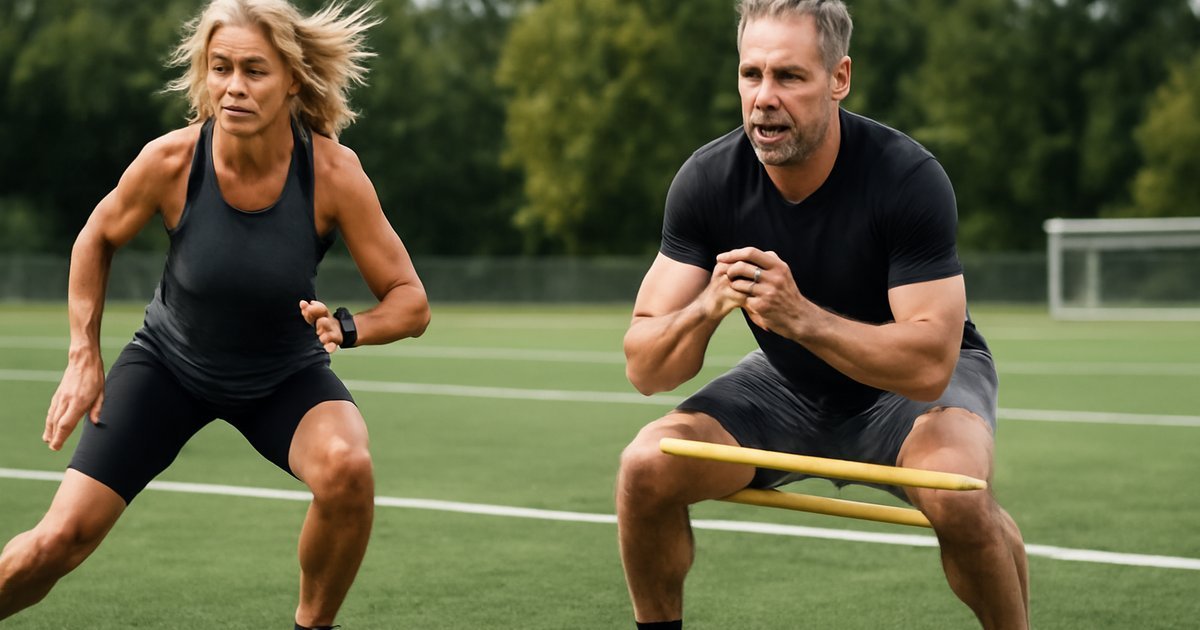
Training like an athlete — no matter your age — can transform your health, performance, and confidence.
When David, a 47-year-old recreational tennis player, kept tweaking his knee during weekend matches, his orthopedist didn’t just recommend rest. She recommended sport-specific training — targeted exercises designed to build the exact strength, agility, and mobility his sport demanded. Within 12 weeks, David was back on the court, moving better than he had in his thirties.
According to the CDC, fewer than 25% of American adults meet both aerobic and muscle-strengthening activity guidelines. But there’s a growing body of evidence suggesting that when exercise is tied to something meaningful — like a sport you love — adherence improves dramatically. Sport-specific fitness training does exactly that: it aligns your workout plan with the physical demands of your chosen activity, reducing injury risk and boosting real-world performance.
Whether you play golf on weekends, swim laps, run local 5Ks, or compete in recreational soccer leagues, this guide will show you what sport-specific training is, why it works, and how to build a program that keeps you active, healthy, and injury-free well into your 60s and 70s.
What Is Sport-Specific Fitness Training?
Sport-specific fitness training is a structured approach to exercise that mimics and supports the physical demands of a particular sport or activity. Rather than generic workouts, each session targets the muscle groups, movement patterns, energy systems, and coordination skills your chosen sport requires most.
For example, a recreational golfer doesn’t just need strong arms — they need rotational core power, hip mobility, and shoulder stability. A weekend cyclist needs strong glutes, cardiovascular endurance, and hip flexor flexibility. Sport-specific training identifies these needs and builds programming around them.
According to the National Strength and Conditioning Association (NSCA), sport-specific training principles are grounded in the SAID principle — Specific Adaptation to Imposed Demands. In simple terms: your body adapts to the exact type of stress you place on it. Generic gym routines build general fitness, but sport-specific programs build targeted capacity.
This approach is no longer reserved for elite athletes. Research published in journals indexed by the NIH’s PubMed database consistently shows that recreational adult athletes benefit just as significantly from periodized, sport-oriented training as professionals do — with notable improvements in injury prevention, movement quality, and sustained participation over time.
Signs You May Need a More Targeted Training Approach
Many adults reach a frustrating plateau where they exercise regularly but still feel underprepared when they actually play their sport. This gap between general fitness and functional sport readiness is a clear signal that a more targeted approach may help.
Common signs you could benefit from sport-specific training include:
- Recurring sport-related injuries — especially in the same joint or muscle group
- Fatigue during the second half of your game or activity — pointing to sport-specific endurance deficits
- Feeling stiff or uncoordinated despite regular exercise
- Slow reaction time or poor agility compared to where you want to be
- Muscle imbalances — one side significantly stronger than the other
- Joint pain during or after sport — a possible indicator of underdeveloped stabilizer muscles
- Loss of power or endurance over a season or year
A 2023 review in the Journal of Aging and Physical Activity (indexed by NIH) found that adults over 40 who participated in structured, sport-aligned resistance training reported 34% fewer overuse injuries compared to those following general fitness routines. This variation from person to person depends on sport type, training history, and existing health conditions — but the trend is consistent.
Key Physical Components: What Every Sport Demands
While each sport has unique demands, most recreational activities draw on a combination of the same foundational physical qualities. Understanding these helps you prioritize your training effectively.
Muscular strength is the foundation. Whether you’re swinging a racket, pulling through water, or sprinting to a ball, muscles must generate force. The American College of Sports Medicine recommends that adults perform muscle-strengthening activities at least two days per week — a baseline that sport-specific training builds upon.
Muscular endurance allows you to sustain effort throughout a game or activity without breaking down in form or performance. This is especially important in sports like tennis, basketball, or soccer that involve repeated efforts over 60 to 90 minutes.
Cardiovascular fitness determines how efficiently your heart and lungs deliver oxygen to working muscles. Sports with intermittent bursts — like pickleball or racquetball — rely more on anaerobic capacity, while distance running or cycling demands sustained aerobic output.
Flexibility and mobility reduce injury risk and improve movement efficiency. Clinical evidence from the Mayo Clinic indicates that poor hip mobility is a leading contributor to lower back and knee injuries in adult recreational athletes.
Balance and proprioception (your body’s ability to sense its own position in space) are critical for injury prevention, particularly as adults age past 50. Fall-related injuries are the leading cause of injury-related death in adults over 65, according to the CDC — and sport-specific balance training directly addresses this risk.
Power and speed refer to explosive, fast-twitch muscle recruitment — essential for sports involving quick directional changes, sprinting, or striking movements.
Sport-Specific Training by Activity: Practical Examples
Here’s how sport-specific training translates into real programming for popular adult recreational sports.
Golf
Golf demands rotational core strength, hip mobility, shoulder stability, and balance. Research from the Titleist Performance Institute suggests that 80% of amateur golfers have at least one physical limitation that negatively affects their swing. A sport-specific program for golfers typically includes:
- Cable wood chops and pallof press variations for rotational core power
- Hip 90/90 stretches and thoracic spine rotations for mobility
- Single-leg balance work to simulate weight shift in the swing
- Resistance band shoulder external rotation for rotator cuff health
Tennis and Pickleball
These sports require lateral agility, explosive arm power, and cardiovascular endurance. According to the Sports & Fitness Industry Association, pickleball participation among adults over 55 has increased by over 120% in recent years, making targeted training increasingly relevant. Key training elements include:
- Lateral shuffle drills and cone agility patterns
- Forearm and wrist strengthening for elbow injury prevention
- Split squat jumps and lateral bounds for explosive leg power
- High-intensity interval training to mimic the stop-start demands of rallying
Running and 5K Racing
Running is not just about logging miles. Research suggests that adults who incorporate strength training alongside running have significantly lower injury rates — particularly for common issues like IT band syndrome, plantar fasciitis, and shin splints. A sport-specific strength program for runners focuses on:
- Single-leg deadlifts and step-ups for glute and hamstring strength
- Calf raises and ankle mobility work for lower leg resilience
- Hip flexor stretching to counteract seated posture
- Core anti-rotation exercises for efficient stride mechanics
For adults who enjoy high-intensity run training, you may find our guide on HIIT for Beginners: A Safe Start Guide for Adults Over 30 a valuable companion resource.
Swimming
Swimming builds cardiovascular fitness and upper body endurance, but competitive swimmers and lap swimmers alike often develop shoulder imbalances from repetitive overhead pulling. Sport-specific dry-land training for swimmers includes:
- Scapular strengthening: prone Y-T-W exercises and face pulls
- Lat pulldowns and cable rows for pull-phase power
- Hip flexor and ankle dorsiflexion work for kick efficiency
- Thoracic spine mobility to support freestyle and backstroke rotation
Cycling
Cyclists often develop tight hip flexors, weak glutes, and anterior knee pain from sustained time in the saddle. A targeted program should counteract these tendencies. Clinical evidence from Johns Hopkins suggests that addressing hip and knee alignment in cyclists significantly reduces patellofemoral (kneecap) pain. Recommended training includes:
- Hip thrust and glute bridge variations
- Standing quad stretches and couch stretch for hip flexor length
- VMO (inner quad) activation through terminal knee extensions
- Upper back strengthening to offset the forward cycling position
How to Build Your Sport-Specific Training Program
Building an effective program doesn’t require a professional sports performance facility. Most adults can design a solid sport-specific routine with basic gym equipment or dumbbells at home.
Follow this four-step framework:
Step 1 — Assess your sport’s demands. List the dominant movements your sport requires. Is it rotational? Explosive? Endurance-based? Lateral? This analysis shapes your exercise selection.
Step 2 — Identify your personal weak links. Where do you feel most fatigued, stiff, or vulnerable during play? These areas guide your training priorities. A physical therapist or certified strength and conditioning specialist (CSCS) can perform a movement screen if you’re unsure.
Step 3 — Structure your training week. Most adults training recreationally benefit from two to three sport-specific strength sessions per week, alongside their actual sport participation. Rest and recovery days are not optional — they’re where adaptation occurs.
Step 4 — Periodize your training. Periodization means systematically varying your training intensity and volume over weeks and months. A simple model for recreational athletes: spend 4-6 weeks building a general strength base, then shift toward power and sport-specific movement for 4-6 weeks, then taper before your peak season. Research from the NIH confirms that periodized programs reduce injury risk and improve performance outcomes compared to non-periodized training.
For adults who prefer structured group environments, building a gym routine that sticks can provide the accountability and variety that keep sport-specific training on track.
Prevention and Longevity: Staying in the Game Longer
One of the most powerful benefits of sport-specific training is long-term athletic longevity — the ability to keep doing what you love well into your 60s and 70s. The American College of Sports Medicine notes that adults who maintain sport participation throughout middle age have significantly lower rates of cardiovascular disease, depression, and cognitive decline.
Key prevention strategies backed by clinical evidence include:
- Progressive overload — gradually increase training stress to build resilience without triggering overuse injuries
- Adequate warm-up — dynamic warm-ups that mirror sport movements reduce acute injury risk by up to 50%, according to FIFA’s 11+ research program, which has been validated across multiple sports and age groups
- Prioritize sleep and recovery — the NIH identifies sleep as the single most important recovery tool, with adults needing 7-9 hours nightly for optimal tissue repair
- Manage training load — more is not always better; sudden spikes in volume or intensity account for the majority of overuse injuries in recreational athletes
- Stay flexible with your approach — this varies from person to person; listen to your body and adjust training when fatigue, soreness, or pain signals accumulate
When to Call Your Doctor or Seek Professional Guidance
Sport-specific training is generally safe for healthy adults, but there are important moments when medical input is essential.
See your doctor before starting a new training program if:
- You are over 40 and have been sedentary for more than a year
- You have a known cardiovascular condition, diabetes, or joint disease
- You take medications that affect heart rate, blood pressure, or balance
- You have had a recent surgery or significant injury
Seek prompt medical care if during or after training you experience:
- Chest pain, pressure, or tightness — call 911 immediately
- Sudden shortness of breath disproportionate to effort
- Dizziness, fainting, or near-fainting episodes
- Sharp joint pain, significant swelling, or inability to bear weight
- Heart palpitations or irregular heartbeat during exercise
These are red flags requiring immediate evaluation, not a reason to push through. Always err on the side of caution.
For ongoing management, consider working with a certified strength and conditioning specialist (CSCS) or a sports physical therapist who can design and monitor your program with professional oversight.
Frequently Asked Questions
Q: Can adults over 50 safely do sport-specific training?
Absolutely. Research suggests that adults over 50 respond well to targeted, periodized training — with appropriate adjustments for recovery time and exercise intensity. Clinical evidence from the NIH indicates that older adults who engage in structured strength and mobility training see meaningful improvements in functional capacity and injury resilience. Always consult your physician first if you have existing health conditions.
Q: How often should I do sport-specific training sessions?
Most recreational adult athletes benefit from two to three dedicated sport-specific strength sessions per week. This allows adequate recovery between sessions while providing enough stimulus for adaptation. This varies from person to person based on age, fitness level, and how many days per week they actually play their sport.
Q: Do I need expensive equipment or a gym membership?
No. Many sport-specific exercises can be performed with minimal equipment — resistance bands, a set of dumbbells, and your own bodyweight cover the vast majority of training needs. That said, a gym environment provides access to cable machines and heavier loads that may be beneficial for advanced programming.
Q: What’s the difference between sport-specific training and general fitness?
General fitness builds broad physical health — cardiovascular capacity, overall strength, and flexibility. Sport-specific training targets the exact movement patterns, muscle groups, and energy systems your chosen sport demands. Both have value; sport-specific training is a more tailored layer built on top of a solid general fitness base.
Q: Should I stop playing my sport while doing sport-specific training?
Generally, no. Sport-specific training is designed to complement your sport participation, not replace it. During high-intensity training phases, you may reduce sport volume slightly to manage overall load — but most recreational athletes can continue playing throughout their training program with smart scheduling.
Conclusion
Sport-specific fitness training is one of the most practical and motivating approaches to adult exercise — because it connects your workouts to something you genuinely enjoy. By understanding what your sport demands, identifying your personal weak links, and building a targeted, progressive program, you can move better, perform longer, and stay in the game through every decade of your life.
The evidence is clear: recreational athletes who train with intention and specificity enjoy lower injury rates, better performance, and higher long-term adherence to physical activity. That’s a combination that pays dividends not just on the field or court — but across your entire health picture.
Start with a conversation with your doctor, especially if you’re managing any chronic conditions. Then consider working with a qualified fitness professional to map your sport’s demands to a training plan built around you. Your best athletic years may still be ahead of you.
Medical Disclaimer: This article is for informational and educational purposes only. It does not constitute medical advice, diagnosis, or treatment. Always consult your physician or a qualified healthcare provider before making changes to your health routine or treatment plan.
Medically reviewed by our editorial health team. Content follows evidence-based standards aligned with CDC and NIH guidelines.