Foam Rolling Benefits: Self-Myofascial Release Guide
Clinical evidence supports foam rolling as a practical recovery and mobility tool — here’s how to use it safely and effectively.
Introduction
Mark, 52, had been dealing with nagging tightness in his calves and lower back for months. He assumed it was just part of getting older — until his physical therapist introduced him to a simple foam roller during a session. Within weeks of regular use, Mark noticed a measurable improvement in his flexibility and a significant reduction in post-workout soreness.
He’s not alone. According to the American College of Sports Medicine, musculoskeletal pain and restricted mobility are among the most common complaints in adults over 40. Yet one of the most accessible, evidence-backed tools for addressing these issues — foam rolling, also known as self-myofascial release (SMR) — remains underused by the general public.
In this guide, you’ll learn exactly what foam rolling is, what the science says about its benefits, how to incorporate it into your routine safely, and which techniques offer the most value for adults managing everyday soreness, stiffness, and exercise recovery. Whether you’re new to fitness or a seasoned exerciser, this guide is designed to help you move better and feel stronger.
What Is Self-Myofascial Release (Foam Rolling)?
Self-myofascial release is a soft tissue therapy technique that involves applying gentle, sustained pressure to specific areas of the body to release tension in the fascia — the connective tissue that surrounds and supports muscles, tendons, and other structures throughout your body.
Think of fascia like a full-body suit of cling wrap beneath your skin. When you sit for long periods, experience muscle overuse, or sustain minor injuries, the fascia can become restricted, forming what clinicians often call "trigger points" or "adhesions." These knots can cause localized pain, reduced range of motion, and impaired movement patterns.
Foam rolling uses body weight and a cylindrical tool — the foam roller — to mimic the pressure of a therapeutic massage. By slowly rolling over a muscle group and pausing on tender spots, you apply a neurological and mechanical stimulus that helps the tissue relax and lengthen.
Research published in the Journal of Athletic Training found that just 60 to 90 seconds of foam rolling on a muscle group can significantly increase flexibility without negatively affecting muscle performance — a key distinction from static stretching, which can temporarily reduce muscle strength when done before exercise.
According to the National Academy of Sports Medicine (NASM), SMR is classified as a corrective exercise technique and is widely used in physical therapy, athletic training, and general fitness programming across the United States.
Key Health Benefits of Foam Rolling
The science behind foam rolling has grown considerably in the past decade. Here’s what clinical evidence currently supports:
Improved Flexibility and Range of Motion
A 2015 meta-analysis published in the International Journal of Sports Physical Therapy found that foam rolling combined with static stretching produced greater improvements in flexibility than stretching alone. For adults over 40 — whose connective tissue naturally becomes less pliable — this combination can be especially valuable.
Foam rolling increases tissue temperature and promotes relaxation of the muscle spindles (sensory organs within muscles), making the tissue more receptive to lengthening.
Faster Muscle Recovery After Exercise
Delayed-onset muscle soreness (DOMS) — the aching, stiffness that peaks 24 to 72 hours after intense physical activity — is one of foam rolling’s most studied applications. A 2014 study in the Journal of Athletic Training demonstrated that participants who foam rolled for 20 minutes after exercise reported significantly less soreness and fatigue compared to those who did not.
Foam rolling appears to improve blood circulation to fatigued tissues and may accelerate the removal of metabolic waste products that accumulate during strenuous activity.
Reduced Muscle Tension and Pain
Research suggests that consistent foam rolling can reduce the perception of chronic muscle tightness and localized pain, particularly in common problem areas like the IT band (iliotibial band along the outer thigh), thoracic spine (upper back), calves, and hip flexors.
This doesn’t mean foam rolling "fixes" structural problems — it works through neurological pathways to temporarily reduce pain sensitivity and muscle guarding, making it a useful complement to other treatments like physical therapy and corrective exercise.
Better Movement Quality and Posture
Tight, restricted tissues affect the way your joints move. Over time, movement compensation patterns develop — your body finds workarounds that often lead to overuse injuries. By addressing restrictions through SMR, foam rolling can help restore more efficient movement mechanics.
Clinical evidence from the Cleveland Clinic supports foam rolling as part of a broader corrective exercise strategy to address postural imbalances common in desk workers, which the Bureau of Labor Statistics estimates make up over 40% of the US workforce.
Cardiovascular and Arterial Benefits
Emerging research published in the Journal of Strength and Conditioning Research suggests that regular foam rolling may improve arterial stiffness and vascular function — factors closely linked to cardiovascular health. While more research is needed to confirm long-term effects, these preliminary findings add an exciting dimension to the practice beyond simple muscle recovery.
Who Should Consider Foam Rolling?
Foam rolling is appropriate for a broad range of adults, but like any physical intervention, it’s most beneficial when matched to individual needs. You may benefit from foam rolling if you:
- Experience chronic muscle tightness, particularly in the back, hips, or legs
- Sit for extended periods during the workday
- Engage in regular physical exercise and want to optimize recovery
- Have reduced flexibility that limits your daily activities
- Are returning to exercise after a period of inactivity
- Manage conditions like fibromyalgia, chronic low back pain, or early-stage osteoarthritis (with physician approval)
This varies from person to person. Adults with certain conditions — including deep vein thrombosis, open wounds, severe osteoporosis, or active inflammation — should avoid foam rolling on affected areas and consult a physician before starting.
If you’re already committed to other forms of movement, foam rolling pairs exceptionally well with Pilates for Adults and cycling for fitness, as both place high demands on the hip flexors, quadriceps, and spinal muscles that respond well to SMR.
How to Start: Foam Rolling Basics and Technique
Getting started with foam rolling doesn’t require expensive equipment or a gym membership. A basic EVA foam roller costing between $15 and $40 is sufficient for most adults. Here’s how to approach your practice:
Choose the Right Roller
- Soft foam rollers: Best for beginners, elderly adults, or those with high pain sensitivity
- Medium-density rollers: The most versatile option for general use
- Firm or textured rollers: Provide deeper pressure, appropriate for experienced users or larger muscle groups
Core Technique Principles
- Position the target muscle on the roller and use your arms or opposite leg for support
- Apply moderate pressure — enough to feel a "productive discomfort," not sharp or shooting pain
- Roll slowly, about one inch per second, along the length of the muscle
- Pause on tender spots for 20 to 30 seconds, breathing deeply until the sensation decreases
- Avoid rolling directly on joints, bones, or the spine
Recommended Session Duration
Most physical therapists recommend 5 to 15 minutes of foam rolling per session, focusing on 2 to 4 muscle groups at a time. You don’t need to address the entire body in one sitting — consistency matters more than volume.
Essential Foam Rolling Techniques by Body Area
Here are evidence-supported techniques for the most commonly targeted areas in adults:
Calves
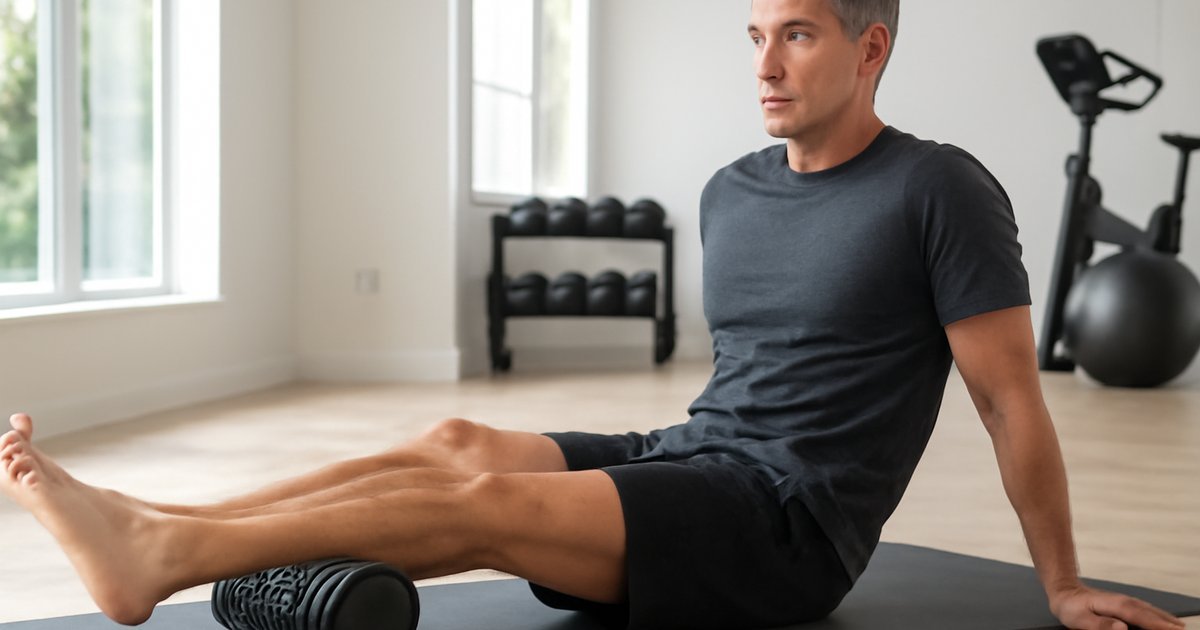
Sit on the floor with one calf resting on the roller. Support your body weight on your hands. Slowly roll from just above the ankle to just below the knee. Cross your opposite ankle over the target leg to increase pressure. This is especially helpful for runners, walkers, and adults who stand for extended periods.
IT Band (Outer Thigh)
Lie on your side with the roller positioned at the outer hip. Using your forearm for support, slowly roll down the outer thigh to just above the knee. This area is notoriously sensitive — start with a softer roller and light pressure. Many people experience significant tightness here due to prolonged sitting.
Quadriceps (Front Thigh)
Lie face-down with the roller under both thighs. Support your body on your forearms and slowly roll from the hips to just above the knee. Pause on any areas of increased tension. Tight quadriceps are among the most common contributors to knee and lower back discomfort in adults over 40.
Thoracic Spine (Upper Back)
Sit on the floor with the roller positioned horizontally behind your mid-back. Support your head with interlaced fingers. Slowly extend over the roller, allowing the upper back to open. This technique can provide remarkable relief for those dealing with desk-related postural strain. Never roll directly on the lumbar (lower) spine.
Glutes and Piriformis
Sit on the roller with one ankle crossed over the opposite knee (figure-4 position). Lean toward the side of the crossed leg and slowly roll the outer glute area. This technique targets the piriformis muscle, which when tight can mimic sciatic nerve pain — a complaint reported by millions of Americans annually, according to the NIH.
When to Foam Roll: Before or After Exercise?
The timing of foam rolling matters. Research suggests the following framework:
- Before exercise (pre-workout): Use foam rolling as part of a dynamic warm-up to increase tissue temperature and range of motion. Keep sessions brief — 30 to 60 seconds per muscle group — and follow with dynamic movement. Clinical evidence indicates pre-workout SMR does not impair muscle strength or power output.
- After exercise (post-workout): This is the most evidence-supported window for foam rolling. Spend 10 to 15 minutes on fatigued muscle groups to promote circulation, reduce soreness, and begin the recovery process.
- On rest days: Foam rolling on non-exercise days helps maintain tissue quality and can be particularly beneficial for adults with desk jobs or sedentary lifestyles.
If you’re building a well-rounded recovery routine, foam rolling complements strategies outlined in resources like our guide on bodyweight training for adults, where tissue quality and mobility are foundational to progress and injury prevention.
Safety Considerations and When to Stop
Foam rolling is considered safe for most healthy adults when performed correctly. However, there are important boundaries to respect:
Stop immediately and consult a healthcare provider if you experience:
- Sharp, stabbing, or shooting pain during rolling
- Numbness or tingling that radiates down a limb
- Swelling, redness, or warmth in the area being rolled
- Symptoms that worsen rather than improve after 2 to 3 weeks of consistent use
Absolute contraindications — avoid foam rolling entirely if you have:
- Confirmed deep vein thrombosis (DVT) or blood clots
- Severe peripheral neuropathy
- Active infection, open wounds, or recent surgical sites
- Fragile skin associated with advanced age or certain medications
- Severe osteoporosis (consult your physician before any SMR practice)
The Mayo Clinic advises that adults with chronic medical conditions always speak with their primary care physician before beginning any new physical therapy technique, including foam rolling.
When to Call Your Doctor
Foam rolling is not a substitute for medical evaluation. Schedule an appointment with your doctor if:
- You have persistent muscle or joint pain lasting more than 2 weeks
- Your range of motion has decreased significantly without a clear cause
- You experience muscle weakness, not just tightness
- You have a history of cancer, blood clotting disorders, or autoimmune conditions affecting connective tissue
At your appointment, let your physician know you’re interested in foam rolling. Bring a list of your symptoms, any affected areas, and your current exercise routine. Most primary care physicians and physical therapists can offer individualized guidance on technique and frequency.
Frequently Asked Questions
How often should I foam roll?
Most research suggests that foam rolling 3 to 5 times per week produces the best results for flexibility and recovery. Daily rolling is generally safe for healthy adults, provided you’re not applying excessive pressure to inflamed or injured areas. Consistency over time produces more meaningful results than infrequent, intense sessions.
Does foam rolling actually break up scar tissue?
This is a common misconception. Current research indicates that foam rolling does not mechanically break up scar tissue or fascial adhesions. Instead, it works primarily through neurological pathways — reducing muscle tension and pain sensitivity via the nervous system. The practical effects on mobility and comfort are real, but the mechanism is different from what many people assume.
Is foam rolling painful?
Foam rolling can feel uncomfortable, especially on very tight or sensitive areas. Clinicians describe the appropriate level of sensation as "discomfort you can breathe through" — roughly a 4 to 6 out of 10 on a pain scale. If the sensation feels sharp, severe, or causes you to hold your breath, reduce the pressure or avoid that area. Discomfort should decrease within 20 to 30 seconds of sustained pressure.
Can foam rolling help with lower back pain?
Clinical evidence supports foam rolling for muscles that contribute to lower back pain — such as the glutes, hip flexors, quadriceps, and thoracic spine — but rolling directly on the lumbar spine is not recommended and can cause harm. If you have chronic lower back pain, consult a physical therapist who can identify the specific muscle groups contributing to your symptoms and guide your SMR practice accordingly.
Should older adults foam roll differently than younger adults?
Adults over 60 should generally start with a softer roller and shorter sessions (5 to 10 minutes), focusing on areas of obvious tightness rather than the entire body. Pressure should be lighter, and more time should be spent pausing on tender spots rather than rolling quickly. For seniors with osteoporosis or other musculoskeletal conditions, physician clearance is strongly recommended. Our chair exercises for seniors guide offers additional low-impact movement strategies that pair well with gentle SMR practice.
Conclusion
Foam rolling is one of the most practical, low-cost tools available to adults who want to move better, recover faster, and manage everyday muscle tension. The evidence base — while still growing — clearly supports its use as a complement to regular exercise and physical therapy for improving flexibility, reducing soreness, and supporting long-term musculoskeletal health.
Like any health intervention, foam rolling works best as part of a broader wellness strategy that includes consistent movement, quality nutrition, adequate sleep, and regular medical care. It’s not a cure for chronic pain or a replacement for professional treatment — but used correctly, it’s a powerful addition to your self-care toolkit.
Start slowly, listen to your body, and don’t hesitate to work with a physical therapist to refine your technique. Small, consistent efforts can produce meaningful results over time.
Medical Disclaimer: This article is for informational and educational purposes only. It does not constitute medical advice, diagnosis, or treatment. Always consult your physician or a qualified healthcare provider before making changes to your health routine or treatment plan.
Medically reviewed by our editorial health team. Content follows evidence-based standards aligned with CDC and NIH guidelines.