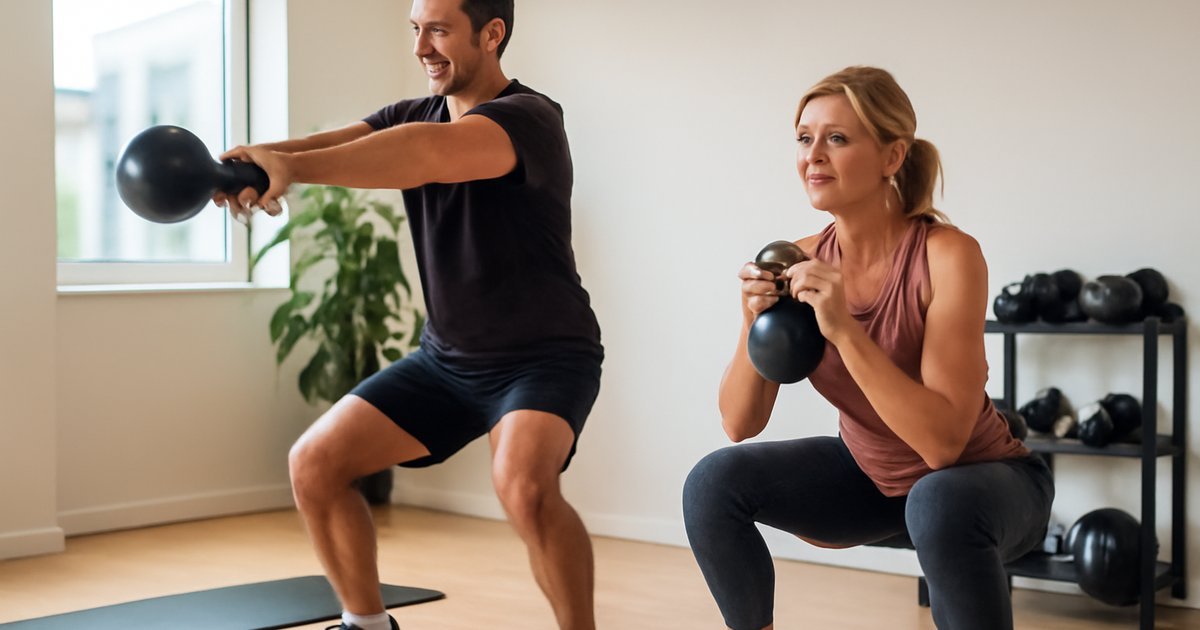
One compact iron ball — and a full-body workout that rivals anything you’ll find in a modern gym.
Meet James, 52, a mid-level manager from Columbus, Ohio. After his annual physical revealed borderline high blood pressure and a waistline creeping past 38 inches, his doctor gave him a clear recommendation: start exercising consistently. But James had no time for long gym sessions, no desire to sign up for expensive classes, and a garage with just enough room for a mat and one piece of equipment.
His solution? A single 35-pound kettlebell — and a training plan that changed his health markers within four months.
Kettlebell training has surged in popularity across the US over the past decade, and for good reason. According to the American Council on Exercise, kettlebell workouts can burn up to 20 calories per minute — comparable to running at a 6-minute-mile pace. Yet the impact on joints is far lower, the equipment investment is minimal, and the full-body conditioning benefits are exceptional.
In this guide, you’ll learn what kettlebell training is, who it’s best suited for, what the clinical evidence says about its health benefits, how to get started safely, and how to build a sustainable routine — whether you’re 35 or 70.
What Is Kettlebell Training?
A kettlebell is a cast-iron or steel weight shaped like a cannonball with a flat base and a looped handle on top. Unlike dumbbells, which distribute weight evenly on both sides of the handle, kettlebells have an offset center of gravity — which means your muscles have to work harder to control the weight through each movement.
Kettlebell training uses this unique design to combine strength work, cardiovascular conditioning, and mobility all in one session. Many exercises involve swinging, pressing, pulling, or carrying the weight through multiple planes of motion — making it a form of functional fitness, meaning it trains your body in ways that translate directly to real-life movement.
The most common kettlebell exercises include the swing, goblet squat, Turkish get-up, clean and press, deadlift, and farmer’s carry. These movements engage multiple muscle groups simultaneously, which is one reason research shows kettlebell training to be highly time-efficient.
According to the American College of Sports Medicine (ACSM), kettlebell training qualifies as both a moderate-to-vigorous aerobic activity and a muscle-strengthening exercise — two categories the CDC recommends adults include in their weekly routines.
In the US, an estimated 80% of adults do not meet the minimum federal physical activity guidelines. Kettlebell training offers a practical, space-saving solution for that large segment of the population.
Health Benefits of Kettlebell Training
The science behind kettlebell training has grown substantially over the past 15 years. Here’s what clinical evidence suggests you can expect.
Cardiovascular and Metabolic Health
A landmark study published in the Journal of Strength and Conditioning Research found that a 20-minute kettlebell workout produced a heart rate response equivalent to running at a moderate pace — with participants burning roughly 13 to 20 calories per minute. That kind of metabolic output in a short session has clear implications for weight management and heart health.
Research from the Mayo Clinic supports the idea that combining strength and cardio in a single session — sometimes called "concurrent training" — may improve insulin sensitivity, lower resting blood pressure, and support healthy cholesterol levels over time.
Muscle Strength and Body Composition
A study from the Journal of Human Kinetics found that adults who trained with kettlebells twice per week for 10 weeks significantly improved their upper-body and lower-body strength, along with reductions in body fat percentage — without changing their diet. This makes kettlebell training particularly effective for adults over 40 who are managing age-related muscle loss, known as sarcopenia.
Core Stability and Posture
Almost every kettlebell movement requires active stabilization from your core — the group of muscles surrounding your spine and pelvis. The asymmetrical load of the kettlebell forces your trunk muscles to work continuously to maintain alignment, which clinical evidence suggests can help reduce chronic low back pain over time.
Grip Strength and Functional Longevity
Grip strength is one of the most well-documented predictors of long-term health. Research published in the British Medical Journal showed that lower grip strength was associated with higher risk of cardiovascular disease, cognitive decline, and all-cause mortality. Kettlebell training — especially exercises like the farmer’s carry and the swing — is one of the most effective ways to build grip strength in adults.
Bone Density
Resistance training places mechanical stress on bones, which stimulates bone remodeling and can slow age-related bone density loss. The NIH’s National Institute on Aging identifies resistance training as one of the most effective lifestyle interventions for reducing osteoporosis risk. If you’re interested in learning more about exercise and bone health, our guide on bodyweight training for adults also covers bone-protective movement strategies.
Who Is Kettlebell Training Best For?
Kettlebell training is remarkably versatile, but it isn’t a one-size-fits-all solution. Here’s a breakdown of who tends to benefit most — and a few important considerations.
Best suited for:
- Adults aged 30-65 looking for efficient full-body conditioning
- People with limited time who want cardio and strength in one session
- Those managing early-stage metabolic conditions (with physician clearance)
- Adults who travel frequently or prefer home workouts
- Individuals recovering from obesity-related deconditioning (starting light)
- Older adults who want to maintain functional strength and independence
Proceed with caution or physician clearance if you have:
- Uncontrolled hypertension or recent cardiac events
- Acute back injuries or herniated discs
- Severe osteoporosis or recent fractures
- Unmanaged rotator cuff injuries
- Balance disorders that significantly increase fall risk
This varies from person to person. Always consult your physician before beginning a new exercise program, especially if you have one or more chronic conditions.
Choosing the Right Kettlebell Weight
One of the most common mistakes beginners make is choosing a weight that’s either too heavy (leading to injury) or too light (limiting results). Here are the general starting ranges most certified trainers and physical therapists recommend:
For women new to kettlebell training:
- Swings and lower-body movements: 18-26 lbs (8-12 kg)
- Upper-body pressing movements: 8-18 lbs (4-8 kg)
For men new to kettlebell training:
- Swings and lower-body movements: 26-35 lbs (12-16 kg)
- Upper-body pressing movements: 18-26 lbs (8-12 kg)
If you’re over 60 or new to resistance training, starting at the lower end of these ranges is always the safer choice. Technique matters far more than weight — especially in the early weeks.
Essential Kettlebell Exercises for Beginners
These five foundational movements are safe, effective, and recommended by certified strength coaches for adults starting kettlebell training.
1. The Kettlebell Deadlift
Place the kettlebell between your feet, hip-width apart. Hinge at the hips — not the waist — while keeping your back flat and chest tall. Grip the handle, press your feet into the floor, and stand up straight. Lower back down with control. This movement teaches proper hip hinge mechanics and builds posterior chain strength (glutes, hamstrings, and lower back).
2. The Goblet Squat
Hold the kettlebell by the horns (the sides of the handle) at chest height. Squat down, keeping your chest tall and knees tracking over your toes. Drive through your heels to stand. The front-loaded position naturally promotes an upright torso, making this one of the most joint-friendly squat variations available.
3. The Two-Hand Kettlebell Swing
This is the signature kettlebell movement. Stand with feet shoulder-width apart. Hike the kettlebell back between your legs, then drive your hips forward explosively to swing the bell to shoulder height. Let it swing back between your legs and repeat. The swing is not a squat — it’s a hip hinge. Most of the power comes from the glutes and hamstrings, not the arms.
4. The Farmer’s Carry
Simply pick up one or two kettlebells and walk. Keep your shoulders back, core tight, and pace steady. This deceptively simple exercise builds grip strength, core stability, and shoulder integrity simultaneously. Research from the National Strength and Conditioning Association supports loaded carries as highly functional for real-world movement patterns.
5. The Kettlebell Overhead Press
Clean the kettlebell to the "rack position" (resting on your forearm at shoulder height), then press it directly overhead until your arm is fully extended. Lower with control. This builds shoulder strength, core stability, and overhead mobility — important for everyday tasks and injury prevention as you age.
Sample Beginner Kettlebell Workout Plan
The following weekly structure aligns with the CDC’s recommendation of at least 150 minutes of moderate-intensity activity and two days of muscle-strengthening per week:
Days 1, 3, 5 — Kettlebell Circuit (25-35 minutes):
- Warm-up: 5 minutes of light walking and hip circles
- Goblet Squat: 3 sets of 10 reps
- Two-Hand Swing: 3 sets of 12 reps
- Farmer’s Carry: 3 rounds of 30 seconds
- Overhead Press: 3 sets of 8 reps per arm
- Cooldown: 5 minutes of gentle stretching
Days 2, 4 — Active Recovery:
- Light walking, swimming, or yoga (20-30 minutes)
Days 6-7 — Rest or low-intensity movement
Rest days are not wasted days. Clinical evidence from the ACSM confirms that muscle repair and adaptation happen during recovery — not during the workout itself. For more on optimizing your recovery between sessions, see our detailed guide on cycling for fitness, which also covers active recovery principles.
Safety Tips and Common Mistakes to Avoid
Kettlebell training is safe when practiced with proper form, but a few consistent mistakes can increase injury risk — especially for beginners.
- Rounding the lower back during swings: This is the most common injury-causing error. Always maintain a neutral spine and hinge at the hips, not the waist.
- Using momentum instead of muscle: Letting the bell swing freely without muscular control reduces effectiveness and strains your joints.
- Skipping the warm-up: Cold muscles and joints are more injury-prone. Always warm up for at least 5 minutes before picking up a kettlebell.
- Progressing weight too quickly: Research suggests a conservative 10% increase in load per week is a safe upper limit for most adults.
- Training through sharp pain: Muscle fatigue and mild soreness are normal. Sharp, sudden, or joint pain is not — stop immediately and consult a healthcare provider.
If you’re new to strength training altogether, consider complementing your kettlebell work with lower-impact movements. Our guide to Pilates for adults covers core stability and body awareness fundamentals that pair extremely well with kettlebell training.
When to Call Your Doctor: Red Flags to Watch For
Kettlebell training is generally safe for healthy adults, but there are clear warning signs that require prompt medical attention:
Stop training and seek emergency care if you experience:
- Chest pain, pressure, or tightness during or after exercise
- Shortness of breath that is disproportionate to your effort level
- Heart palpitations or irregular heartbeat
- Sudden dizziness, lightheadedness, or fainting
- Sudden severe pain in your lower back, shoulder, or joints
Schedule a non-emergency doctor visit if you notice:
- Persistent joint pain lasting more than 72 hours after a session
- Numbness or tingling in the arms or legs
- Swelling in a joint that doesn’t resolve with rest and ice
- Significant worsening of a pre-existing condition after starting training
Before starting any new exercise program, it’s strongly recommended that adults over 50 — or those managing a chronic health condition — get medical clearance from their physician. Tell your doctor what type of exercises you’re planning, how intense they’ll be, and how frequently you intend to train.
Frequently Asked Questions
How many days a week should I do kettlebell training?
Most clinical exercise guidelines from the ACSM and CDC support two to three sessions per week for beginners, allowing at least 48 hours of recovery between strength training sessions. As your fitness improves over several weeks, you may be able to train up to four days per week — but recovery time remains critical at any level.
Can older adults — say, 60 or older — do kettlebell training safely?
Yes, with appropriate modifications. Research published by the National Institute on Aging supports resistance training for adults well into their 70s, noting improvements in muscle strength, balance, and functional independence. Older adults should start with lighter weights, prioritize technique over load, and consider working with a certified personal trainer or physical therapist initially.
Will kettlebell training help me lose weight?
Kettlebell training can contribute meaningfully to weight management when combined with a healthy diet. Because it combines cardiovascular and strength work, it burns calories both during and after the session — a phenomenon researchers call excess post-exercise oxygen consumption (EPOC). However, no form of exercise alone guarantees weight loss. Nutrition, sleep quality, stress levels, and other factors all play important roles.
Is one kettlebell enough, or do I need a set?
One kettlebell is genuinely sufficient for a complete beginner program. As you progress and become stronger, you may benefit from a lighter bell for pressing movements and a heavier one for swings and lower-body work. Many fitness experts recommend starting with a single moderate-weight bell and reassessing after 8-12 weeks of consistent training.
How long before I see results from kettlebell training?
Research suggests that measurable improvements in strength and cardiovascular fitness can appear within 4-6 weeks of consistent training, two to three times per week. Changes in body composition typically become noticeable after 8-12 weeks. Individual results vary based on starting fitness level, age, diet, sleep, and training consistency.
Conclusion
Kettlebell training is one of the most efficient, evidence-backed forms of exercise available to adults in 2026. With a single piece of equipment, you can build real strength, improve cardiovascular health, sharpen your balance, and protect your body against age-related decline — all in sessions that fit into even the busiest schedules.
Like James from Columbus, many adults find that the simplicity of kettlebell training is what makes it stick. You don’t need a gym membership, a rack of weights, or hours per week. You need a plan, proper technique, consistent effort, and the guidance of a healthcare provider who knows your individual health history.
Start light, focus on form, and give your body time to adapt. The results — in strength, energy, and long-term health — are well worth the investment.
Medical Disclaimer: This article is for informational and educational purposes only. It does not constitute medical advice, diagnosis, or treatment. Always consult your physician or a qualified healthcare provider before making changes to your health routine or treatment plan.
Medically reviewed by our editorial health team. Content follows evidence-based standards aligned with CDC and NIH guidelines.