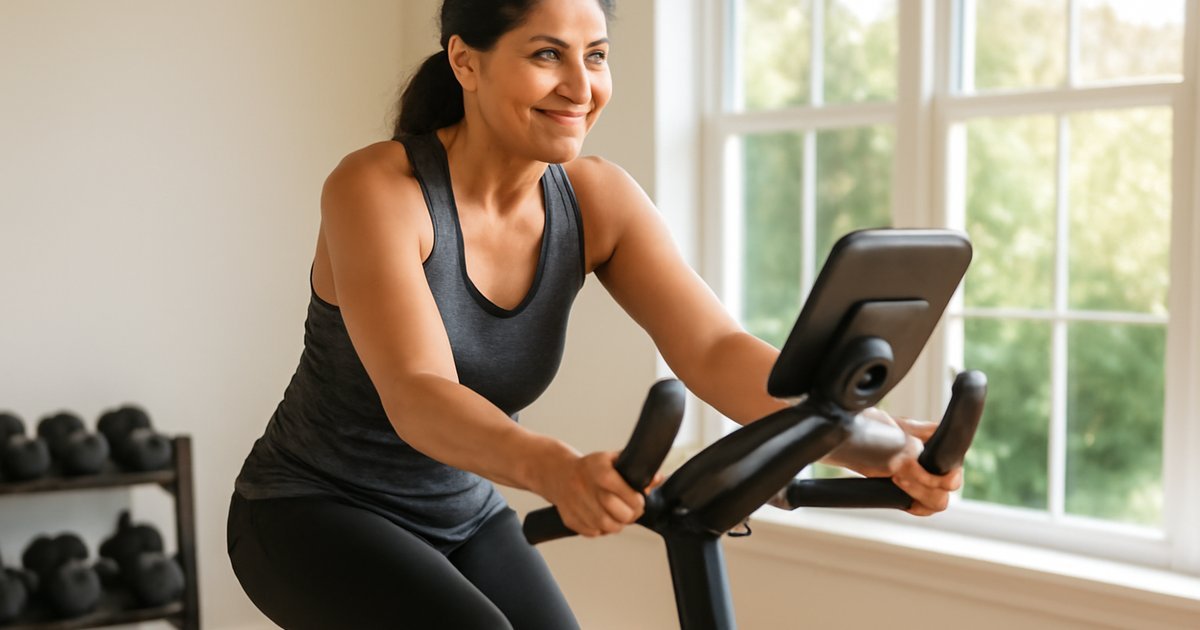
Tag: cycling for weight loss

  • Stationary Bike Workouts: Health Benefits & How to Start

    Stationary Bike Workouts: Health Benefits & How to Start

    Stationary Bike Workouts: Health Benefits & How to Start

    A low-impact, high-reward exercise proven to boost heart health, burn calories, and protect your joints — at any fitness level.

    Introduction

    When Mark, 54, was told by his cardiologist to start exercising after a routine checkup revealed high cholesterol and borderline hypertension, he was nervous. His knees had been aching for years, and the idea of pounding pavement felt impossible. His doctor suggested one simple starting point: a stationary bike.

    Three months later, Mark had lost 14 pounds, his blood pressure readings had improved, and he was logging 45 minutes on the bike four times a week — without a single knee flare-up.

    Mark’s story is not unusual. According to the American Heart Association, fewer than 25% of U.S. adults meet the recommended guidelines for both aerobic and muscle-strengthening activity. Stationary bike workouts offer one of the most accessible, evidence-backed paths to closing that gap — especially for adults aged 30 to 70 managing weight, joint pain, cardiovascular risk, or simply looking to build a sustainable fitness habit.

    In this guide, you will learn exactly what stationary bike exercise does for your body, how to get started safely, which workout formats work best, and how to avoid the most common beginner mistakes.

    What Is a Stationary Bike Workout?

    A stationary bike workout is a form of cardiovascular exercise performed on a fixed bicycle — either upright, recumbent, or spin-style — that simulates outdoor cycling without the balance demands or weather variables of riding outdoors.

    Unlike treadmill running or jumping exercises, stationary biking is considered low-impact, meaning your joints absorb significantly less force with each pedal stroke compared to weight-bearing activities. This makes it a preferred option for older adults, people with arthritis, those recovering from injury, and anyone who finds high-impact exercise painful or risky.

    According to data from the National Institutes of Health (NIH), regular aerobic exercise — including cycling — reduces the risk of cardiovascular disease, type 2 diabetes, metabolic syndrome, and all-cause mortality. Stationary biking specifically has been validated in multiple clinical settings as an effective modality for improving cardiorespiratory fitness, body composition, and muscular endurance in the lower body.

    Whether you use a basic upright bike at home, a recumbent machine at the gym, or a high-intensity spin bike in a studio class, the core physiological benefits remain highly consistent across bike types and formats.

    Health Benefits of Stationary Bike Workouts

    The science behind stationary biking is robust and spans multiple health domains. Here is what clinical evidence consistently shows:

    Cardiovascular Health

    Cycling raises your heart rate into aerobic training zones, which strengthens the heart muscle over time, improves stroke volume (the amount of blood your heart pumps per beat), and lowers resting heart rate. A 2021 meta-analysis published in the European Journal of Preventive Cardiology found that regular cycling — including stationary cycling — was associated with a 46% lower risk of cardiovascular mortality compared to non-cyclists.

    The American Heart Association recommends at least 150 minutes of moderate-intensity aerobic activity per week. A five-day routine of 30-minute stationary bike sessions fulfills this recommendation entirely.

    Weight and Metabolic Benefits

    A 155-pound adult burns approximately 260 calories in 30 minutes of moderate stationary cycling and up to 400 calories during a vigorous session, according to Harvard Health data. When combined with consistent dietary habits, this caloric expenditure contributes meaningfully to weight loss and maintenance.

    Beyond calories, cycling improves insulin sensitivity — the body’s ability to use blood sugar effectively — which is critical for adults managing prediabetes or type 2 diabetes. The CDC reports that 96 million U.S. adults have prediabetes, and most do not know it.

    Joint Health and Mobility

    The pedaling motion lubricates the knee and hip joints by promoting synovial fluid circulation — the fluid that cushions cartilage surfaces. This makes stationary biking one of the few exercises actively recommended for people with osteoarthritis of the knee. The Arthritis Foundation specifically endorses cycling as a joint-friendly aerobic option for arthritis patients.

    Mental Health Benefits

    Aerobic exercise consistently reduces symptoms of anxiety and depression by triggering endorphin release and supporting neuroplasticity. A study published in JAMA Psychiatry found that 150 minutes of aerobic activity per week was associated with a 25% reduction in depression risk. Stationary biking — accessible, private, and adjustable in intensity — is an effective vehicle for achieving this threshold.

    For more on how exercise supports mental well-being, see our guide on Elliptical Machine Workouts for Adults, which shares similar cardiovascular and mood-enhancing benefits.

    Types of Stationary Bikes: Which One Is Right for You?

    Choosing the right bike type matters for comfort, safety, and adherence. Here is a clinical breakdown of your main options:

    • Upright Bike: Mimics traditional cycling posture. Engages core and upper body slightly more than recumbent models. Good for adults with no significant back issues.
    • Recumbent Bike: Features a reclined seat with back support. Ideal for adults with lower back pain, hip issues, or balance concerns. Research from the Mayo Clinic supports recumbent cycling for cardiac rehabilitation patients.
    • Spin/Indoor Cycling Bike: A heavier, more performance-oriented bike designed for high-intensity interval work. Best for adults with baseline fitness who want to push cardiovascular capacity. Often used in instructor-led group formats.
    • Air Resistance Bike (Assault Bike): Uses fan-based resistance and works upper and lower body simultaneously. Higher intensity ceiling, but less suitable for beginners or those with joint pain.

    If you are just starting out or managing a chronic condition, clinical evidence and most physicians recommend beginning with an upright or recumbent model at low resistance before progressing.

    How to Start: A Beginner’s Framework

    Starting safely and consistently is far more valuable than starting intensely and burning out. Here is an evidence-informed approach for adults beginning stationary bike training:

    Week 1–2: Establish the Habit

    • Duration: 15 to 20 minutes per session
    • Frequency: 3 days per week
    • Intensity: Low — you should be able to hold a conversation (RPE 3-4 on a scale of 10)
    • Focus: Proper posture, comfortable seat height, smooth pedal stroke

    Week 3–4: Build Endurance

    • Duration: 25 to 35 minutes per session
    • Frequency: 4 days per week
    • Intensity: Moderate — breathing harder but not breathless (RPE 5-6)
    • Add: Brief resistance increases of 1 to 2 minutes every 10 minutes

    Month 2 and Beyond: Progressive Overload

    • Duration: 30 to 60 minutes
    • Introduce interval training: alternate 2 minutes at moderate intensity with 1 minute at higher intensity
    • Aim for 150+ minutes of moderate activity per week, per AHA guidelines

    Research suggests that progressive overload — gradually increasing duration, resistance, or frequency — is the key driver of continued fitness improvement over time. Staying at the same effort level indefinitely leads to adaptation and stalled results.

    Effective Stationary Bike Workout Formats

    Once you have built a baseline fitness level, rotating workout formats keeps training stimulating and targets different physiological systems:

    Steady-State Cardio

    Maintain a consistent moderate pace for 30 to 45 minutes. This format builds aerobic base, is easy to sustain long-term, and is ideal for active recovery days. Best suited for fat burning and cardiovascular endurance.

    Interval Training (HIIT on the Bike)

    Alternate between high-effort sprints (20 to 30 seconds) and low-effort recovery periods (60 to 90 seconds). A 2019 study in the Journal of Physiology found that HIIT cycling produced comparable cardiovascular benefits to steady-state cardio in significantly less time — important for adults with busy schedules.

    If you are interested in interval-based approaches, our article on Cable Machine Workouts explores similar principles of structured effort and recovery applied to strength training.

    Hill Climb Simulation

    Gradually increase resistance every 3 to 5 minutes over a 30 to 40-minute session, simulating an uphill climb. This builds lower body muscular endurance (quads, glutes, hamstrings, calves) and significantly elevates caloric burn.

    Recovery Spin

    10 to 20 minutes at very low resistance and cadence. Promotes blood flow to fatigued muscles without adding training stress. Particularly valuable after strength training sessions or intense workout days.

    Proper Form and Setup: What Most Beginners Get Wrong

    Poor bike setup is the number one cause of discomfort, knee pain, and early dropout in stationary cycling. Follow these evidence-based positioning guidelines:

    • Seat Height: When the pedal is at its lowest point, your knee should have a slight bend — approximately 25 to 35 degrees. A seat set too low strains the knee; too high causes hip rocking and lower back strain.
    • Seat Position (Fore/Aft): Your knee should be directly above the pedal axle when the crank arm is horizontal. This distributes force evenly across the knee joint.
    • Handlebar Height: Beginners and those with back pain should keep handlebars level with or slightly above the seat. Lowering them too far creates excessive lumbar flexion.
    • Foot Position: The ball of your foot (widest part) should rest over the center of the pedal. Avoid pushing with your heel or toes exclusively.
    • Posture: Maintain a neutral spine, relaxed shoulders, and a slight forward lean. Avoid locking your elbows or hunching your upper back.

    If you experience persistent knee pain, hip discomfort, or numbness in the saddle area after adjusting position, consult a physical therapist or fitness professional for an individualized bike fit assessment.

    Stationary Biking for Adults with Specific Health Conditions

    Stationary biking is one of the few exercise modalities recommended across a wide range of chronic conditions. However, individual variation is significant — always confirm exercise plans with your physician or specialist before starting.

    • Hypertension: Regular moderate-intensity cycling is associated with systolic blood pressure reductions of 4 to 9 mmHg, according to the American College of Sports Medicine. Avoid very high-intensity efforts if your blood pressure is uncontrolled.
    • Type 2 Diabetes: Post-meal cycling sessions of 15 to 30 minutes have been shown to blunt blood glucose spikes. Clinical evidence indicates improvements in HbA1c (a 3-month blood sugar average) with consistent aerobic training.
    • Osteoarthritis: Low-resistance cycling strengthens the muscles around the knee and hip without compressing cartilage, reducing pain and improving function, per research from Johns Hopkins Arthritis Center.
    • Obesity: Stationary biking allows higher caloric burn with less joint stress than weight-bearing cardio, making it especially suitable for adults with a BMI above 30.
    • Post-Cardiac Event Recovery: Stationary cycling is a cornerstone of cardiac rehabilitation programs. Always follow your cardiologist’s specific intensity guidelines in this context.

    When to Call Your Doctor — Warning Signs During Exercise

    Most adults can begin low-to-moderate stationary biking safely. However, certain symptoms require immediate attention. Stop exercising and seek emergency care if you experience:

    • Chest pain, pressure, or tightness during or after cycling
    • Shortness of breath that is disproportionate to your effort level
    • Dizziness, lightheadedness, or feeling faint
    • Heart palpitations or irregular heartbeat
    • Sudden severe joint or muscle pain
    • Numbness or tingling in the arms or chest

    Schedule a non-emergency appointment with your doctor before starting if you:

    • Have been sedentary for more than one year
    • Have a diagnosed heart condition, uncontrolled diabetes, or severe hypertension
    • Are currently pregnant
    • Have had a recent surgery or significant injury
    • Are over 60 and have not had a recent physical exam

    This varies from person to person — your physician can provide individualized clearance and exercise parameters based on your health history and current medications.

    Frequently Asked Questions

    How long should I ride a stationary bike to lose weight?

    Research suggests that 30 to 60 minutes of moderate-intensity cycling, four to five days per week, combined with a balanced diet, supports meaningful weight loss over time. The exact outcome varies based on your starting weight, intensity, and dietary habits. Consistency over weeks and months matters far more than any single long session.

    Is a stationary bike good for bad knees?

    Clinical evidence strongly supports stationary biking for people with knee osteoarthritis and general knee discomfort, provided the bike is properly fitted and resistance remains appropriate. The low-impact nature of cycling reduces compressive forces on the knee compared to running or stair climbing. That said, if you have a specific knee injury or recent surgery, consult your orthopedist or physical therapist before starting.

    How many calories does a stationary bike burn in 30 minutes?

    According to Harvard Health, a 155-pound adult burns approximately 210 to 260 calories in 30 minutes at moderate intensity and 315 to 400 calories at vigorous intensity. Heavier individuals burn more calories for the same effort. Calorie estimates on bike displays vary widely and are often inaccurate — use them as a rough guide only.

    Should I use a stationary bike every day?

    Most healthy adults can ride daily at low-to-moderate intensity without significant overuse risk, particularly on a recumbent bike. However, most physicians and exercise scientists recommend at least one to two rest or active recovery days per week to allow muscle repair and prevent burnout. High-intensity sessions specifically should not be performed daily.

    Is a stationary bike better than a treadmill?

    Neither is universally superior — the best exercise is the one you will do consistently. Stationary biking is lower impact and generally safer for the knees and hips, making it the preferred choice for adults with joint concerns. Treadmill walking or running engages more total muscle mass and is more weight-bearing, which can benefit bone density. Many adults benefit from rotating both into their routine.

    Conclusion

    Stationary bike workouts offer something increasingly rare in the fitness world: an exercise that is genuinely accessible, clinically validated, and sustainable for the long term — regardless of your starting fitness level or health challenges.

    Whether you are managing knee pain, working to lower your blood pressure, trying to lose weight, or simply building a healthier daily routine after 40, the stationary bike provides a low-risk, high-reward path forward. The key is starting at an appropriate intensity, progressing gradually, maintaining proper form, and above all — showing up consistently.

    You do not need to ride for an hour or push yourself to exhaustion. Research suggests that even 20 to 30 minutes of moderate cycling, done regularly over weeks and months, produces meaningful and lasting health improvements.

    Talk to your doctor about incorporating stationary biking into your routine, especially if you are managing a chronic condition. Then get on the bike — and start pedaling toward better health.


    Medical Disclaimer: This article is for informational and educational purposes only. It does not constitute medical advice, diagnosis, or treatment. Always consult your physician or a qualified healthcare provider before making changes to your health routine or treatment plan.

    Medically reviewed by our editorial health team. Content follows evidence-based standards aligned with CDC and NIH guidelines.

  • Cycling for Fitness: Health Benefits, Tips & Getting Started

    Cycling for Fitness: Health Benefits, Tips & Getting Started

    Cycling for Fitness: Health Benefits, Tips & Getting Started

    One of the most effective, joint-friendly workouts you can do — whether you’re 35 or 70.

    Mark, 54, had spent most of his adult life avoiding high-impact exercise after a knee injury in his late 30s. His doctor kept telling him he needed cardiovascular activity, but running felt out of the question. Then he tried cycling. Within three months, his resting heart rate had dropped, he had lost 14 pounds, and — for the first time in years — he was actually looking forward to his workouts.

    Mark’s story isn’t unusual. According to the CDC, fewer than 25% of American adults meet the recommended guidelines for both aerobic and muscle-strengthening activity. Yet cycling — whether outdoors on a road bike or indoors on a stationary unit — consistently ranks among the most accessible, sustainable, and medically supported forms of exercise available to adults across all fitness levels.

    In this guide, you’ll learn exactly what cycling does for your body, how to get started safely, what the clinical evidence says about its benefits, and how to build a cycling habit that lasts for the long term.


    What Is Cycling as a Fitness Activity?

    Cycling is a rhythmic, aerobic exercise that engages the cardiovascular system, lower body muscles, and — depending on the intensity and terrain — the core and upper body as well. It can be performed outdoors on roads, trails, or mountain paths, or indoors on stationary bikes, spin bikes, and smart trainers.

    From a clinical standpoint, cycling is classified as a low-impact, moderate-to-vigorous aerobic exercise. "Low-impact" means the activity does not place excessive stress on the joints — specifically the knees, hips, and ankles — making it a preferred option for individuals with arthritis, obesity, or a history of joint injuries.

    The American Heart Association (AHA) recognizes cycling as a recommended form of aerobic activity that contributes toward the 150 minutes per week of moderate-intensity exercise that most adults need for cardiovascular health. Research published in the British Medical Journal found that adults who cycled to work had a 45% lower risk of developing cancer and a 46% lower risk of cardiovascular disease compared to non-active commuters — a finding that underscores just how powerful regular cycling can be as a preventive health tool.

    In the United States, cycling participation has grown significantly, with over 50 million Americans riding bikes each year, according to the Outdoor Industry Association. The explosion of indoor cycling platforms and connected smart bikes has also made the activity more accessible than ever, particularly for adults who prefer structured, at-home workouts.


    Health Benefits of Cycling: What the Evidence Shows

    Cycling delivers a broad spectrum of evidence-backed health benefits. Here’s what clinical research tells us:

    Cardiovascular Health

    Regular cycling strengthens the heart muscle, improves circulation, and reduces resting heart rate over time. The AHA notes that aerobic exercise like cycling helps lower LDL ("bad") cholesterol and raise HDL ("good") cholesterol, reducing the buildup of arterial plaque that leads to heart attack and stroke.

    A large-scale study published in PLOS Medicine that followed over 260,000 adults found that cycling was associated with a significant reduction in cardiovascular disease risk — with even modest amounts of cycling yielding measurable benefits.

    Weight Management and Metabolic Health

    Cycling at moderate intensity can burn between 400 and 700 calories per hour, depending on body weight, speed, and terrain. Over time, consistent cycling supports a healthy weight and improves insulin sensitivity — the body’s ability to use glucose effectively. This is particularly meaningful for adults at risk for type 2 diabetes.

    The NIH notes that even non-vigorous physical activity, when performed consistently, plays a key role in metabolic health and long-term weight maintenance.

    Muscle Strength and Toning

    Cycling primarily engages the quadriceps (front thigh), hamstrings (back thigh), glutes, and calves. Over time, these muscles become stronger and more defined. Adding resistance — through hills, gear changes, or stationary bike tension — increases the muscle-building stimulus further.

    Joint Health

    Because cycling involves a circular motion without ground impact, it is significantly easier on the knees and hips than running or aerobics. The Arthritis Foundation specifically recommends cycling as one of the best exercises for individuals with osteoarthritis, as it lubricates the joints without compressing them.

    Mental Health and Cognitive Function

    Clinical evidence indicates that aerobic exercise — including cycling — triggers the release of endorphins, dopamine, and serotonin, all of which contribute to improved mood, reduced anxiety, and better stress management. Research from Harvard Health suggests that regular aerobic activity may also reduce the risk of cognitive decline and dementia as we age.

    If you’re interested in how exercise broadly supports mental well-being, our guide on Exercise for Mental Health explores this connection in greater depth.

    Bone and Balance Support

    While cycling is not a weight-bearing exercise — meaning it doesn’t directly build bone density the way walking or strength training does — it supports overall fitness that indirectly protects bone health. Pairing cycling with weight-bearing activities is the most effective combination for bone strength. For more on this topic, see our guide on Exercise for Strong Bones and Preventing Osteoporosis.


    Signs That Cycling Might Be Right for You

    Cycling is an excellent choice for a wide range of adults. You may be a particularly good candidate if you:

    • Have knee, hip, or ankle pain that makes running or high-impact exercise uncomfortable
    • Are managing a chronic condition such as type 2 diabetes, hypertension, or heart disease and need a medically supported form of cardio
    • Are overweight and looking for a sustainable, lower-impact way to build fitness
    • Are recovering from a lower-body injury and have been cleared for light physical activity
    • Enjoy being outdoors and want exercise that doubles as recreation or transportation
    • Are looking for a social activity — group cycling classes and outdoor cycling clubs are widely available
    • Prefer indoor options with controlled environments, such as stationary bikes or smart trainers

    That said, this varies from person to person. If you have a cardiovascular condition, uncontrolled blood pressure, or recent surgery, consult your physician before beginning any new exercise program.


    Types of Cycling: Finding the Right Fit

    Not all cycling is the same. Understanding your options helps you choose the format that best matches your fitness level, goals, and lifestyle.

    Road Cycling

    Performed on paved roads, road cycling is ideal for endurance building, cardiovascular fitness, and weight loss. It requires a road bike and basic safety gear. Intensity can be self-regulated based on speed and terrain.

    Mountain Biking

    Mountain biking takes place on unpaved trails and offers higher intensity, greater muscle engagement, and an added balance challenge. It’s better suited for individuals with some existing fitness base and a tolerance for uneven terrain.

    Stationary Cycling

    Stationary bikes — including upright bikes, recumbent bikes, and spin bikes — allow indoor cycling at any time, in any weather. Recumbent bikes (where you sit with back support and legs extended forward) are especially useful for older adults or those with lower back issues.

    Indoor Cycling / Spin Classes

    Group spin classes, either in a studio or through connected platforms, offer structured, music-driven workouts with coached intervals. Research suggests that the group format increases motivation and adherence compared to solo exercise.

    E-Biking (Electric-Assist Cycling)

    Electric bikes provide pedal assistance, reducing the effort required on hills or long distances. Studies from the NIH have confirmed that e-biking still provides meaningful cardiovascular benefits — particularly for older adults or those with limited fitness — because riders still pedal and sustain elevated heart rates.


    How to Get Started Safely

    Starting cycling the right way dramatically reduces your risk of injury and increases your chance of sticking with it long term. Here’s what most physicians and certified fitness professionals recommend:

    Step 1: Get Medical Clearance If Needed

    If you’re over 45, have a chronic condition, or have been sedentary for an extended period, check with your doctor before starting. Mention the type of cycling you plan to do and your target intensity level.

    Step 2: Choose the Right Equipment

    For outdoor cycling, a properly fitted bike is essential. An ill-fitted bike is one of the leading causes of cycling-related knee, back, and neck pain. Visit a local bike shop for a professional fit assessment. For indoor cycling, ensure the seat height allows a slight bend in the knee at the bottom of the pedal stroke.

    Step 3: Always Wear a Helmet

    The CDC reports that helmets reduce the risk of serious head injury by up to 85% in bicycle crashes. This applies to all cyclists, at every fitness level, on every terrain.

    Step 4: Start Slow and Build Gradually

    Begin with 20 to 30 minutes of easy-paced cycling, three days per week. Over four to six weeks, gradually increase duration and intensity. Most fitness guidelines suggest increasing total weekly volume by no more than 10% per week to reduce injury risk.

    Step 5: Incorporate Warm-Up and Cool-Down

    Begin each ride with five minutes of easy, low-resistance pedaling to warm up your muscles and joints. End with another five minutes of easy pedaling followed by light stretching — particularly for the quadriceps, hamstrings, and hip flexors. For a deeper look at flexibility work that complements cycling, our Functional Fitness Training Guide offers useful techniques.

    Step 6: Listen to Your Body

    Some muscle soreness after the first few rides is normal. Sharp joint pain, chest discomfort, dizziness, or shortness of breath that is disproportionate to your effort level are signals to stop and seek medical evaluation.


    Building a Sustainable Cycling Routine

    Consistency over intensity is the cornerstone of long-term fitness gains. Here’s how to build cycling into your lifestyle in a way that’s both effective and enjoyable:

    • Set a realistic schedule: Three to five cycling sessions per week is a well-supported target for cardiovascular benefit. Even two sessions per week is meaningfully better than none.
    • Mix intensities: Include both easy, steady-state rides (where you can hold a conversation) and harder interval-based sessions. This combination maximizes cardiovascular and metabolic adaptation.
    • Track your progress: Using a simple fitness tracker, cycling app, or heart rate monitor helps you see improvement over time and stay motivated.
    • Pair with strength training: Cycling is primarily a lower-body and cardiovascular workout. Complementing it with upper-body and core strengthening exercises creates a more balanced fitness program.
    • Stay hydrated: Cycling — especially in warm weather — leads to significant fluid loss. Drink water before, during, and after your rides. For rides longer than an hour, an electrolyte source may be appropriate.
    • Fuel appropriately: For moderate rides under an hour, your existing glycogen stores are typically sufficient. For longer efforts, a small carbohydrate-containing snack before or during the ride supports sustained energy.

    When to Call Your Doctor — Red Flags to Watch For

    While cycling is safe for the vast majority of adults, there are specific warning signs that should prompt you to stop exercising and seek medical attention:

    • Chest pain, pressure, or tightness during or after cycling — this requires emergency evaluation
    • Irregular heartbeat or a sensation of your heart "fluttering" or skipping beats
    • Severe shortness of breath that is out of proportion to your level of effort
    • Dizziness, lightheadedness, or fainting
    • Sharp knee, hip, or back pain that does not resolve with rest
    • Numbness or tingling in the hands, feet, or groin area that persists after rides

    If you experience any of the above, stop your ride immediately. Chest pain with exertion is a medical emergency — call 911 or have someone drive you to the nearest emergency room.

    At your next routine appointment, consider discussing the following with your doctor:

    • Your current fitness level and cycling goals
    • Whether your current medications affect exercise tolerance or heart rate response
    • Any recurring pain or discomfort you notice during or after rides
    • Whether your blood pressure and cholesterol should be rechecked given your new activity level

    Frequently Asked Questions About Cycling for Fitness

    Is cycling enough exercise on its own, or do I need to add other activities?

    Cycling is an excellent primary form of cardiovascular exercise and can absolutely anchor a healthy fitness routine. However, because it’s not a weight-bearing activity, it doesn’t build bone density the way walking, running, or strength training does. Most physicians and exercise physiologists recommend combining cycling with some form of resistance training and weight-bearing activity for complete, balanced health.

    How long does it take to see results from cycling?

    Most people report noticeable improvements in energy, mood, and aerobic capacity within two to four weeks of consistent cycling. Visible physical changes — such as improved muscle tone or weight loss — typically become apparent within six to eight weeks, though this varies significantly from person to person based on diet, starting fitness level, and ride intensity.

    Is cycling safe if I have knee problems?

    In many cases, yes — but it depends on the specific condition. Because cycling is low-impact and uses a smooth, circular motion, it is frequently recommended for individuals with knee osteoarthritis. However, an improperly fitted bike can worsen knee symptoms. If you have existing knee issues, consult your orthopedic physician or physical therapist before starting, and prioritize proper bike fit.

    Can older adults benefit from cycling?

    Absolutely. Research published in the journal Aging Clinical and Experimental Research found that older adults who cycled regularly had significantly better cardiovascular fitness, cognitive function, and muscle strength compared to sedentary peers. Stationary and recumbent bikes offer particularly safe options for adults over 65 or those with balance concerns.

    Is indoor cycling as effective as outdoor cycling?

    From a cardiovascular standpoint, indoor cycling can be equally effective — and in some ways easier to control for intensity. Outdoor cycling adds the variables of terrain, wind, and weather, which can increase caloric burn. Indoor cycling offers consistency, convenience, and safety, particularly for those in areas without safe cycling infrastructure. Both are valid, evidence-supported options.


    Conclusion

    Cycling is one of the most versatile and evidence-backed fitness activities available to adults of any age or fitness level. It supports cardiovascular health, helps with weight management, protects your joints, boosts mental well-being, and — perhaps most importantly — is an activity that many people genuinely enjoy doing.

    You don’t need to ride a hundred miles a week to experience meaningful benefits. Research suggests that even moderate, consistent cycling — three to four times per week — delivers substantial improvements in health outcomes over time.

    Start where you are. Go at a pace that feels manageable. Build gradually. And always loop in your healthcare provider if you have existing conditions or concerns. The road ahead — whether it’s a mountain trail, a neighborhood street, or a stationary bike in your living room — is well worth taking.


    Medical Disclaimer: This article is for informational and educational purposes only. It does not constitute medical advice, diagnosis, or treatment. Always consult your physician or a qualified healthcare provider before making changes to your health routine or treatment plan.

    Medically reviewed by our editorial health team. Content follows evidence-based standards aligned with CDC and NIH guidelines.