Tag: adult fitness

  • Circuit Training for Adults: Benefits, Workouts & How to Start

    Circuit Training for Adults: Benefits, Workouts & How to Start

    Circuit Training for Adults: Benefits, Workouts & How to Start

    A time-efficient, evidence-backed training method that builds strength, burns calories, and supports long-term health — all in one session.

    Why Circuit Training Deserves a Spot in Your Fitness Routine

    Mark, 52, had tried gym memberships three times in the past decade. Each time, he quit within two months — not because he lacked motivation, but because he felt overwhelmed by long, complicated routines and rarely had more than 30 minutes to spare. Then his cardiologist suggested he try circuit training. Within eight weeks, his resting heart rate had dropped and he had lost 11 pounds.

    Mark’s story isn’t unusual. According to the CDC, fewer than 25% of American adults meet both the aerobic activity and muscle-strengthening guidelines set by the Physical Activity Guidelines for Americans. Time, complexity, and low confidence are the top barriers — and circuit training directly addresses all three.

    In this guide, you’ll learn what circuit training is, what the clinical evidence says about its benefits, how to build a safe and effective routine, and how to adapt it to your fitness level and health goals. Whether you’re managing a chronic condition, trying to lose weight, or simply looking to get more done in less time, this article will show you exactly where to start.

    What Is Circuit Training?

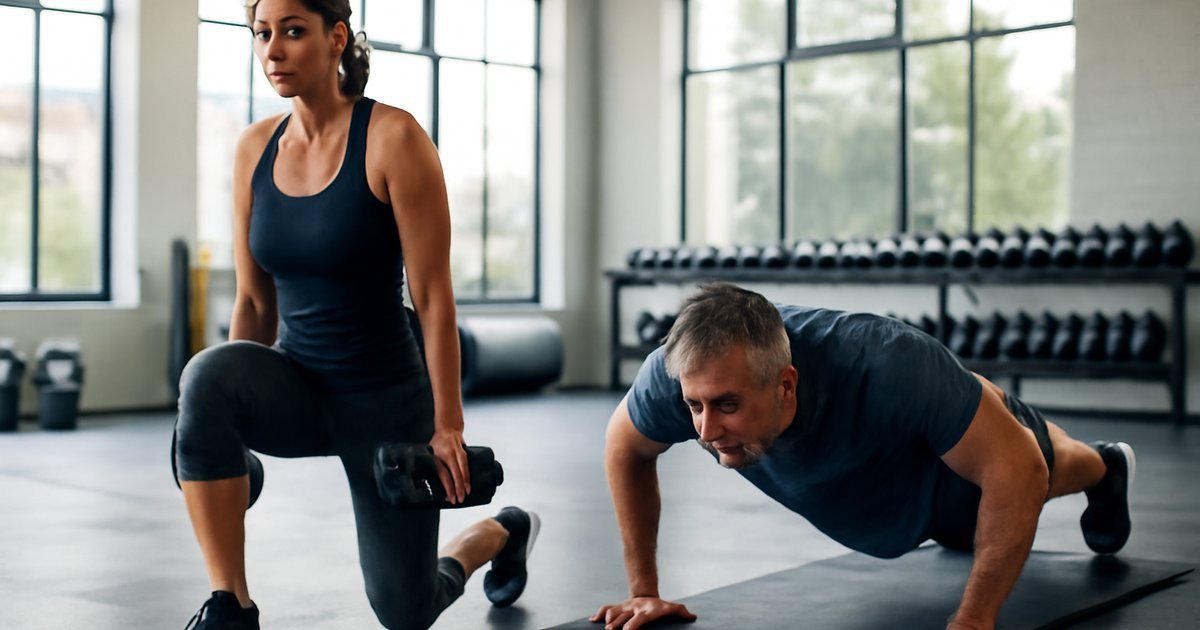
    Circuit training is a structured exercise format in which you perform a series of exercises — called "stations" — one after another, with minimal rest between movements. A typical circuit includes 6 to 10 exercises targeting different muscle groups or energy systems, and you cycle through them once or multiple times depending on your fitness level.

    The defining characteristic of circuit training is its combination of cardiovascular conditioning and resistance work in a single session. Unlike traditional strength training — where you might do multiple sets of one exercise before moving to the next — circuit training keeps you moving continuously, which elevates your heart rate while simultaneously building muscular strength and endurance.

    This approach was originally developed in the 1950s by British researchers R.E. Morgan and G.T. Anderson at the University of Leeds as a way to improve general fitness efficiently. Today it is used by physical therapists, cardiologists, personal trainers, and sports medicine specialists across the United States.

    According to the American College of Sports Medicine (ACSM), circuit training can be tailored to nearly any fitness level — from sedentary beginners to competitive athletes — making it one of the most versatile exercise formats available to adults.

    Health Benefits of Circuit Training

    Research supporting circuit training’s health benefits has grown substantially over the past two decades. Here’s what the clinical evidence indicates:

    Cardiovascular Health

    A meta-analysis published in the Journal of Human Kinetics found that circuit training significantly reduced resting heart rate, systolic blood pressure, and LDL cholesterol (the "bad" cholesterol) in adults with metabolic syndrome. Because the format keeps your heart rate elevated throughout the session, it delivers a meaningful aerobic stimulus even when weights or resistance are involved.

    The American Heart Association identifies physical inactivity as a major modifiable risk factor for cardiovascular disease — the leading cause of death in the US. Regular circuit-style exercise can directly counter that risk.

    Weight Management and Body Composition

    Circuit training produces what researchers call an "afterburn effect," clinically known as Excess Post-Exercise Oxygen Consumption (EPOC). This means your body continues burning calories at an elevated rate for several hours after your workout ends.

    A study from the NIH-supported National Library of Medicine found that adults who completed 12 weeks of circuit training three times per week lost significantly more body fat than those who performed moderate-intensity steady-state cardio for the same duration. This matters for adults over 40, who are more vulnerable to age-related muscle loss — a condition called sarcopenia.

    Blood Sugar Regulation

    For adults managing or at risk for type 2 diabetes, circuit training offers meaningful benefits. Research suggests that combining aerobic and resistance exercise in a single session is particularly effective at improving insulin sensitivity — the body’s ability to use glucose efficiently. The American Diabetes Association recommends including resistance training at least twice weekly as part of a comprehensive diabetes management plan.

    If you want to dive deeper into this topic, our guide on Exercise and Blood Sugar Control: What Adults Need to Know covers this in detail.

    Mental Health and Cognitive Function

    Clinical evidence indicates that regular aerobic-resistance exercise like circuit training is associated with reduced symptoms of anxiety and depression in adults. A 2023 systematic review from Johns Hopkins Medicine found that adults who exercised at moderate-to-vigorous intensity at least three times per week showed statistically significant reductions in depression scores compared to sedentary controls.

    Additionally, the varied, cognitively engaging nature of circuit training — remembering stations, tracking reps, adjusting equipment — may provide a mild cognitive stimulus that contributes to brain health over time.

    Signs Circuit Training May Be Right for You

    Circuit training is particularly well-suited for adults who:

    • Have 20–45 minutes per session and want maximum efficiency
    • Find single-exercise routines boring or hard to sustain
    • Want to build both cardiovascular fitness and muscle strength simultaneously
    • Are managing weight, blood pressure, or blood sugar concerns
    • Prefer structure over self-directed "figure it out" gym sessions
    • Are returning to exercise after a break or injury (with medical clearance)

    That said, it’s not ideal for everyone in its standard form. Adults with uncontrolled hypertension, recent cardiac events, severe joint disease, or certain neurological conditions should consult their physician before starting. Individual variation is significant — what works for one person may need to be modified for another.

    Causes of Low Fitness in Adults: Why Circuit Training Addresses the Root Issues

    Understanding why adults fall out of exercise habits helps explain why circuit training has such strong adherence rates compared to other formats.

    According to the CDC’s National Center for Health Statistics, the most commonly reported barriers to physical activity among US adults aged 30–70 are:

    • Time constraints — cited by 64% of inactive adults
    • Lack of motivation or enjoyment — cited by 52%
    • Uncertainty about what to do — cited by 41%
    • Fatigue and low energy — cited by 38%

    Circuit training is structurally designed to overcome all four. Sessions are short (20–45 minutes), the variety of exercises prevents boredom, the format provides built-in structure, and the intensity-to-time ratio makes it energy-efficient.

    Risk factors for poor fitness — including sedentary desk jobs, high-stress lifestyles, poor sleep, and aging-related hormonal changes — are widespread in American adults. Circuit training won’t eliminate these factors, but clinical evidence suggests it significantly mitigates their health impact when practiced consistently.

    How to Build a Circuit Training Routine

    Here is a practical, evidence-informed approach to building your first circuit training routine safely.

    Step 1: Choose Your Format

    There are three main circuit training formats:

    • Time-based circuits: You perform each exercise for a set duration (e.g., 30–45 seconds), then move to the next. Best for beginners.
    • Rep-based circuits: You complete a specific number of reps (e.g., 12–15) per exercise before moving on. Better for strength-focused goals.
    • Mixed circuits: Some stations are time-based, others are rep-based. More flexible and often preferred by intermediate exercisers.

    Step 2: Select 6–8 Exercises

    A well-designed circuit should include exercises that target different muscle groups to avoid fatigue-related injury. A solid beginner circuit might include:

    1. Bodyweight squats (lower body)
    2. Push-ups or modified push-ups (upper body push)
    3. Resistance band rows (upper body pull)
    4. Reverse lunges (lower body, single-leg)
    5. Plank hold (core)
    6. Dumbbell shoulder press (upper body)
    7. Glute bridges (posterior chain)
    8. Marching in place or low-impact jumping jacks (cardiovascular station)

    This kind of balanced programming — which you can learn more about in our guide to Strength Training for Adults: Benefits, How to Start & Tips — ensures you build total-body fitness without overloading any one area.

    Step 3: Set Your Work-to-Rest Ratio

    For beginners, research suggests a 1:1 work-to-rest ratio is effective and safe — for example, 30 seconds of exercise followed by 30 seconds of rest. As fitness improves, you can shift toward a 2:1 ratio (40 seconds on, 20 seconds rest) to increase intensity.

    Step 4: Plan Your Weekly Volume

    Most physicians and exercise physiologists recommend starting with two to three circuit sessions per week on non-consecutive days, allowing 48 hours of recovery between sessions. This schedule aligns with the Physical Activity Guidelines for Americans published by the Department of Health and Human Services.

    Step 5: Warm Up and Cool Down

    Never skip your warm-up. A 5-minute dynamic warm-up — including leg swings, arm circles, hip rotations, and light marching — prepares your joints, muscles, and cardiovascular system for the demands ahead. A 5-minute cool-down with static stretching reduces delayed-onset muscle soreness and supports recovery.

    For more on recovery strategies, see our article on Bodyweight Training for Adults: Benefits, Workouts & Tips, which includes recovery-focused programming advice.

    Adapting Circuit Training to Your Fitness Level and Health Status

    One of the most important principles in exercise medicine is individualization. Circuit training can be adapted across a wide spectrum of fitness levels and health conditions.

    Beginners (Little or No Exercise History)

    • Start with bodyweight-only stations (no added resistance)
    • Use longer rest intervals (45–60 seconds between stations)
    • Limit circuits to 2 rounds per session
    • Focus on movement quality over speed

    Intermediate Adults (Some Consistent Exercise)

    • Add light-to-moderate resistance (dumbbells, resistance bands, kettlebells)
    • Reduce rest intervals to 20–30 seconds
    • Complete 3 rounds per session
    • Introduce one higher-intensity station per circuit (e.g., step-ups, battle ropes)

    Adults with Joint Pain or Chronic Conditions

    • Choose low-impact alternatives for all jumping or high-force movements
    • Use seated or supported stations as needed
    • Work with a physical therapist or certified exercise physiologist to design your circuit
    • Always obtain physician clearance before starting

    This varies significantly from person to person. Adults managing osteoarthritis, heart disease, or diabetes may need specific modifications that only their care team can provide safely.

    Living With a Busy Schedule: Fitting Circuit Training Into Real Life

    One of the strongest arguments for circuit training is its time-to-benefit ratio. A 2022 clinical review published in the British Journal of Sports Medicine found that adults who performed high-effort, shorter-duration sessions three times per week achieved comparable cardiovascular and metabolic improvements to those who performed longer, moderate-intensity workouts five times per week.

    Here are practical strategies for making circuit training stick:

    • Schedule it like a medical appointment — put it in your calendar and treat it as non-negotiable
    • Prepare your equipment the night before — lay out your mat, dumbbells, or resistance bands so there’s no friction in the morning
    • Use a timer app — interval apps like Seconds or Tabata Timer remove all guesswork
    • Start small — a 20-minute circuit three times a week is vastly better than zero minutes of activity
    • Track your progress — note weights used, rounds completed, and how you felt; progress is motivating

    When to Call Your Doctor — Red Flags to Watch For

    Circuit training is safe for most healthy adults, but certain symptoms require immediate attention. Stop exercising and seek emergency care if you experience:

    • Chest pain, tightness, or pressure during or after exercise
    • Sudden shortness of breath disproportionate to effort level
    • Dizziness, fainting, or near-fainting
    • Severe or sudden joint pain, especially in the knee or hip
    • Heart palpitations that feel irregular or prolonged
    • Sudden severe headache during exertion

    At your next routine visit, talk to your doctor if you experience:

    • Persistent muscle soreness lasting more than 5–7 days
    • Consistent fatigue that doesn’t resolve with rest
    • Joint swelling that occurs regularly after workouts
    • Any new symptom pattern that concerns you

    If you’re over 45, haven’t exercised regularly in more than a year, or have a known cardiovascular or metabolic condition, most physicians recommend getting a fitness-focused checkup before starting a new exercise program.

    Frequently Asked Questions About Circuit Training

    How long should a circuit training session be?

    Most effective circuit sessions run between 20 and 45 minutes, not counting warm-up and cool-down. Research suggests that sessions in this range, performed consistently, produce meaningful cardiovascular and strength improvements. Beginners may start with 20 minutes and build up gradually over several weeks.

    Is circuit training safe for older adults?

    Yes — with appropriate modifications. Clinical evidence from the Mayo Clinic indicates that resistance-based circuit training is beneficial for adults over 60, improving muscle mass, bone density, and functional mobility. Lower-impact stations, lighter resistance, and longer rest intervals make the format accessible and safe for most older adults with medical clearance.

    Can circuit training help with weight loss?

    Research suggests it can, particularly when combined with a balanced diet. The combination of resistance work and cardiovascular stimulus in a single session creates a caloric deficit during the workout and raises metabolism for hours afterward through EPOC. However, exercise alone is rarely sufficient for significant weight loss — dietary habits must be addressed in parallel.

    How is circuit training different from HIIT?

    High-Intensity Interval Training (HIIT) and circuit training share similarities but differ in key ways. HIIT typically involves very short bursts of maximal or near-maximal effort followed by full recovery. Circuit training generally operates at a moderate-to-vigorous intensity throughout, cycling through diverse exercises. Circuit training tends to be more sustainable and accessible for beginners and adults with certain health conditions.

    How soon will I see results from circuit training?

    This varies from person to person. Most adults report noticeable improvements in energy levels, endurance, and mood within 2–3 weeks. Visible changes in body composition typically emerge after 6–12 weeks of consistent training. Cardiovascular markers such as resting heart rate and blood pressure may begin improving within 4–8 weeks, according to clinical evidence from the American Heart Association.

    Conclusion: A Smarter, Sustainable Way to Get Fit

    Circuit training stands out among exercise formats because it solves real-world problems — limited time, decision fatigue, and the need to address multiple fitness goals at once. The clinical evidence supporting it is robust: improved cardiovascular health, better blood sugar control, enhanced body composition, and meaningful mental health benefits, all achievable in sessions as short as 20 minutes.

    The most important step is simply starting — at a level that’s appropriate for your current fitness and health status. Talk to your doctor, choose exercises that suit your body, and give yourself permission to begin with a modest, sustainable circuit rather than waiting until conditions are "perfect."

    Your health is worth the 20 minutes. Start where you are. Build from there.


    Medical Disclaimer: This article is for informational and educational purposes only. It does not constitute medical advice, diagnosis, or treatment. Always consult your physician or a qualified healthcare provider before making changes to your health routine or treatment plan.

    Medically reviewed by our editorial health team. Content follows evidence-based standards aligned with CDC and NIH guidelines.
  • Functional Fitness Training: The Complete Guide for Adults

    Functional Fitness Training: The Complete Guide for Adults

    The workout that makes real life easier — backed by science and designed for the way your body actually moves.

    Introduction

    Michael, 54, could bench press 200 pounds at the gym. But when he tried to lift a heavy box into the attic or get up quickly from the floor after playing with his grandkids, he struggled — and his back paid for it later. His strength was impressive on paper, but it wasn’t translating into his daily life.

    That’s exactly the problem that functional fitness training was designed to solve. According to the CDC, more than 36 million adults in the United States fall each year, and a significant portion of those injuries are linked to poor movement quality, weak stabilizer muscles, and a disconnect between gym performance and real-world physical demands.

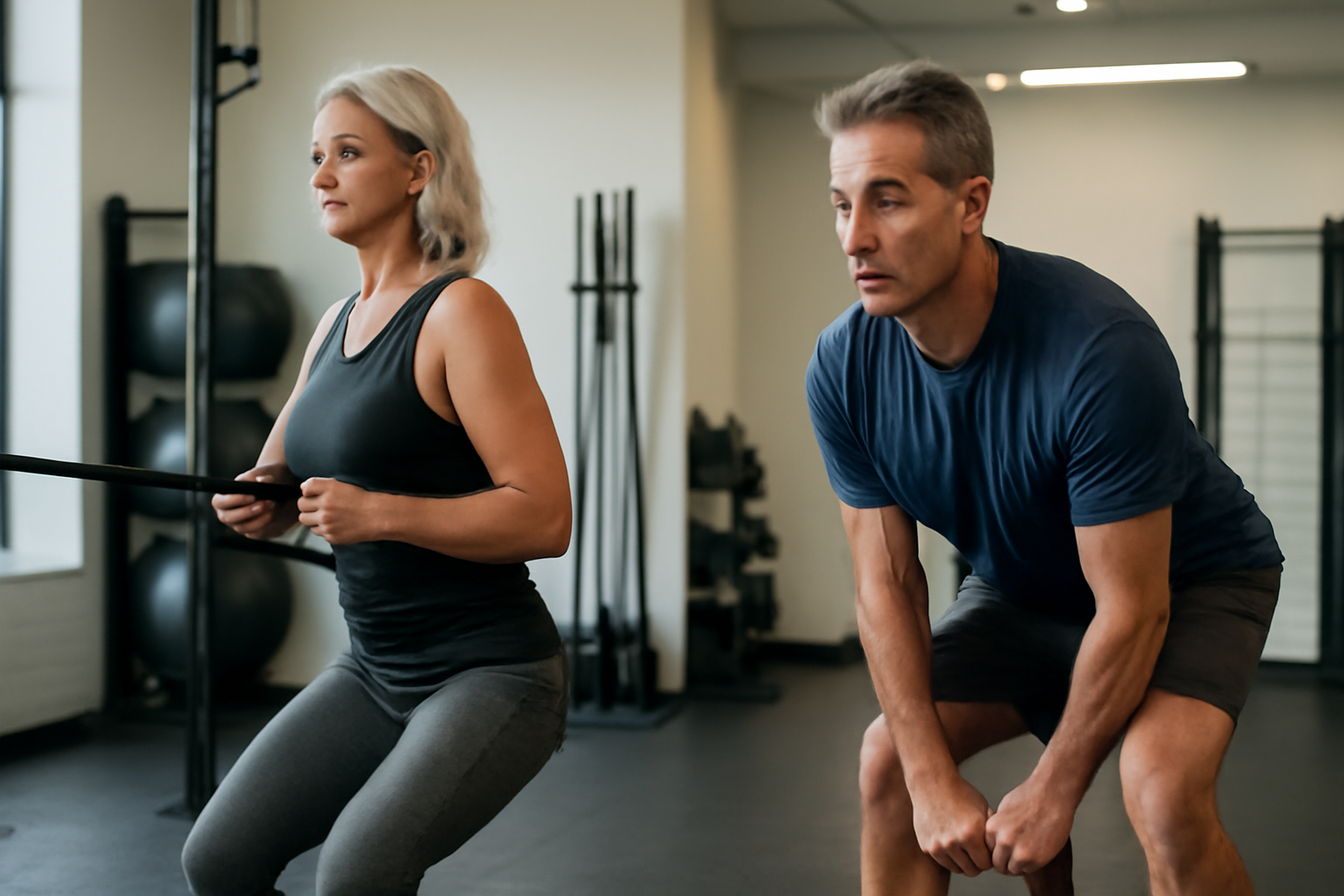
    Functional fitness training focuses on movements that mirror what your body does every day — squatting, bending, pushing, pulling, twisting, and carrying. In this guide, you’ll learn what functional fitness is, why it matters for adults of all fitness levels, how to get started safely, and how to build a practical routine that supports a stronger, more independent life.

    What Is Functional Fitness Training?

    Functional fitness training is a style of exercise that trains your muscles to work together in coordinated, multi-joint movement patterns — the same patterns you use in everyday activities like climbing stairs, picking up groceries, getting out of a car, or reaching overhead.

    Unlike traditional machine-based gym exercises that isolate a single muscle group (like a leg extension or a bicep curl machine), functional training emphasizes compound movements that engage your core, challenge your balance, and replicate real-life biomechanics.

    The American College of Sports Medicine (ACSM) defines functional fitness as training designed to improve neuromuscular efficiency — meaning your nervous system and muscles communicate better, allowing for safer, more coordinated movement.

    Common functional training tools include your own bodyweight, resistance bands, dumbbells, kettlebells, medicine balls, and suspension trainers like TRX. But the real focus isn’t on the equipment — it’s on the movement quality.

    In the United States, functional fitness has become a cornerstone of physical therapy, athletic training, and senior wellness programs. The NIH recognizes it as one of the most effective training approaches for preserving physical independence in adults over 50.

    Signs You May Need Functional Fitness Training

    You don’t need to be injured or elderly to benefit from functional training. In fact, most adults would see meaningful improvements in daily life with this approach. Here are signs that your fitness routine may be missing a functional component:

    Early signs of poor functional fitness:

    • Stiffness or discomfort when getting up from a chair or the floor
    • Back pain after bending over or lifting common household items
    • Difficulty carrying groceries or luggage without straining
    • Feeling off-balance or unsteady on uneven surfaces
    • Knee or hip discomfort when walking up or down stairs
    • Fatigue after moderate physical activity that used to feel easy

    More advanced signs:

    • Frequent minor injuries from low-effort tasks
    • Chronic lower back or shoulder pain during routine movements
    • Noticeable decline in coordination or reaction time
    • Fear of falling or reluctance to perform physical tasks

    A 2023 study published in the Journal of Aging and Physical Activity found that adults who engaged in functional movement training at least twice per week showed significantly greater improvements in daily task performance than those who performed isolated strength training alone.

    Causes of Poor Functional Movement in Adults

    Poor functional movement rarely has a single cause. It’s typically the result of a combination of factors that compound over time — especially as we age.

    Sedentary lifestyle: The CDC reports that only 24% of American adults meet both the aerobic and muscle-strengthening guidelines set by the Physical Activity Guidelines for Americans. Prolonged sitting leads to tight hip flexors, weak glutes, and an overworked lower back — all of which impair functional movement.

    Muscle imbalances: Traditional gym routines that favor mirror muscles (chest, biceps, quads) while neglecting stabilizers (rotator cuff, glute medius, deep core) create imbalances that show up in daily movement as compensation patterns and injury risk.

    Age-related muscle changes: Sarcopenia — the gradual loss of muscle mass and strength that begins around age 30 and accelerates after 50 — reduces the body’s ability to generate force and maintain coordination. The NIH estimates that sarcopenia affects 10 to 25% of adults over 60.

    Neurological deconditioning: The pathways between your brain and your muscles weaken without regular use. This affects proprioception (your body’s sense of its own position in space), which is critical for balance and coordination.

    Previous injuries: Old sprains, joint surgeries, or chronic pain often lead to compensatory movement patterns that persist long after the original injury heals.

    Obesity and excess body weight: Carrying excess weight changes movement mechanics and increases joint stress, often forcing the body into inefficient movement patterns over time.

    Getting Started: What to Expect

    Before beginning any new exercise program, especially if you are managing a chronic health condition, recovering from injury, or have been sedentary for an extended period, it’s essential to consult your primary care physician or a licensed physical therapist.

    A functional fitness assessment may include:

    • Movement screening: A certified trainer or physical therapist may use tools like the Functional Movement Screen (FMS) to identify asymmetries, mobility restrictions, and compensatory patterns
    • Balance testing: Simple tests like the single-leg stance or timed up-and-go test help establish a baseline
    • Strength and mobility evaluation: Assessing your ability to perform fundamental movements like a squat, hinge, and overhead reach
    • Medical clearance: Your physician may order labs or imaging if you have cardiovascular concerns, joint pain, or other risk factors

    Most healthy adults can begin with beginner-level bodyweight movements and progress gradually. The Cleveland Clinic recommends starting with two to three sessions per week, each lasting 30 to 45 minutes, with at least 48 hours of recovery between full-body sessions.

    If you’re already active, you can likely integrate functional movements into your existing routine. If balance or joint health is a concern, our guides on Balance Training for Adults and Low-Impact Exercise for Joint Health provide excellent complementary starting points.

    Functional Fitness Exercises: A Practical Framework

    Functional training is built around seven foundational movement patterns. Every exercise you do should map to one or more of these patterns:

    1. Squat (knee-dominant)
    Mirrors sitting down and standing up. Strengthens quads, glutes, hamstrings, and core.
    Examples: Bodyweight squat, goblet squat, split squat

    2. Hinge (hip-dominant)
    Mirrors picking something up from the floor safely. Primarily targets glutes, hamstrings, and lower back.
    Examples: Romanian deadlift, kettlebell deadlift, single-leg hinge

    3. Push (horizontal and vertical)
    Mirrors pushing a door open or lifting overhead. Works chest, shoulders, and triceps.
    Examples: Push-up, dumbbell press, wall push-up (modified)

    4. Pull (horizontal and vertical)
    Mirrors pulling open a heavy door or reaching and pulling objects toward you. Works back, biceps, and rear shoulders.
    Examples: Resistance band row, dumbbell row, lat pulldown

    5. Carry (loaded locomotion)
    Mirrors carrying groceries or luggage. Engages the entire body — especially core, grip, and shoulder stability.
    Examples: Farmer’s carry, suitcase carry, overhead carry

    6. Rotate (rotational and anti-rotational)
    Mirrors twisting to look behind you, swinging, or reaching across your body. Core-dominant.
    Examples: Pallof press, woodchop, rotational medicine ball throw

    7. Gait and locomotion
    Mirrors walking, stepping, climbing, and lunging in varied directions.
    Examples: Reverse lunge, lateral step-up, step-over

    A well-designed functional fitness session typically includes movements from three to five of these categories. You don’t need to hit all seven in every workout — variety across the week is what matters.

    Research published in the journal PLOS ONE found that adults who trained all seven movement patterns regularly over 12 weeks showed statistically significant improvements in functional independence scores, grip strength, and reported quality of life compared to a control group.

    Living With Functional Fitness: Long-Term Management and Prevention

    One of the greatest strengths of functional fitness training is that it’s inherently sustainable. Because it reinforces movements you already do every day, it doesn’t feel disconnected from real life — and that makes it easier to stick with over the long term.

    Building a consistent habit:

    • Aim for 2 to 4 functional training sessions per week, depending on your recovery capacity
    • Pair functional training with cardiovascular activity — walking, swimming, or cycling — for comprehensive health benefits
    • Use daily activities as mini training opportunities: practice good hinge mechanics when picking up objects, engage your core while standing in line, take stairs deliberately and mindfully

    Progression principles: Clinical evidence from Mayo Clinic indicates that gradual, progressive overload — slowly increasing resistance, complexity, or range of motion over time — is the most effective and safest way to build functional strength. Rushing progression is one of the most common causes of injury in adults returning to exercise.

    Recovery matters: Functional training still creates muscular stress and demands proper recovery. Make sure you’re getting 7 to 9 hours of sleep, staying hydrated, and consuming adequate protein (most physicians recommend 0.7 to 1.0 grams per pound of body weight daily for active adults). For more detail on smart recovery strategies, see our guide on Exercise Recovery: How to Recover Faster and Train Smarter.

    Prevention through movement quality: Research from Johns Hopkins suggests that adults who maintain consistent functional movement training significantly reduce their risk of age-related disability, fall-related injury, and loss of independence. The investment made in movement quality in your 40s and 50s pays substantial dividends in your 60s and 70s.

    This varies from person to person: Your ideal functional training frequency, intensity, and exercise selection depends on your current fitness level, health history, and goals. Working with a certified personal trainer (look for NASM, ACE, or NSCA credentials) or a licensed physical therapist can help you build a program tailored to your needs.

    When to Call Your Doctor or Seek Emergency Care

    Functional fitness is generally very safe for most adults, but there are situations where medical guidance is essential before or during training.

    Consult your doctor before starting if you have:

    • Uncontrolled hypertension or a recent cardiac event
    • A current or recent joint injury (knee, hip, shoulder, or spine)
    • Osteoporosis or a history of stress fractures
    • Diabetes with neuropathy or balance-affecting complications
    • Any condition where physical activity is currently restricted

    Stop exercising and seek immediate care if you experience:

    • Chest pain, chest tightness, or pressure during or after exercise
    • Shortness of breath disproportionate to your exertion level
    • Sudden severe joint pain, especially with swelling or inability to bear weight
    • Dizziness, lightheadedness, or near-fainting
    • Heart palpitations (irregular or racing heartbeat)
    • Sudden or severe headache during exercise

    At your next routine appointment, mention:

    • Any persistent joint soreness lasting more than 72 hours after a session
    • Recurring lower back pain or sciatic-type symptoms
    • Gradual loss of balance or increasing unsteadiness
    • Fatigue that seems out of proportion to your activity level

    Frequently Asked Questions

    Q: Is functional fitness training appropriate for beginners?
    A: Yes — functional training is highly adaptable. Many foundational movements can be modified to any fitness level. Beginners typically start with bodyweight-only exercises and gradually add resistance as strength and coordination improve. The key is mastering movement quality before adding load.

    Q: How is functional fitness different from strength training?
    A: Traditional strength training often isolates individual muscles using machines or fixed movement planes. Functional training emphasizes multi-joint, multi-plane movements that train muscles to work together in coordination. Both have value, and many evidence-based programs combine elements of both. You can learn more in our guide to Strength Training After 50.

    Q: How quickly will I see results from functional fitness training?
    A: Most people begin to notice improvements in daily movement quality and energy within 4 to 6 weeks of consistent training. Measurable strength and balance gains are typically evident at 8 to 12 weeks. This varies from person to person based on starting fitness level, age, consistency, and nutrition.

    Q: Can I do functional fitness training if I have joint pain or arthritis?
    A: Research suggests that appropriately modified functional training can actually help reduce joint pain and stiffness associated with osteoarthritis. However, you should always consult your physician or a physical therapist before beginning if you have active joint disease. Low-impact modifications and reduced range of motion are commonly used to make functional training safe and effective for adults managing joint conditions.

    Q: Do I need special equipment for functional fitness?
    A: No. Your own bodyweight is sufficient to build a highly effective functional fitness routine, especially in the early stages. As you progress, resistance bands, dumbbells, or kettlebells can add variety and challenge. Many physical therapists and certified trainers design full functional programs requiring no equipment at all.

    Conclusion

    Functional fitness training isn’t just another fitness trend — it’s a scientifically grounded approach to exercise that prepares your body for the demands of real life. Whether you’re 35 and trying to move better, 55 and focused on preserving independence, or 68 and working to stay active on your own terms, functional training offers practical, measurable benefits.

    The movements are accessible, the progressions are clear, and the results show up not just in the gym, but in every box you lift, every staircase you climb, and every moment you move with confidence and ease.

    Start where you are. Move with intention. And always work with your healthcare provider to make sure your program is right for your individual health profile.


    Medical Disclaimer: This article is for informational and educational purposes only. It does not constitute medical advice, diagnosis, or treatment. Always consult your physician or a qualified healthcare provider before making changes to your health routine or treatment plan.

    Medically reviewed by our editorial health team. Content follows evidence-based standards aligned with CDC and NIH guidelines.